Why Weather Conditions Demand More Than Caution
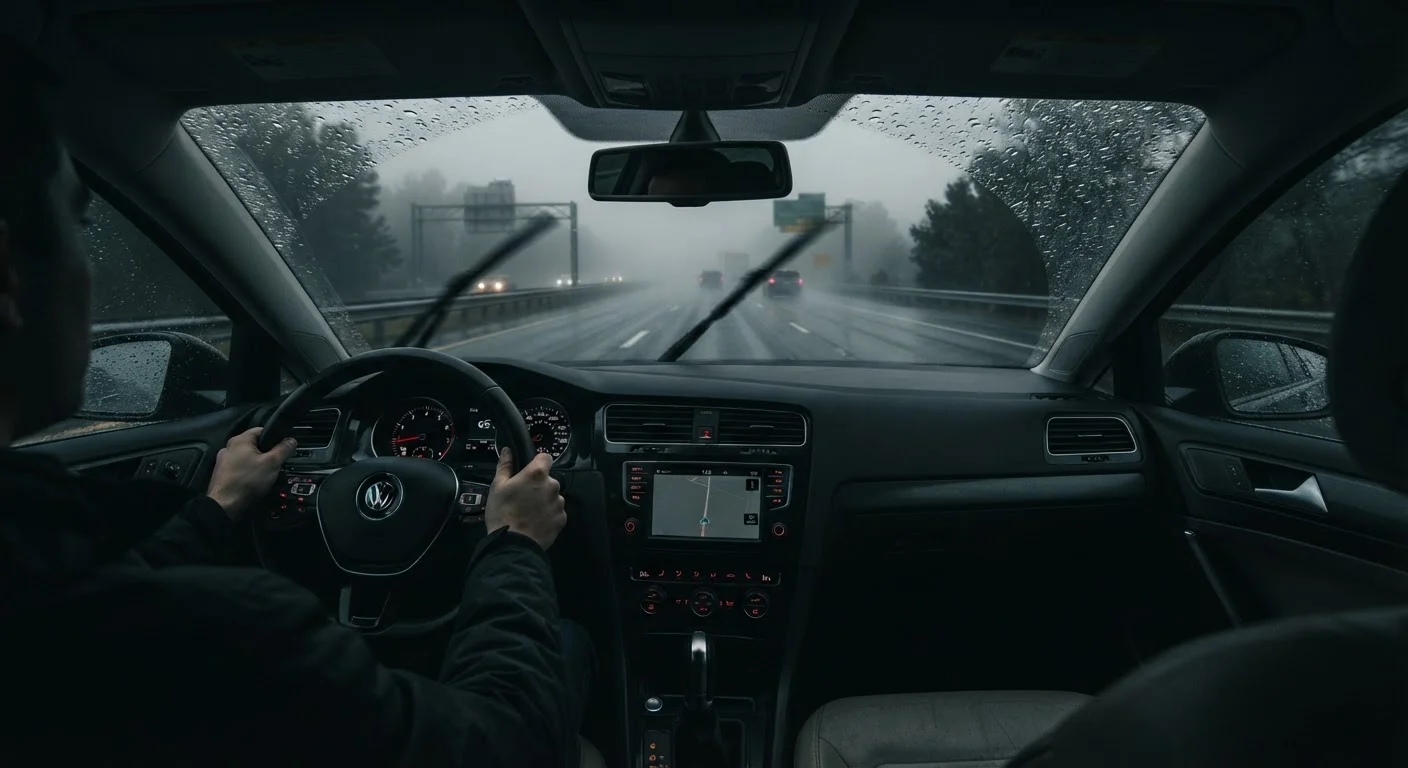
Weather is consistently one of the leading contributing factors in traffic crashes in the United States. According to data from the Federal Highway Administration, roughly 21% of all vehicle crashes each year are weather-related - that's over 1.2 million crashes annually. Rain accounts for the largest share, but snow, ice, and fog each present their own serious risks.
The problem isn't just visibility. Weather changes the physics of driving: stopping distances grow, traction disappears, and the cues drivers rely on - lane markings, road edges, other vehicles - become harder to read. Caution alone isn't enough. What helps is understanding how each condition changes the road, and adjusting your behavior accordingly.
This guide covers the three most common low-visibility weather scenarios American drivers face, along with shared principles that apply across all of them.
21%
Of all U.S. crashes are weather-related
According to the Federal Highway Administration, weather contributes to roughly 1.2 million crashes annually in the United States.
3x+
Stopping distance increase on ice vs. dry road
On packed snow or ice, stopping distances can more than triple compared to dry asphalt, according to transportation safety research.
35 mph
Speed at which hydroplaning can begin
Hydroplaning on standing water can occur at speeds as low as 35 mph, particularly on tires with worn tread.
Driving in Rain
Rain creates two distinct hazards: reduced visibility and reduced traction. Both get worse as rainfall intensifies, but even light rain deserves a behavior change because road surfaces are often most slippery in the first 30 minutes of a rain event - oil and debris that built up during dry weather mix with water before washing away.
Hydroplaning
Hydroplaning happens when a tire rides up on a thin film of water and loses contact with the road surface. It can occur at speeds as low as 35 mph on standing water, and it happens faster on worn tires. If you feel the steering go light or hear the engine RPM rise without acceleration, you may be hydroplaning. Ease off the gas gently, avoid sharp steering inputs, and don't brake hard. Let the car slow down and reconnect with the road. See our guide to regaining control of a skidding vehicle for techniques that apply to both wet and icy surfaces.
Speed and Lighting in Rain
Reduce speed meaningfully - not just by a few mph. Turn on your headlights even in daytime rain; in many states it's the law, and it makes you visible to others. Use your low beams rather than high beams, which reflect off rain and reduce your effective sight line. Keep a following distance of at least four seconds - double the standard dry-road recommendation.
Driving in Snow and Ice
Snow and ice eliminate the traction margin that most drivers take for granted. On dry asphalt, a car traveling 60 mph might stop in about 180 feet. On packed snow or ice, that distance can more than triple. This is why the adjustments required in winter conditions are more dramatic than in rain.
Speed, Braking, and Momentum
Drive well below posted speed limits. Keep as much space ahead of you as possible - at minimum eight to ten seconds of following distance on snow, more on ice. Brake early and gently. On vehicles with anti-lock brakes (ABS), apply firm, steady pressure and let the system pulse for you; don't pump the pedal. On vehicles without ABS, threshold braking - pressing just to the edge of lockup - provides the most control.
Black Ice
Black ice is a thin, nearly transparent layer of ice on pavement that looks like a wet road surface. It commonly forms on bridges, overpasses, and shaded road sections before other areas freeze. If your car suddenly becomes unresponsive to steering or braking on what looked like a wet road, treat it as ice: ease off all inputs, stay smooth, and let the car slow.
Our article on getting your car ready for winter driving covers the tire, battery, and fluid checks that give you the best mechanical footing before cold weather arrives.
Before accelerating on a snowy surface, try gently feathering the throttle rather than pressing steadily - if the tires spin, ease off immediately and let traction build before adding more power.
Spinning tires on snow generate heat that melts the surface contact point, reducing grip further. Light, controlled throttle inputs maintain the friction needed to move forward.
When you must brake on ice, look as far ahead as possible and begin braking far earlier than you think you need to - the extra distance isn't wasted, it's insurance.
Drivers consistently underestimate how long it takes to stop on ice. Anticipating stops from much farther back is one of the clearest separators between experienced and inexperienced winter drivers.
Driving in Fog
Fog is uniquely deceptive. It reduces contrast and depth perception in ways that can make it hard to judge speed and distance accurately. Dense fog can cut visibility to less than a quarter mile - sometimes much less - with little warning.
The High-Beam Mistake
The instinct to switch on high beams in fog is nearly universal, and it's almost always wrong. High beams bounce off fog droplets and reflect back at you, creating a bright wall of glare that reduces your effective vision. Use low beams instead, or dedicated fog lights if your vehicle has them - these are mounted lower and angled to illuminate the road surface beneath the fog layer.
Speed and Distance in Fog
Your speed should match your actual sight distance - not the posted limit. If you can see 200 feet ahead, you should be traveling at a speed that allows you to stop within 200 feet. This is often slower than drivers are comfortable with, but it's the correct standard. Increase following distance significantly, use lane markings as reference points, and avoid the temptation to follow another vehicle's taillights closely as a navigation guide - you'll be reacting to their decisions with almost no buffer.
This type of visibility challenge has parallels with nighttime driving hazards, where the ability to see and be seen shifts dramatically.
Habits That Apply to Every Low-Visibility Condition
Across rain, snow, and fog, several principles hold regardless of which specific condition you're in.
- Slow down more than feels necessary. The instinct to maintain near-normal speed is strong, but stopping distances and reaction requirements don't scale linearly with small speed reductions. A meaningful reduction - 15 to 25 mph in severe conditions - changes your outcome significantly.
- Turn on your headlights. In low-visibility conditions, being seen is as important as seeing. Headlights on low beam help other drivers locate you, even when you feel like you can see well enough without them.
- Increase following distance. The standard three-second rule is a dry-road minimum. See our article on what following distance actually means at highway speeds for a clearer picture of how stopping distance works in practice.
- Avoid distractions entirely. Weather conditions demand full cognitive attention. Anything that pulls focus - phone, radio adjustments, conversation - compounds risk.
- Know when not to drive. If conditions are severe enough that experienced drivers are pulling over, that's relevant information. There's no shame in waiting out a storm.
These habits connect directly to the principles of defensive driving, which research consistently links to lower crash involvement.
Preparing Your Vehicle Before Conditions Strike
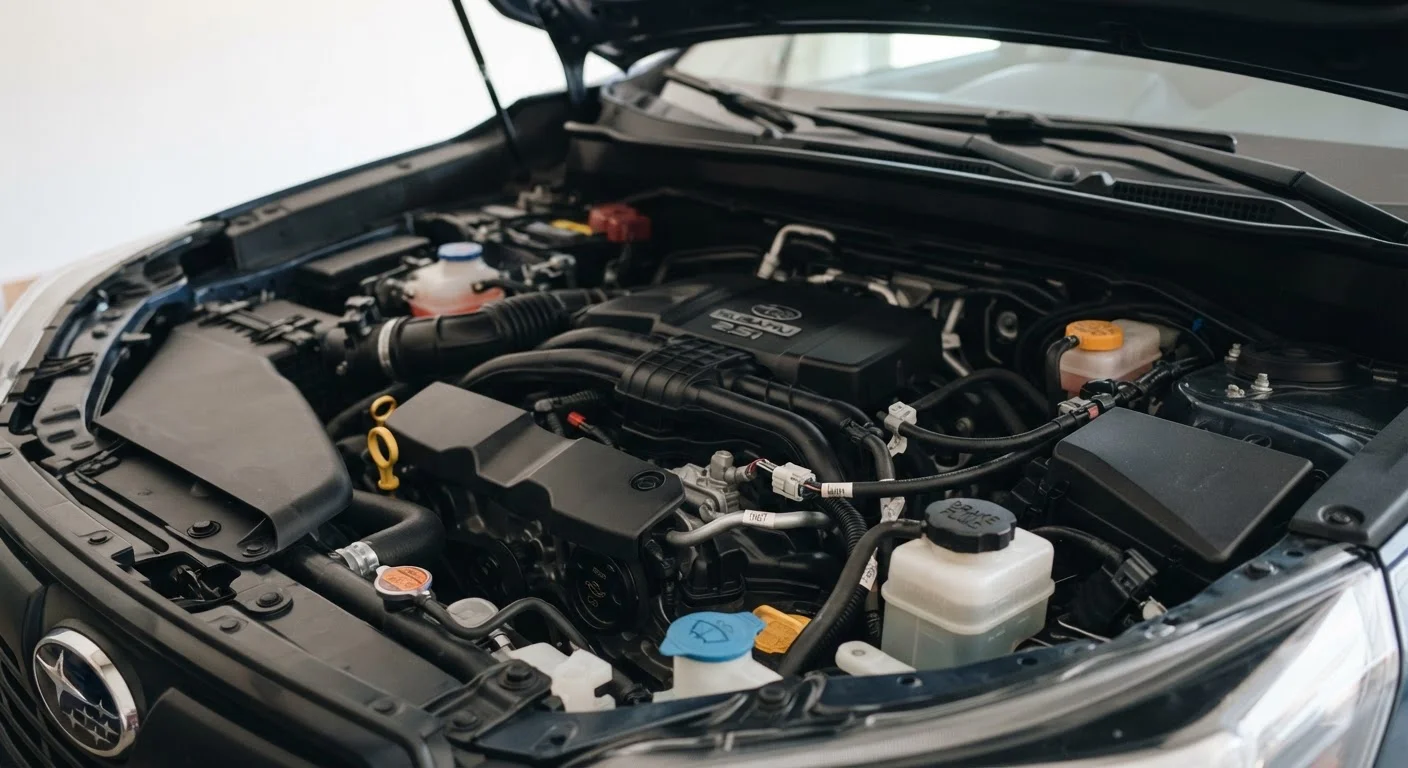
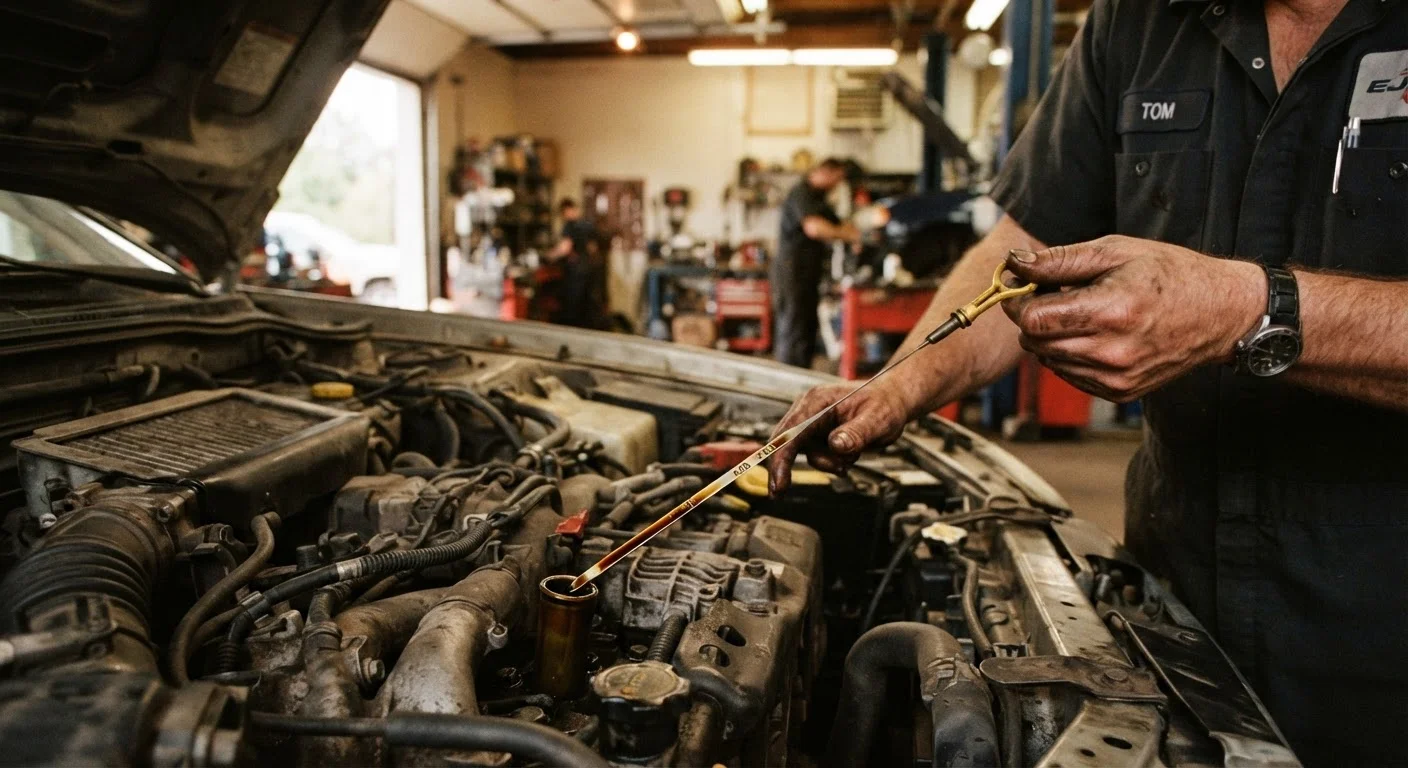
In-the-moment driving choices matter, but they're easier to execute correctly when the vehicle underneath you is properly maintained. Tires are the most critical factor - tread depth, inflation, and compound all directly affect how your car responds on wet or icy pavement. Wiper blades that streak or skip reduce visibility exactly when you need it most. Defogging systems - rear defogger, front defroster, and cabin airflow - need to work reliably before you're already driving in fog or a snowstorm.
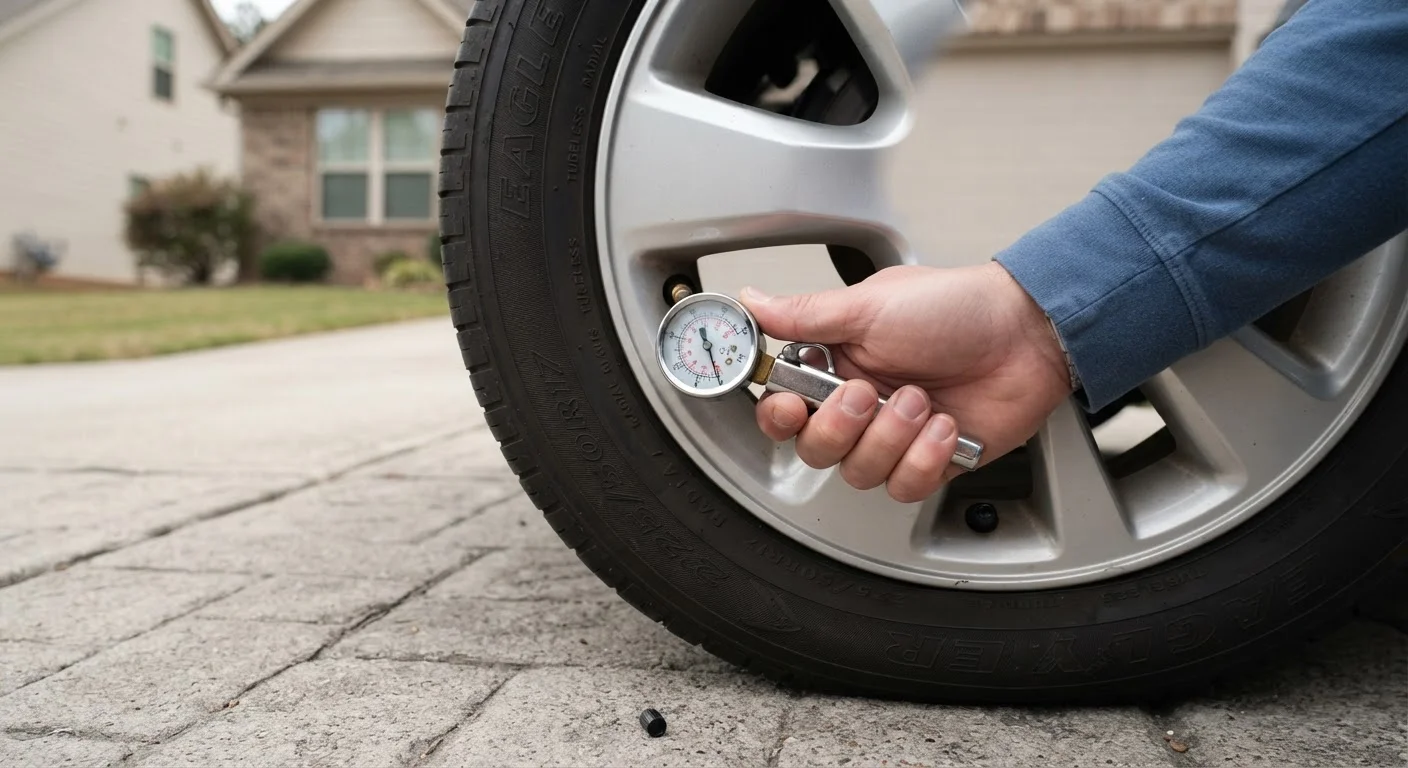
Check your tire pressure regularly in cold months; pressure drops roughly one PSI for every 10°F decrease in temperature, which can quietly push tires below safe inflation levels. If any dashboard warnings come on related to tires or traction systems, address them before driving in bad weather. Our reference on dashboard warning lights explains what the most common alerts mean and how urgently to act.
Drivers newer to navigating poor-weather roads may also find it useful to review foundational driving safety habits - many of the core principles apply regardless of experience level.