Why Old Advice Can Be Expensive
Car maintenance advice has a long shelf life - sometimes too long. Tips that made sense for carbureted engines from the 1970s get passed down as universal rules, even when the cars underneath have changed completely. Following outdated guidance doesn't just waste money; it can lead to neglecting services your car actually needs while spending on ones it doesn't.
The best single reference for your specific vehicle is the owner's manual. It reflects what the manufacturer tested and validated - not what a quick-lube shop's sign recommends. For a clear breakdown of what each service interval really covers, see your car's maintenance schedule explained.
Below are the most costly myths circulating today, along with what the evidence actually shows.
Myth
You need to change your oil every 3,000 miles.
Fact
Most modern vehicles can go 5,000 to 10,000 miles or more between oil changes, depending on the oil type and engine design.
The 3,000-mile rule was a reasonable guideline decades ago, when engine tolerances were looser and conventional oils degraded faster. Today's engines are more precisely built, and modern motor oils - especially full synthetics - are formulated to last significantly longer. Many manufacturer-recommended intervals now fall between 7,500 and 10,000 miles, and some vehicles using full synthetic oil are rated for up to 15,000 miles between changes. The only reliable source for your interval is your owner's manual or your vehicle's oil-life monitoring system, if it has one. For more on the oil-type question, see synthetic vs. conventional motor oil.
Myth
You should let your car warm up for several minutes before driving in cold weather.
Fact
Modern fuel-injected engines reach operating temperature faster by being driven gently than by sitting and idling.
Extended idling to warm up made sense with older carbureted engines, which needed time to regulate fuel mixtures in cold temperatures. Fuel injection systems, standard on virtually every car sold since the early 1990s, handle cold starts automatically. Idling for more than 30 seconds or so on a cold morning wastes fuel, increases engine wear (because oil circulates slowly at idle), and can, in older gasoline engines, allow excess fuel to wash lubricant off cylinder walls. A gentle drive - avoiding hard acceleration until the temperature gauge moves - warms the engine and transmission more efficiently.
Myth
Premium gasoline is better for your engine, even if it isn't required.
Fact
If your engine is designed for regular unleaded fuel, premium provides no measurable performance or longevity benefit.
Premium fuel has a higher octane rating, which resists "knock" (uncontrolled combustion) in high-compression or turbocharged engines that are specifically engineered to use it. In an engine calibrated for regular unleaded, the combustion dynamics are already matched to 87 octane - there is no additional power, fuel economy, or protective effect from using a pricier grade. Your owner's manual will say "premium required" or "premium recommended" if it matters for your vehicle. "Recommended" means the engine can adjust for regular but may perform marginally better on premium; "required" means you should use it. If neither appears, save your money.
Myth
You should inflate your tires to the pressure printed on the tire sidewall.
Fact
The sidewall number is the maximum pressure the tire can hold - not the recommended pressure for your car.
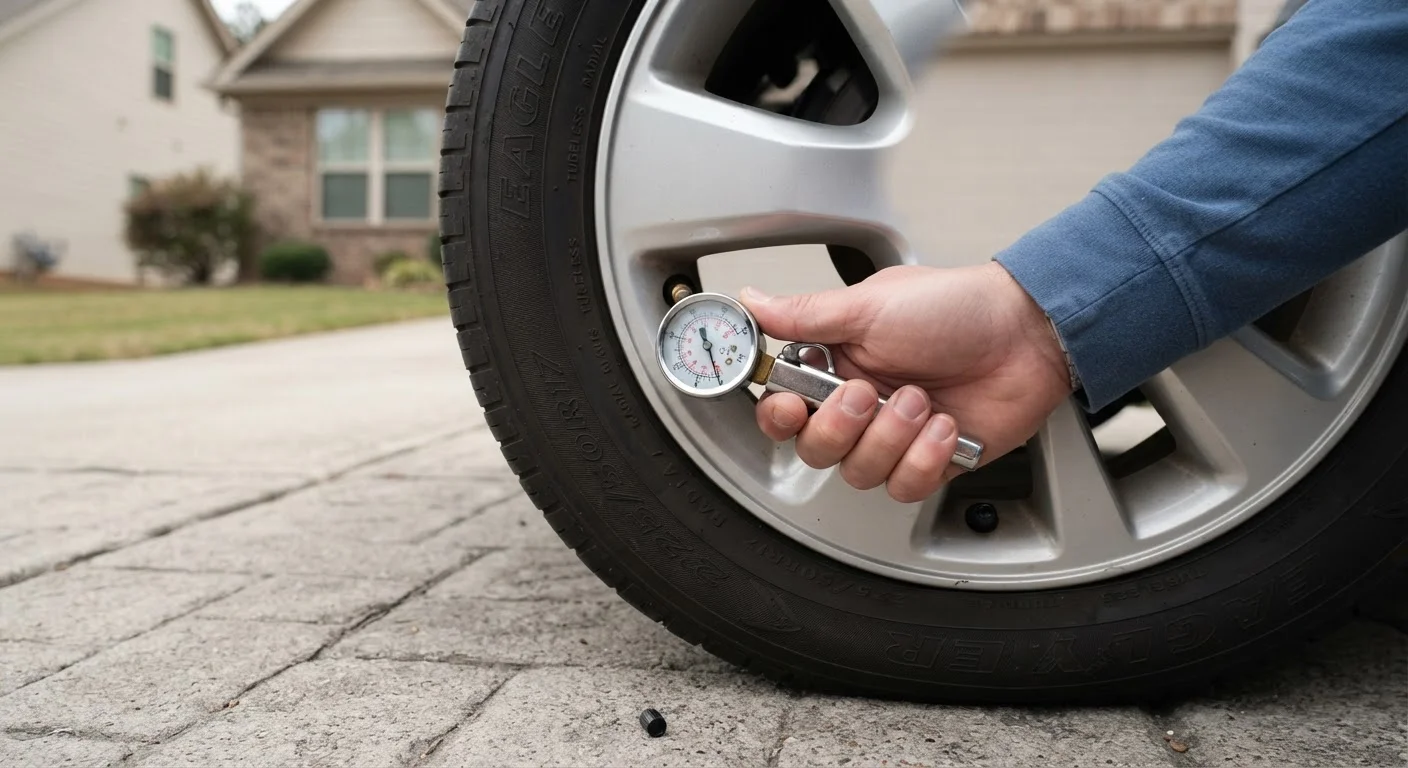
The correct tire pressure for your vehicle is listed on a sticker inside the driver's door jamb (or sometimes in the fuel door or glove box), and it typically differs from the number molded into the tire. Inflating to the sidewall maximum can make tires overly stiff, reduce traction, and cause uneven wear across the center of the tread. Under-inflation causes its own problems - increased rolling resistance, heat buildup, and premature wear on the outer edges. Check pressure when tires are cold (before driving or after sitting for at least three hours), and use the vehicle specification, not the tire's maximum.
Myth
If the car is running fine, you can skip scheduled maintenance.
Fact
Many maintenance items address wear that has no noticeable symptoms until a serious and expensive failure occurs.
Coolant, transmission fluid, brake fluid, and timing belts are classic examples. They don't announce their deterioration with dashboard lights or rough driving feel - they degrade quietly until something breaks. A timing belt failure, for instance, can cause catastrophic engine damage in interference-type engines, turning a $200-$500 scheduled replacement into a repair that may total the vehicle. "It seems fine" is not a diagnostic tool. Scheduled maintenance intervals exist because engineers studied failure rates and set replacement points before problems become likely - not after they've already started.
The Real Cost of Acting on Bad Information
None of these myths are harmless. Changing oil more often than necessary adds up to hundreds of dollars over a vehicle's life. Using premium fuel in an engine that doesn't require it costs more at every fill-up with no mechanical return. And skipping real maintenance - like transmission fluid or coolant flushes - because the car "seems fine" can result in repairs that dwarf what the service would have cost.
$1,200+
Average annual vehicle repair cost per household
According to AAA research, American drivers pay an average of over $1,200 per year in unexpected vehicle repair and maintenance costs.
~35%
Drivers who check tire pressure monthly
National Highway Traffic Safety Administration data has consistently shown that a large share of vehicles on U.S. roads operate with at least one underinflated tire.
If budget pressure is making it tempting to defer maintenance, it helps to know which services are truly critical versus which can wait. Keeping up with car maintenance when money is tight walks through exactly that. And for a clear-eyed look at what actually happens mechanically when upkeep slips, what happens when you ignore routine car maintenance is worth reading before your next service is due.
Staying current on fluids is another area where myths persist. Car fluids every driver should know about covers what each one does and the warning signs that something needs attention.