What These Two Styles Actually Mean
Driving behavior isn't simply fast or slow, careful or reckless. It exists on a spectrum, and most drivers fall somewhere in the middle - closer to one end or the other depending on stress, time pressure, and road conditions.
Defensive driving means operating a vehicle with active awareness of potential hazards, maintaining enough space and speed to respond to them, and prioritizing predictability for other drivers. It doesn't mean driving slowly or timidly. It means reading the road ahead and giving yourself options.
Aggressive driving covers a range of behaviors - speeding, tailgating, frequent or abrupt lane changes, running yellow lights, and failing to yield. The National Highway Traffic Safety Administration (NHTSA) identifies aggressive driving as a factor in a substantial number of serious crashes. Crucially, most aggressive drivers don't see themselves as reckless; they see themselves as efficient.
That self-perception gap is where the real danger lives.
| Defensive Driving | Aggressive Driving | |
|---|---|---|
| Following Distance | 3+ seconds minimum | Often under 1 second |
| Speed Approach | Matched to conditions | Maximized for travel time |
| Lane Changes | Planned, signaled early | Reactive, gap-seeking |
| Hazard Response | Anticipated proactively | Handled reactively |
| Crash Risk | Lower across conditions | Higher, especially at speed |
| Effect on Others | Predictable, reduces friction | Unpredictable, increases tension |
Where the Differences Show Up in Practice
Following distance is one of the clearest separators. Defensive drivers maintain at least a three-second gap to the vehicle ahead - more in poor conditions. Aggressive drivers routinely close that gap to under a second, eliminating reaction time entirely. At 65 mph, a car travels roughly 95 feet per second. Three seconds of following distance buys about 285 feet. One second buys less than 100 feet - barely enough to register a brake light, let alone stop.
Speed management also diverges sharply. Posted speed limits reflect design standards for the road under normal conditions. Driving above them - or at the limit during rain, fog, or heavy traffic - reduces the time available to react. For more on how weather changes what safe speed looks like, see the unified guide to driving in low-visibility conditions.
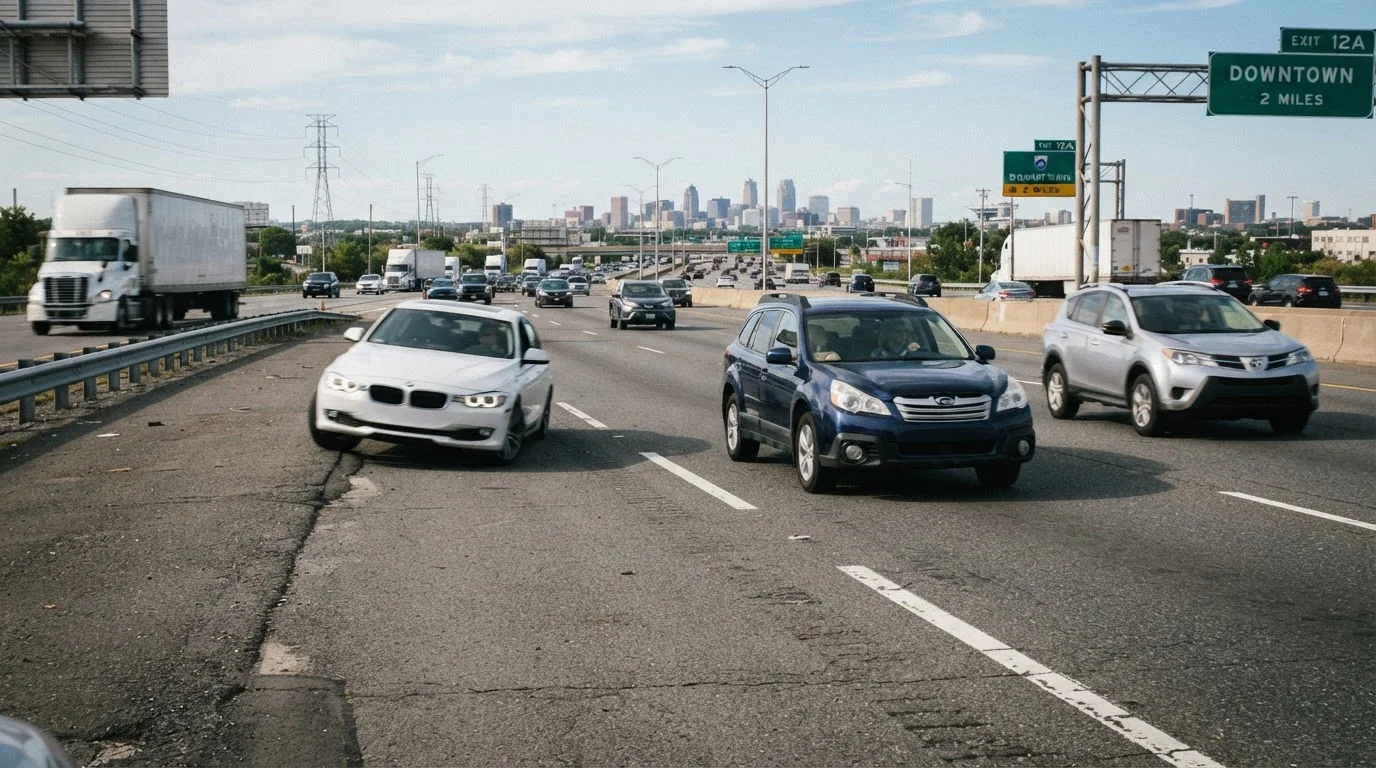
Decision-making under pressure reveals the deeper difference. Defensive drivers plan lane changes early and signal in advance. Aggressive drivers react to gaps rather than creating them deliberately. On a busy highway, that distinction plays out dozens of times per trip. Our guide on confident merging habits breaks down what that deliberate approach actually looks like.
How Passenger Dynamics and Context Shift the Equation
Driving style rarely operates in a vacuum. Social pressure - passengers encouraging faster driving, peer norms about assertiveness, running late - nudges drivers toward the aggressive end of the spectrum even when they know better. Research consistently shows that crash risk rises when passengers are present, particularly for younger drivers. The social dynamics of driving with passengers article explores those patterns in detail.
Road environment matters too. The same aggressive habits that feel manageable on an open rural highway become far more dangerous in dense city traffic, where pedestrians, cyclists, and shorter sight lines multiply the consequences of every error. And after dark, the stakes climb further - see why night driving carries higher statistical risk for the factors involved.
The point isn't that context excuses aggressive behavior - it's that context amplifies its cost.
Building Defensive Habits Without Becoming a Passive Driver
One reason drivers resist the defensive label is the false association with slow or indecisive driving. Good defensive technique is actually more demanding than aggressive driving - it requires sustained attention rather than reactive bursts of speed or braking.
A few practical anchors:
- Scan ahead, not just in front. Look 12-15 seconds down the road to identify merging traffic, brake lights, and lane changes before they reach you.
- Communicate clearly. Signal early. Brake progressively. Make your intentions readable to drivers around you.
- Manage your margin. Space to the front, awareness of sides and rear. Constantly adjust based on speed and conditions.
- Understand posted signs correctly. Not all speed signs carry the same legal weight - what speed limit signs are actually telling you explains the difference between regulatory and advisory limits.
Defensive driving isn't about being the slowest car on the road. It's about keeping enough margin that when something unexpected happens - and eventually it will - you have room to respond rather than react.