Two Types of Speed Signs, Two Different Rules
Most drivers treat every speed number on a sign as the same kind of instruction: go this fast or face a ticket. That assumption is understandable, but it's not always accurate. American roads use two distinct categories of speed signs, and they carry different legal weight.
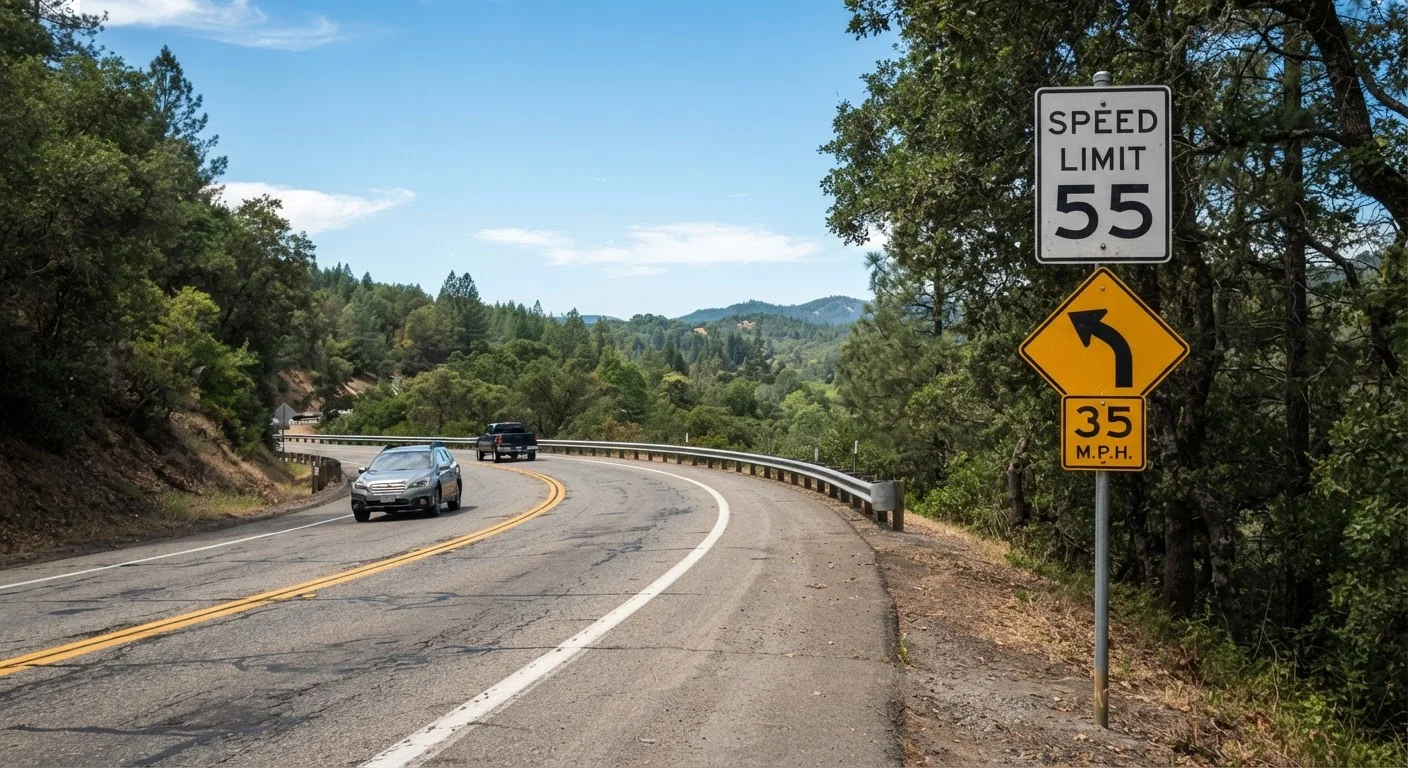
Regulatory speed limit signs are the familiar white rectangular signs with black text. When you see one, that number is the law. Exceeding it is a moving violation, regardless of road conditions or traffic flow.
Advisory speed signs are yellow and diamond-shaped - the same color and shape used for general warning signs. They appear before curves, ramps, intersections, or other features where the road geometry changes. The number on a yellow advisory sign is not a legal speed limit. It is a recommended safe speed for that specific condition, established through engineering studies of how vehicles handle that section of road.
Driving faster than an advisory speed isn't automatically a ticketable offense in the same way exceeding a posted limit is - but it can absolutely be used as evidence of reckless or negligent driving if you lose control. And in wet, icy, or low-visibility conditions, the advisory figure may actually be too fast for safety anyway. For a broader look at how road environments affect risk, see our comparison of city and rural driving hazards.
How Speed Limits Are Set - and What Laws Govern Them
Regulatory speed limits are established through state law and municipal ordinance. Each state sets a statutory maximum - the default limit that applies when no sign is posted - and local governments can set lower limits on roads within their jurisdiction. The federal government no longer mandates a national maximum speed limit; that authority returned to the states in 1995.
Engineers set specific posted limits using a method based on the 85th percentile speed - the speed at or below which 85 percent of vehicles travel under free-flow conditions. The reasoning is that a limit close to the natural speed of traffic produces more consistent behavior and fewer dangerous speed differentials between vehicles. However, this method is applied differently across jurisdictions, and political and community pressure also influence posted limits, particularly in residential areas and school zones.
Variable speed limits, which change based on traffic, weather, or time of day, are an increasingly common third type. Electronic signs displaying variable limits have the same legal force as static regulatory signs in states that authorize them.
Speed-related laws are more nuanced than many drivers realize. Many states also have basic speed laws, which require drivers to travel at a speed that is reasonable and prudent for conditions - meaning you can be cited for driving the posted limit if conditions (fog, ice, construction zones) make that speed unsafe. This is distinct from the regulatory limit itself. The road rules Americans most commonly misunderstand covers several other legal distinctions that trip up experienced drivers.
Applying This Knowledge Behind the Wheel
Understanding sign types helps you make better real-time decisions. Here's what to keep in mind:
- Yellow advisory signs are data, not decoration. The speed listed was calculated for ideal dry-pavement conditions. In rain or snow, treat the advisory number as a ceiling, not a target.
- Regulatory limits are minimums for legal compliance, not maximums for safety. A clear highway may feel easy at 75 mph, but a sudden hazard - debris, a stopped vehicle, an unexpected merge - changes the math instantly. Following distance at highway speeds is directly tied to how quickly you can stop, and speed multiplies the stopping distance required.
- School zone and work zone limits carry enhanced penalties in most states, including doubled fines and, in some cases, mandatory license suspension. These limits are regulatory, not advisory.
- Speed differentials are a real hazard. Driving significantly slower than surrounding traffic can be as dangerous as speeding in certain contexts, particularly on multi-lane highways. Most states have minimum speed laws for freeways for this reason.
Pairing awareness of speed signs with a defensive driving mindset - adjusting speed to conditions rather than simply matching a number - is what separates drivers who avoid close calls from those who experience them regularly.