Why Winter Prep Matters More Than You Might Think
Most car problems don't announce themselves on a convenient Tuesday afternoon in mild weather. They show up on a frozen Wednesday morning when you're already running late. Cold temperatures stress nearly every major system in your vehicle - the battery, tires, fluids, and brakes all perform differently at 20°F than they do at 70°F.
The good news is that most winter prep takes less than an hour and doesn't require any special mechanical knowledge. This checklist walks you through the checks that matter most, flags which ones you can do yourself, and tells you clearly when something needs a professional's attention. For a broader look at what to review on your vehicle each year, see the Annual Car Ownership Audit.
Work through the checklist below before the first hard freeze in your area. If you're not sure when that typically arrives, check historical weather data for your region - some parts of the country see freezing temps as early as October.
What to Check and How to Check It
The five categories below cover the systems most vulnerable to cold weather. Each check is noted with a priority level: must items are non-negotiable for safe winter driving, should items are strongly recommended, and nice-to-have items add extra margin if your situation calls for it.
Battery & Electrical
Tires
Fluids
Brakes & Wipers
Emergency Kit
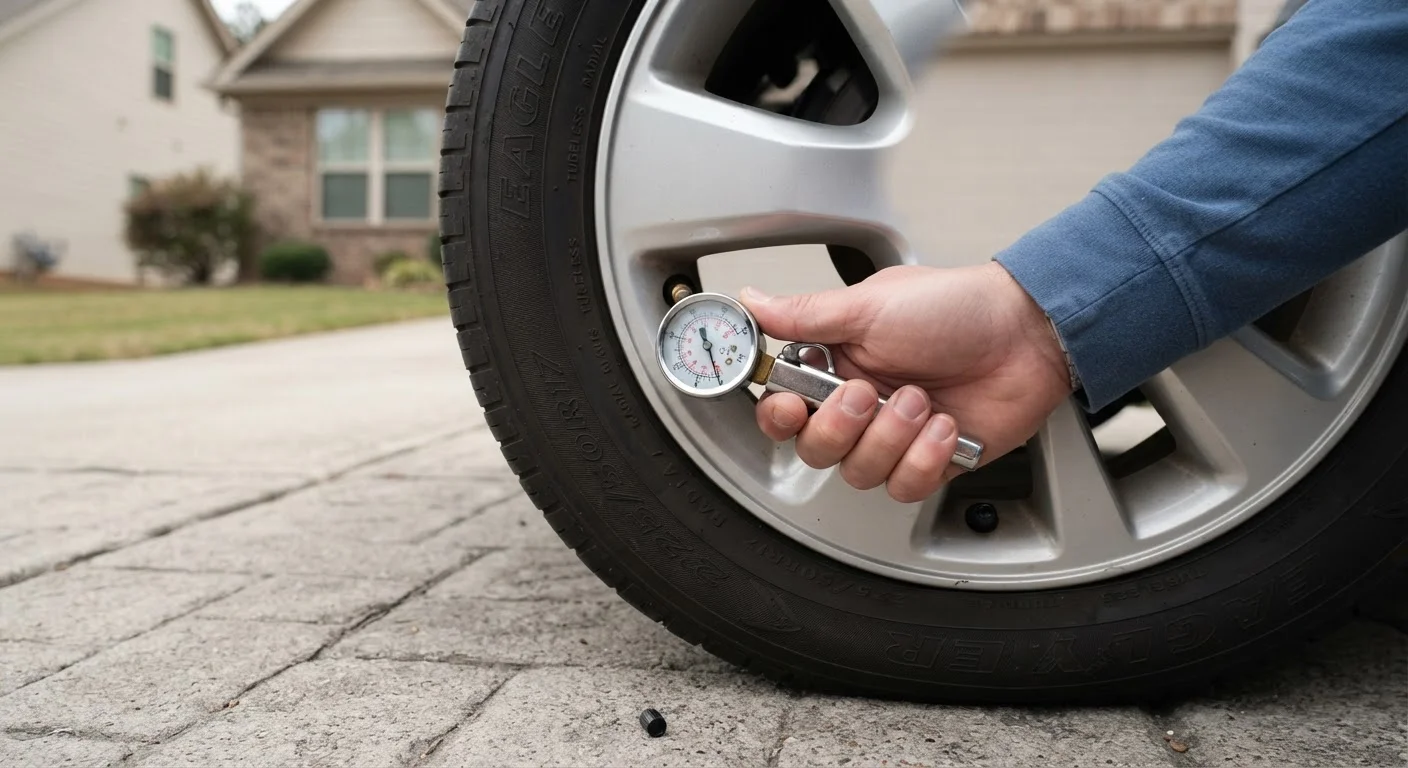
For more detail on how to check your tire pressure accurately - including how to read your door jamb sticker and use a gauge correctly - see Checking Your Tire Pressure the Right Way. And if you want a fuller picture of all the fluids your car depends on, Car Fluids Every Driver Should Know About covers what each one does and what warning signs to watch for.
Tools and Supplies You'll Need
Most of the items below are inexpensive and widely available. Many auto parts stores will also test your battery and check your tire pressure at no charge - worth asking about before you buy anything.
Battery tester / CCA tester
Measures your battery's remaining capacity and cold-cranking amps to determine whether it will hold up through winter.
Tire pressure gauge
Checks each tire's PSI so you can inflate accurately when temperatures cause pressure to drop.
Penny (tread depth check)
A quick, no-cost way to gauge whether your tire tread meets the minimum safe depth.
Coolant test strips
Measures antifreeze concentration to confirm freeze protection is adequate for your climate.
Ice scraper and snow brush
Clears snow and ice from windows, mirrors, and roof before driving - required for safe visibility.
Jumper cables or jump starter pack
Lets you restart a dead battery in cold weather without waiting for roadside assistance.
Once You're on the Road This Winter
Completing this checklist puts your vehicle in a much better position heading into cold weather, but maintenance is only part of the picture. How you drive matters just as much as how your car is prepared. Stopping distances increase dramatically on snow and ice, and many drivers underestimate how much adjustment is required.
If you want to build confidence behind the wheel in tough conditions, Driving in Rain, Snow, and Fog covers braking technique, speed management, and positioning for exactly the conditions you're likely to encounter. You can also find broader safety guidance through our Driving & Safety hub.
Finally, even a well-maintained car can have a rough morning in extreme cold. A failing battery often shows warning signs before it leaves you stranded - knowing what to look for means you can act before it becomes an emergency. Keep your emergency kit stocked, stay aware of forecasts, and give yourself a few extra minutes on days when conditions are bad.