Why Batteries Fail Quietly - Until They Don't
A dead battery is one of the most common reasons drivers end up stranded. What makes it frustrating is that the warning signs are almost always there ahead of time - they're just easy to dismiss or overlook. Understanding what to watch for gives you the chance to act before you're stuck in a parking lot waiting for a jump.
Most standard lead-acid car batteries last somewhere between three and five years. After that, their ability to hold a charge degrades, and cold weather accelerates the process. A battery that struggled through last winter may not survive the next one. If yours is approaching that age range, paying attention to the signs below becomes even more important. For a broader look at how skipped maintenance leads to bigger problems, see what happens when you ignore routine car maintenance.
The engine cranks slowly when you start the car
When you turn the key or press the start button, the battery sends a burst of power to the starter motor. If that power is running low, the engine turns over more slowly than usual - sometimes described as a labored or sluggish sound before the engine catches. This is often the first noticeable symptom and shouldn't be written off as "just how it sounds." If it happens once, it may happen again at a far less convenient moment.
A sluggish crank is the battery's earliest distress signal - don't ignore it.
Electrical components are dimming or behaving oddly
Headlights that seem dimmer than usual, interior lights that flicker, or a radio that resets unexpectedly can all point to an inconsistent power supply. These quirks are easy to chalk up to a random glitch, but when they cluster together - or appear shortly after a slow crank - they often share the same root cause. The battery may be struggling to maintain steady voltage, which ripples through every electrical system in the vehicle.
Flickering lights and random electrical glitches often share one root cause: the battery.
You notice corrosion on the battery terminals
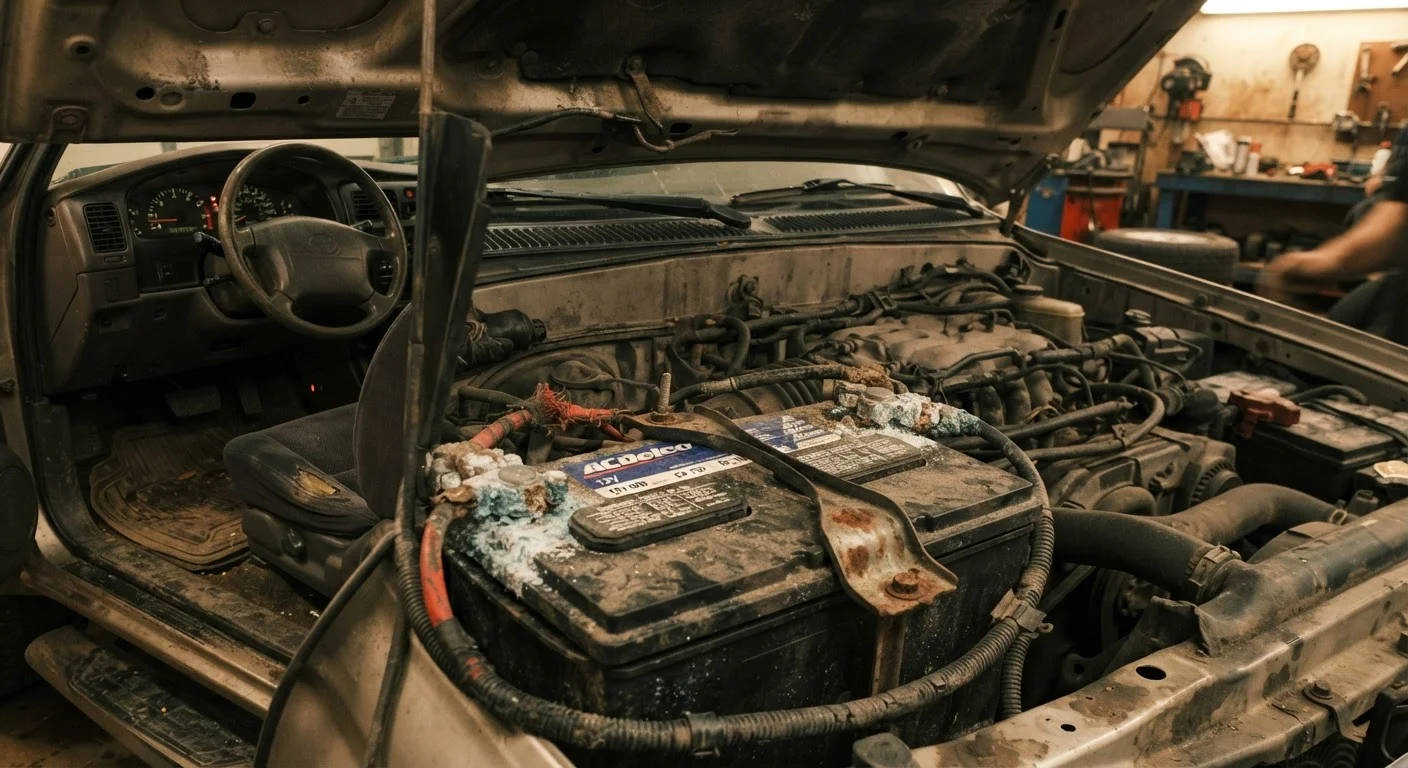
Pop the hood and look at the two posts where the battery cables connect. A white, blue, or greenish crusty buildup around those terminals is a sign of corrosion. Some minor buildup is common over time, but heavy corrosion can interfere with the connection between the battery and the rest of the car's electrical system. In some cases, cleaning the terminals resolves intermittent issues. In others, it reveals that the battery itself is leaking and needs to be replaced.
Heavy terminal corrosion can disrupt your car's electrical connection and signal a leaking battery.
The battery case looks swollen or misshapen
A healthy battery has flat, rectangular sides. If the case looks bloated or warped, that's typically caused by excessive heat expanding the internal components. This can happen in hot climates or from prolonged exposure to engine heat. A swollen battery is not just a cosmetic issue - it's a sign that the battery's internal structure has been compromised and it may fail without further warning. This is one you can often spot with a quick visual check when checking other fluids.
A swollen battery case means internal damage has already occurred - replacement is necessary.
The battery warning light appears on your dashboard
Most vehicles have a battery-shaped warning light that illuminates when the charging system detects a problem. This light doesn't always mean the battery itself has failed - it can also indicate an issue with the alternator or voltage regulator, both of which affect how the battery charges while you drive. Either way, this light warrants prompt attention. Driving with a charging system problem can drain even a good battery and leave you stranded within miles.
The battery warning light signals a charging system problem that needs attention soon, not later.
Your battery is three or more years old
Age alone is a legitimate warning sign. Even a battery that starts your car reliably today can lose significant capacity in a short period as it crosses the three-to-five year mark. If you're unsure how old yours is, check the date code stamped on the battery label - it's typically a letter and number indicating the month and year of manufacture. An aging battery under stress - from cold weather, frequent short trips, or high electrical loads - can decline faster than the average timeline suggests.
After three years, age alone is enough reason to have your battery professionally tested.
What to Do Once You Spot the Signs
If any of these symptoms sound familiar, the next step is getting the battery tested - not just a voltage check with a basic meter, but a proper load test that shows how the battery performs under the actual demands of starting your engine. Many auto parts retailers offer this at no charge and can give you a clear picture of where your battery stands.
If a replacement is needed, have the charging system tested at the same time. A failing alternator can drain a new battery quickly, leaving you right back where you started. Battery issues can also trigger warning lights on your dashboard - learn what those warning lights mean so you're not guessing when one comes on. If winter is around the corner, it's also worth reading up on getting your car ready for winter driving, since cold temperatures are one of the fastest ways to expose an already-weakened battery.
Get a Free Battery Test Before Trouble Starts
You don't need a mechanic's appointment to find out where your battery stands. Many auto parts retailers offer free battery and charging system tests using professional-grade equipment - no purchase required. It takes about ten minutes and gives you concrete information rather than guesswork. If your battery is borderline, you'll know before it leaves you stranded.