What Makes Container Gardening Different
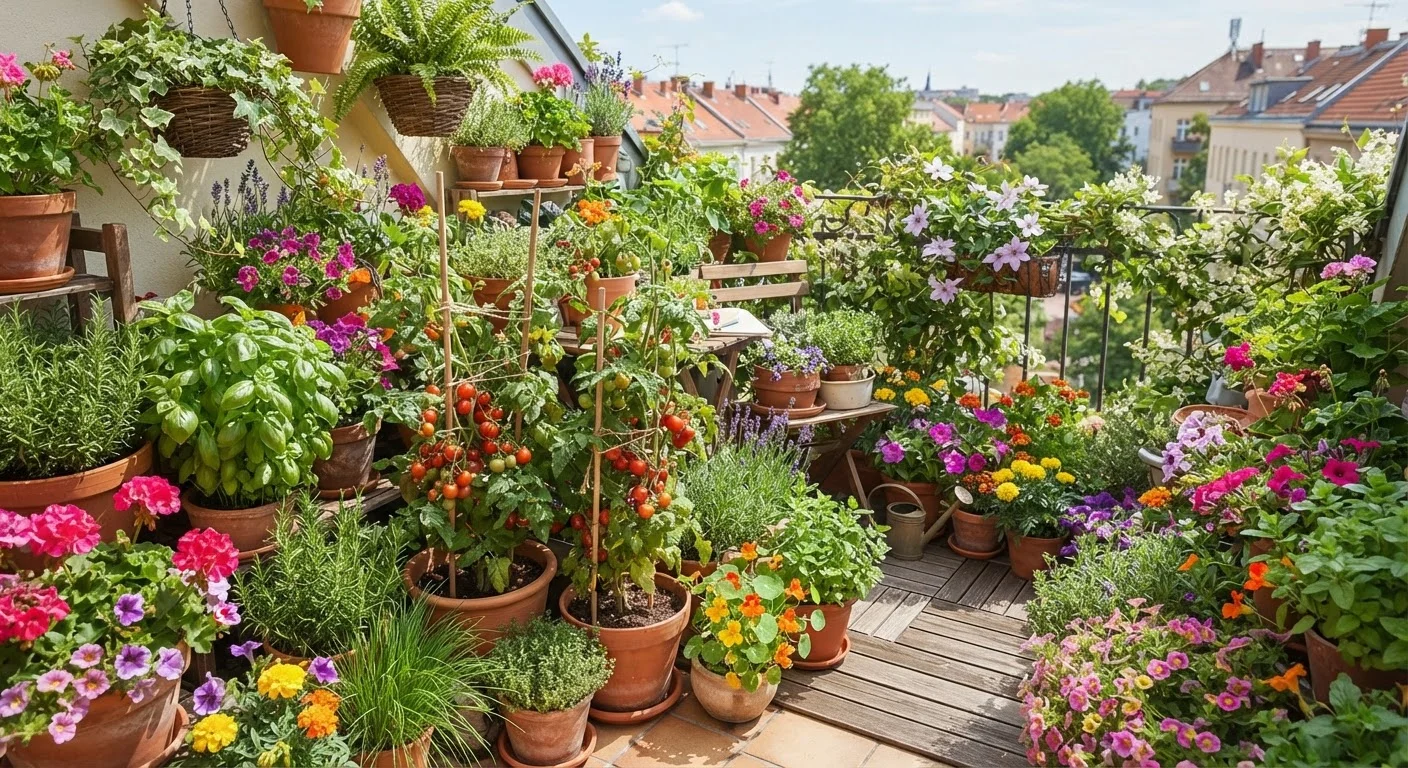
Container gardening means growing plants in pots, planters, window boxes, or any vessel rather than directly in the ground. The fundamentals of plant care don't change, but the conditions inside a container are meaningfully different from open soil - and understanding those differences determines whether your containers thrive or struggle.
In a container, roots can't spread to find water or nutrients. The plant is entirely dependent on what you put in the pot and how often you replenish it. That's the central trade-off: you gain control, but you also take on responsibility. For a fuller picture of how plant placement affects success, see our article on balancing aesthetics with what plants actually need.
The Advantages of Growing in Containers
Container gardening offers several genuine benefits that in-ground planting simply cannot match.
Grow anywhere with suitable light
Balconies, patios, rooftops, and driveways become viable growing spaces. If you're renting or lack a yard, containers may be your only realistic option.
Full control over soil quality
You fill each pot with a mix suited to the plant, bypassing clay-heavy, sandy, or contaminated native soil entirely. This is a significant advantage in urban areas.
Mobility lets you follow light or avoid frost
Containers can be moved to chase seasonal sun or brought indoors before a cold snap, extending your growing season and protecting investments in plants.
Easier pest and disease management
Isolating a diseased plant is straightforward - simply move the container away from others. Soil-borne disease cycles are also easier to break by replacing potting mix each season.
Lower startup cost and commitment
A few pots require far less initial effort and expense than building raised beds or tilling in-ground plots, making containers a sensible starting point for new gardeners.
If you're starting your first food garden, containers are a low-commitment entry point. Our guide to starting a vegetable garden from scratch covers how containers fit alongside other beginner-friendly approaches.
The Disadvantages You Should Plan For
Containers also come with real limitations. Knowing them upfront helps you avoid the most common failure points.
Frequent watering is non-negotiable
Containers dry out much faster than in-ground soil, often requiring daily watering in warm weather. Missing even one or two days can stress or kill plants during a heat spell.
Limited root volume restricts plant size
Even large containers constrain root systems, which caps the size and vigor of many plants. Large shrubs, trees, and sprawling vegetables rarely perform as well as they would in open ground.
Nutrients deplete rapidly
Regular watering leaches fertilizer out of the potting mix quickly, requiring consistent supplemental feeding throughout the growing season - an ongoing cost in time and money.
Containers overheat in intense sun
Dark-colored pots in full sun can heat root zones to damaging temperatures. This is particularly harmful for cool-season crops and shallow-rooted plants.
Weight and space limitations on structures
Large, water-saturated containers are heavy, and balconies or decks have load limits. Always verify structural weight capacity before placing multiple large planters on elevated surfaces.
Watering Demands Deserve Honest Planning
Container gardening demands more from gardeners than in-ground planting in one key area: watering frequency. A pot in direct summer sun can dry out completely within 24 hours. If consistent daily attention isn't feasible, consider self-watering inserts, drip irrigation, or clustering containers to slow moisture loss.
Container gardening demands more from gardeners than in-ground planting in one key area: watering frequency. A pot in direct summer sun can dry out completely within 24 hours. If consistent daily attention isn't feasible, consider self-watering inserts, drip irrigation, or clustering containers to slow moisture loss.
What Actually Thrives in Containers
Not every plant is a good candidate, but the list of what works well is long and genuinely useful.
Excellent choices: Herbs (basil, parsley, chives, mint - keep mint contained, as it spreads aggressively in open ground), salad greens, radishes, cherry tomatoes, peppers, dwarf beans, strawberries, pansies, petunias, geraniums, and succulents. Compact or dwarf cultivars of vegetables are specifically bred for limited root space and are worth seeking out.
Poor choices: Large indeterminate tomatoes in small pots, corn, sprawling squash, most fruit trees (unless grown in very large half-barrel planters as dwarf grafted varieties), and deep-rooted perennials that need to establish extensive root systems. Companion planting principles still apply in containers - pairing herbs with vegetables can reduce pest pressure even in a pot.
For a side-by-side look at how containers compare to other growing methods, our article on raised beds vs. in-ground planting breaks down the real trade-offs.
Getting the Basics Right
Drainage first. Every container needs drainage holes. Sitting in standing water is the fastest way to kill most container plants through root rot. Elevate pots slightly if water pools beneath them on hard surfaces.
Use potting mix, not garden soil. Garden soil compacts in containers, cutting off oxygen to roots. A quality potting mix is formulated to stay loose and drain well. Adding finished compost to your potting mix improves nutrient content and moisture retention without sacrificing drainage.
Size matters. A pot that's too small restricts roots and dries out rapidly. As a general rule, use the largest container that's practical for the space. Most vegetables need at least a 5-gallon pot; tomatoes do better in 10-gallon or larger.
Feed regularly. Nutrients leach out with frequent watering. A slow-release fertilizer worked into the mix at planting, supplemented with liquid feeding every few weeks during active growth, keeps plants performing well through the season.
At the end of the season, check our fall garden cleanup guide for advice on preparing containers for winter or transitioning them indoors.