
What Companion Planting Actually Does
Companion planting is the practice of growing two or more plant species in close proximity so that at least one - and ideally both - benefits from the arrangement. The benefits can take several forms: one plant may deter pests that trouble the other, improve soil nutrients, attract pollinators, or even provide physical shelter from wind or intense sun.
It's worth being clear about what the science does and doesn't say. Some pairings have solid research support; others are rooted in generations of gardening tradition. Both types are worth knowing, but it helps to distinguish between the two so you can set realistic expectations in your own garden.
If you're laying out a new plot, pairing companion knowledge with sound garden planning principles can make the whole season run more smoothly from the start.
| Concept origin | Indigenous and traditional agricultural practices worldwide |
| Most documented system | The Three Sisters (corn, beans, squash) |
| Most versatile pest deterrent | French marigolds (Tagetes patula) |
| Herb to isolate | Mint - plant in buried containers to control spread |
| Avoid near most vegetables | Fennel - releases growth-inhibiting root compounds |
| Legumes benefit neighbors by | Fixing atmospheric nitrogen into usable soil nutrients |
Classic Pairings That Work - and Why
Some of the most reliable companion pairings have been used for centuries and hold up under modern observation.
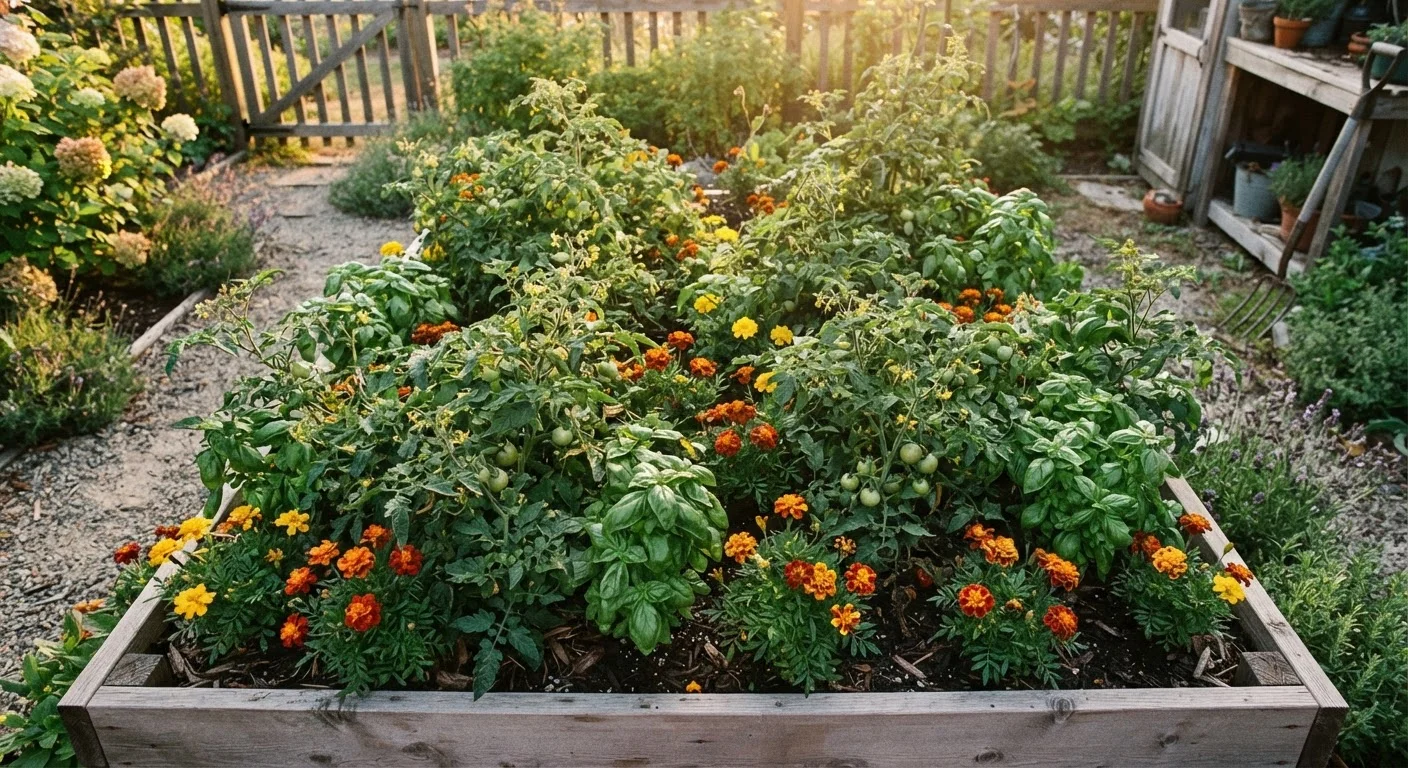
- Tomatoes and Basil: Widely practiced and beloved by gardeners, this pairing is thought to repel aphids and thrips. Basil also attracts bees, which benefits tomato pollination. Definitive scientific proof remains limited, but many gardeners report positive results.
- The Three Sisters (Corn, Beans, Squash): Developed by Indigenous farmers across North America, this trio is one of the most documented companion systems. Corn provides a trellis for beans; beans fix nitrogen in the soil, feeding both corn and squash; squash leaves shade the ground, retaining moisture and discouraging weeds.
- Carrots and Onions: Carrot flies dislike the scent of onions, and onion flies are reportedly deterred by carrots. Planting them in alternating rows is a traditional approach to reducing both pests.
- Tomatoes and Marigolds: French marigolds (Tagetes patula) are well-studied as a companion. Their roots release a compound that suppresses certain soil nematodes, and their flowers attract beneficial insects that prey on aphids.
- Lettuce and Tall Plants: Lettuce is a cool-season crop that bolts (goes to seed) in heat. Planting it in the partial shade of taller plants like tomatoes or pole beans extends the harvest by keeping soil and air temperatures lower around the leaves.
For gardeners just getting started, our guide on starting a vegetable garden from scratch covers how to choose crops and build soil before adding companion strategies.
Combinations to Avoid
Just as some plants help each other, others compete or suppress one another's growth. Keeping these pairs apart can save you from puzzling yield problems.
Allelopathy
A biological process in which one plant releases chemical compounds - through its roots, leaves, or decomposing matter - that inhibit or influence the growth of nearby plants. Fennel is a common example in vegetable gardens.
Nitrogen fixation
A process carried out by certain bacteria living in the root nodules of legumes (beans, peas, clover) that converts atmospheric nitrogen into a form usable by plants. This enriches surrounding soil for neighboring crops.
Beneficial insects
Insects that help gardeners by pollinating flowers or preying on pest species. Ladybugs, parasitic wasps, lacewings, and hoverflies are common examples that companion plants can attract.
Bolting
When a plant prematurely shifts from leaf or root production to flowering and seed production - often triggered by heat or long days. Bolted lettuce or spinach becomes bitter and is no longer good for harvest.
Nematodes
Microscopic roundworms that live in soil. Some species are beneficial, helping break down organic matter, while others - called root-knot nematodes - damage plant roots and reduce crop yields.
Alliums
A plant family that includes onions, garlic, leeks, shallots, and chives. Known for their pungent sulfur compounds, alliums can deter certain pests but may inhibit the growth of neighboring legumes.
- Fennel and Almost Everything: Fennel releases compounds from its roots that inhibit germination and growth in many common vegetables, including tomatoes, peppers, and beans. Grow fennel in an isolated container or a dedicated corner of the garden.
- Onions and Beans or Peas: Alliums (the family that includes onions, garlic, and leeks) are known to stunt the growth of legumes. Keep them in separate beds.
- Brassicas Together in High Density: While brassicas (cabbage, broccoli, kale, Brussels sprouts) don't directly harm each other, planting them too closely concentrates the pests that target them - particularly cabbage worms and aphids - creating a feast situation for insects.
- Tomatoes and Brassicas: Both are heavy feeders that compete aggressively for the same nutrients, particularly calcium. Pairing them often leads to one or both underperforming.
Good soil health supports all your companion pairings. If your beds need a boost, composting at home is one of the most accessible ways to improve soil structure and fertility over time.
Herbs as Garden Allies
Herbs are some of the most versatile companions in the vegetable garden. Many produce aromatic oils that confuse or deter insect pests, and their flowers are excellent at drawing beneficial insects.
- Dill and Parsley attract parasitic wasps and hoverflies - both of which prey on common garden pests like aphids and caterpillars. Plant them at the edges of vegetable beds where they can bloom freely.
- Borage is a traditional companion for strawberries and squash. It's thought to repel tomato hornworm and attracts pollinators with its bright blue flowers.
- Mint is effective at deterring aphids and flea beetles, but it spreads aggressively. Grow mint in a buried container to keep its roots contained while still placing it near vulnerable crops.
- Chives planted among roses or at the base of fruit trees are used to deter black spot fungus and aphids - a low-effort pairing that does double duty in a mixed garden.
If you're working with limited ground space, companion planting adapts well to pots and planters. See how to make it work in our guide to container gardening.