Choosing the Right Spot
Before you buy a single seed, walk your yard and observe it honestly. The single biggest factor in vegetable garden success is sunlight. Most food crops - tomatoes, peppers, beans, squash - need at least six hours of direct sun each day. Leafy greens like lettuce and spinach can manage with four to five hours, but they are the exception.
Beyond sun, look for a spot with:
- Level or gently sloped ground so water doesn't pool or run off too fast
- Proximity to a water source - hauling hoses across a yard gets old fast
- Some protection from strong wind, which can dry out soil and damage young plants
If your yard's best sun happens to fall in a tight or awkward space, don't rule out containers or a small raised bed. Our overview of container gardening explains how to make even a patio or balcony productive.
Understanding and Building Your Soil
Soil is the foundation everything else rests on. Healthy garden soil drains well, holds enough moisture for roots to access, and contains the nutrients and microbial life that feed your plants.
Loam
A balanced soil type that contains a mix of sand, silt, and clay - it drains well without drying out too fast, and supports healthy root growth.
Organic matter
Decomposed plant or animal material - like compost or aged manure - that improves soil structure, adds nutrients, and supports beneficial soil life.
Frost date
The average date of the last spring freeze (or first fall freeze) in your area - used to time planting so cold-sensitive crops aren't damaged.
Hardiness Zone
A USDA geographic classification based on average minimum winter temperatures, used as a general guide for what plants can survive in a given region.
Mulch
A layer of material - straw, shredded leaves, wood chips - spread over soil to retain moisture, suppress weeds, and regulate temperature.
Before planting anything, dig down about eight inches and take stock of what you're working with. Sandy soil drains too fast; dense clay holds water too long and compacts easily. The goal is loam - a balanced mix with good structure.
The most reliable way to improve almost any native soil is to work in organic matter: compost, aged manure, or leaf mold. Spread two to four inches across the surface and turn it into the top foot of soil. This improves drainage in clay, increases water retention in sand, and adds nutrients to both.
Making your own compost is an efficient, low-cost way to keep building soil health over time. Our guide on composting at home covers everything from choosing a bin to knowing when your compost is ready to use.
Deciding What to Grow
The temptation to plant everything is real - resist it. A focused first garden with three to five crops is far easier to manage, and you'll actually learn more from it than from a sprawling, hard-to-maintain plot.
Pick crops based on three filters:
- What you eat. Don't plant kale because it seems productive if nobody in your household likes kale.
- What your climate supports. Check your USDA Hardiness Zone and local frost dates before buying warm-season plants.
- How forgiving the crop is. Zucchini, bush beans, lettuce, radishes, and cherry tomatoes are widely considered reliable starters.
Once you have your crop list, think about how plants will interact in the garden. Some combinations actively benefit each other, while others compete. Our article on companion planting lays out which pairings work and which to avoid.
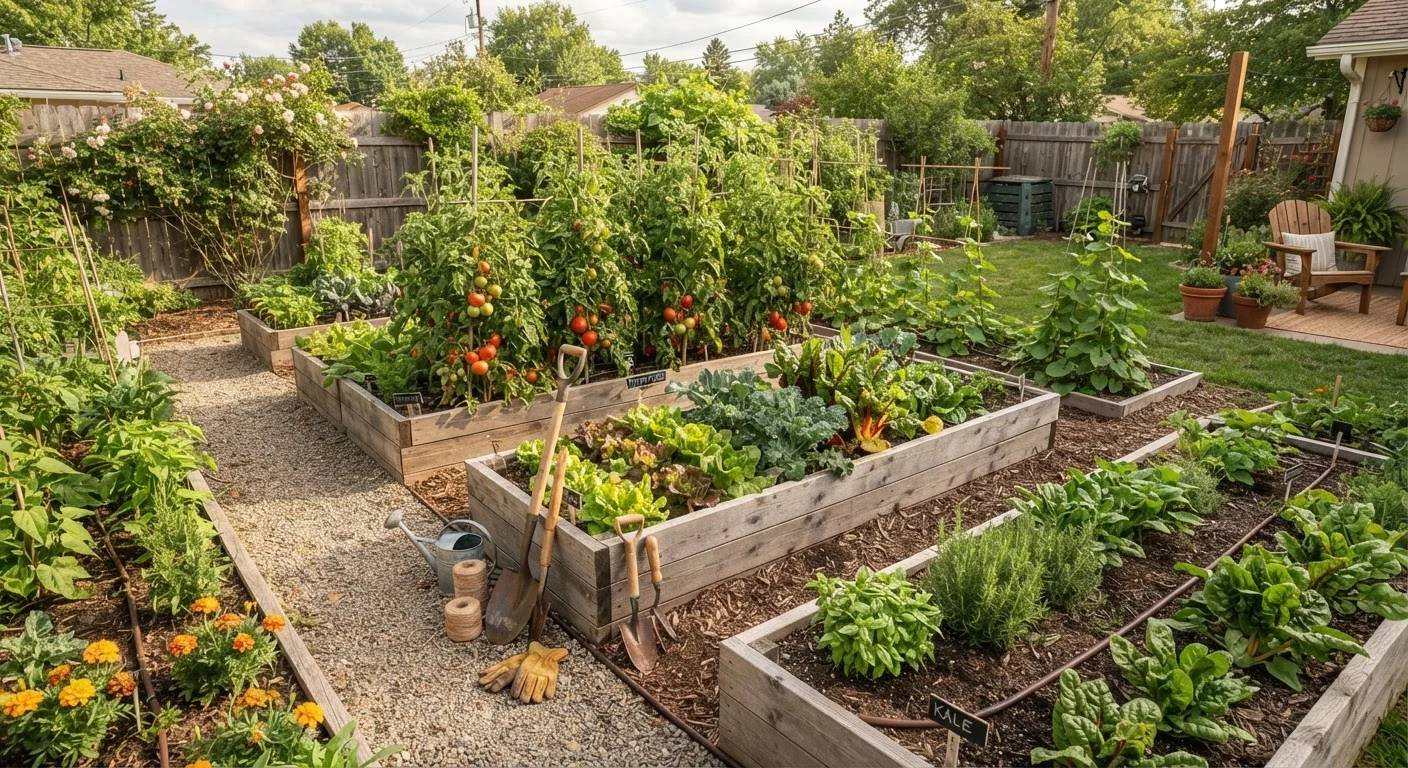
Also consider your growing format early. Raised beds give you cleaner soil control and better drainage; in-ground rows cost less and scale easily. See our comparison of raised beds vs. in-ground planting to help you decide.
Planting, Watering, and Basic Care
Once your site is prepared and your crops chosen, planting is straightforward - but a few habits make a large difference in outcomes.
Planting depth and spacing matter more than most beginners expect. Seed packets and transplant tags list these for good reason: crowded plants compete for light and airflow, and seeds buried too deep never germinate. Follow the guidance on your seed packet as a reliable starting point.
Water deeply and less frequently. Most vegetables benefit from about one inch of water per week. Rather than a light daily sprinkle, aim to water two to three times a week in dry conditions, soaking the soil to a depth of six inches. Always water at the base of plants - wet foliage invites fungal disease. A simple drip line or soaker hose does this job well and conserves water.
Mulch Right After Planting
Apply mulch immediately after transplanting or once seeds have sprouted to a few inches tall. This locks in soil moisture during the critical early weeks when plants are establishing roots. Pull mulch back slightly from direct contact with plant stems to prevent rot.
Mulching is one of the highest-return habits in vegetable gardening. A two- to three-inch layer of straw, shredded leaves, or wood chips around your plants slows evaporation, moderates soil temperature, and suppresses weeds. Apply it after planting and refresh it mid-season if it breaks down.
Common First-Year Mistakes to Avoid
Most first-year garden struggles trace back to a handful of predictable errors. Knowing them in advance saves a season of frustration.
- Planting too much, too soon. A 4×8-foot bed is a genuinely productive space. Overplanting leads to crowding, poor airflow, and a garden that feels unmanageable by midsummer.
- Skipping soil prep. Seeds and transplants placed into poor, compacted, or nutrient-depleted soil will underperform no matter how carefully you water and tend them.
- Ignoring pest and disease signs early. Check plants two to three times a week. Small problems caught early - a cluster of aphids, a yellowing leaf - are easily managed; ignored ones escalate.
- Watering inconsistently. Alternating between very wet and very dry conditions stresses plants and causes problems like blossom end rot in tomatoes and tip burn in lettuce.
- Forgetting to plan for fall. Many gardeners let the garden wind down without a plan. A bit of fall cleanup makes next spring much easier - our guide on fall garden cleanup helps you decide what to tackle and what to leave.
Every garden season teaches you something the previous one didn't. Start modest, stay observant, and build on what works.