Why Fall Cleanup Isn't One-Size-Fits-All
The instinct to tidy everything up before the first frost is understandable - but a bare, cropped garden isn't always a healthy one. Some plants genuinely benefit from being cut back in autumn, while others do better left alone until late winter or early spring. The difference often comes down to plant type, disease history, and the value each plant offers to overwintering wildlife.
Striking the right balance between a tidy yard and a garden that supports birds, beneficial insects, and healthy soil takes a little know-how. The list below walks through the most common fall garden tasks - what to tackle now, what to hold off on, and why each decision matters. For a broader view of seasonal yard care, see our month-by-month lawn care checklist.
Cut back plants with diseased foliage
If a plant showed signs of fungal disease, powdery mildew, or pest infestation during the growing season, cut it back now and dispose of the debris in the trash - not the compost bin. Leaving diseased material in place allows pathogens and pest eggs to overwinter in your beds, setting you up for the same problems next year. Peonies, bee balm, and phlox are common culprits. Cut these down to just a few inches above the soil line and discard the cuttings.
Diseased plant debris left in beds can reinfect your garden the following growing season.
Leave ornamental grasses standing until late winter
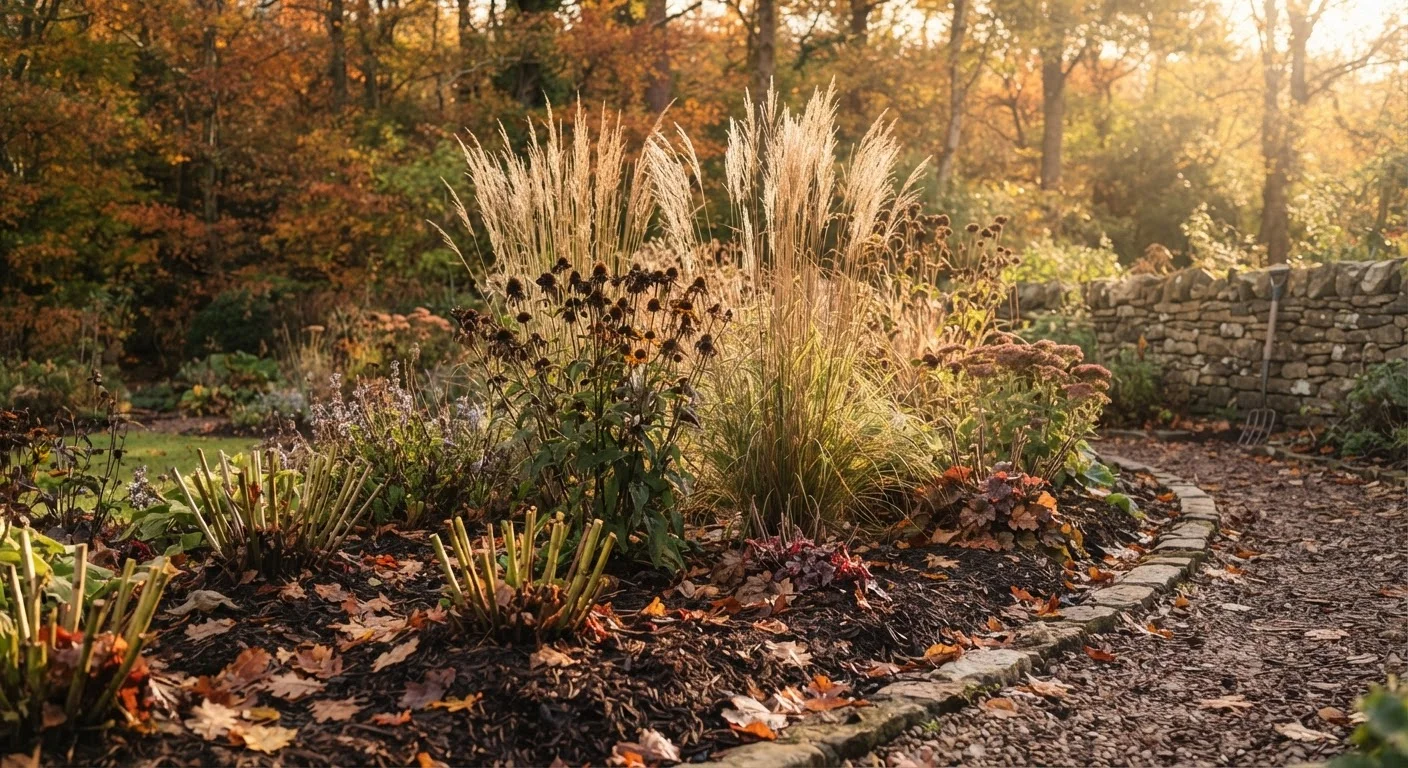
Ornamental grasses - like switchgrass, feather reed grass, and little bluestem - are among the most valuable plants to leave standing through winter. Their seed heads feed sparrows and finches, their dense clumps shelter ground-nesting insects, and their architectural form adds visual interest to an otherwise bare yard. Wait until late February or early March to cut them back, just before new growth begins emerging from the base.
Ornamental grass seed heads provide critical winter food for native birds like sparrows and finches.
Delay cutting back most perennials until spring
Many popular perennials - coneflowers (Echinacea), black-eyed Susans, sedums, and rudbeckias - are better left standing through winter. Their seed heads feed birds, and their hollow stems offer nesting sites for native bees like small carpenter bees and stem-nesting mason bees. Come spring, cut stems back to a few inches before new growth resumes. This single habit change can meaningfully support local pollinators with almost no extra effort on your part.
Hollow perennial stems left standing through winter become nesting habitat for native bees.
Remove and compost healthy annual plants
Annuals - vegetables, zinnias, marigolds, petunias - complete their life cycle in one season and won't return. Once frost kills them, pull them out promptly. If the plants are healthy (no signs of disease), they can go into your compost pile. Leaving dead annuals in beds doesn't provide meaningful wildlife benefit and can harbor slugs or other pests. This is also a good time to pull up spent vegetable plants - for more on building productive garden beds, see our guide to starting a vegetable garden.
Healthy spent annuals are compost-ready; diseased ones belong in the trash, not the pile.
Mulch garden beds after the ground cools
Applying a 2-3 inch layer of mulch in fall helps regulate soil temperature, reduce freeze-thaw heaving that can push plant roots out of the ground, and suppress early weed germination. Wait until after the ground has cooled significantly - usually after a few hard frosts - before mulching. Mulching too early can trap warmth and delay dormancy. Keep mulch a few inches away from plant crowns and woody stems to prevent rot. For a deeper look at how mulch compares to other ground coverage options, see mulch vs. ground cover.
Applying mulch after the ground cools protects roots without interfering with natural dormancy.
Cut back roses - but with restraint
In most U.S. climates, roses benefit from a light fall pruning to remove dead or crossing canes and reduce wind damage, but a heavy cutback should wait until early spring. Cutting roses back hard in fall can stimulate new tender growth that freezes and causes dieback. After a light trim, mound several inches of soil or compost over the crown of the plant for winter protection, particularly for hybrid teas and grafted varieties that are less cold-hardy.
A light fall trim protects roses from wind damage without triggering frost-vulnerable new growth.
Clear fallen leaves from lawns but use them in beds
A thick mat of unshredded leaves left on a lawn through winter can smother grass and create conditions for fungal issues. Rake or mow-mulch leaves off turf areas. However, those same leaves are a resource: shredded leaves make excellent free mulch for garden beds and compost material. Many overwintering moths and butterflies also pupate in leaf litter, so leaving a few inches of leaf mulch in naturalized areas or at the base of shrubs can support local wildlife while still keeping your lawn clear.
Shredded leaves recycled into beds feed soil microbes and cost nothing - a true garden resource.
Set Your Garden Up for a Stronger Spring
Fall garden work isn't just about wrapping up the season - it's an investment in the year ahead. Beds that are mulched, cleared of disease, and thoughtfully pruned will wake up faster, with fewer pest problems and stronger root systems. The plants you intentionally leave standing will reward you with early pollinator activity and natural garden structure through the gray winter months.
If you're still developing your garden layout or thinking about what to plant next year, our garden planning principles guide can help you make smarter decisions before spring arrives. And if you're interested in plants that naturally require less seasonal intervention, explore what native plants can do for a low-maintenance yard.
When in Doubt, Wait Until Spring
If you're unsure whether a plant should be cut back now or later, err on the side of leaving it. The vast majority of perennials, grasses, and shrubs lose nothing by being pruned in late winter instead of fall. Waiting until you can see where new growth is emerging lets you make more precise cuts and reduces the risk of removing more than necessary.