What Makes a Plant 'Native'?
A native plant is one that evolved naturally in a specific region over thousands of years - long before European settlement reshaped North American landscapes. These plants developed alongside the local soils, climate patterns, rainfall rhythms, insects, and wildlife of their region, which means they are fundamentally shaped by those conditions rather than fighting against them.
The term 'native' is relative to geography. A plant native to the tallgrass prairies of Illinois is not native to the coastal plains of Georgia, even though both are within the United States. When evaluating plants, aim to identify species native to your specific ecoregion, not just your country or state. Your local cooperative extension service or a regional native plant society can point you toward authoritative plant lists for your area.
It's also worth distinguishing between native species and native cultivars - sometimes called 'nativars.' Nativars are cultivated varieties of native species selected for traits like unusual flower color or compact form. Some nativars retain most of the ecological value of the straight species; others do not. When possible, straight species selections tend to offer the most consistent ecological benefit.
Why Native Plants Require Less Work
The low-maintenance reputation of native plants isn't marketing - it's ecology. Because native species evolved to thrive under your region's specific rainfall patterns, temperature swings, and soil chemistry, they generally don't need the supplemental inputs that keep non-native ornamentals alive.
- Water: Once established, most native plants survive on natural rainfall alone. This is a meaningful difference from conventional lawns, which often require regular irrigation to stay green through dry spells.
- Fertilizer: Native plants are adapted to local soil nutrient levels - often relatively lean. Adding fertilizer can actually encourage excessive leafy growth at the expense of flowers and can invite pest problems.
- Pesticides: Because native plants co-evolved with local insects, they tend to have natural defenses that keep pest damage at manageable levels. You're unlikely to need routine chemical intervention.
Compare this to the ongoing upkeep described in a traditional lawn care calendar, and the labor savings become apparent. Native plantings also tend to crowd out weeds more effectively as they mature and fill in.
When buying natives at a nursery, ask whether the plants were grown from local seed ecotypes - not just whether the species is native. Regional genetic provenance makes a real difference in long-term performance.
Plants grown from locally sourced seed are adapted to the specific temperature ranges, frost dates, and rainfall patterns of your area, making them more resilient than the same species grown from seed collected hundreds of miles away.
Plant natives in drifts of three or more of the same species rather than scattering single specimens. Pollinators forage more efficiently when flowers are grouped, and the visual effect reads as intentional rather than accidental.
Ecological research consistently shows that patch size matters for pollinator habitat value - larger clusters of the same species attract more specialized insects and support more consistent reproduction.
Wildlife and Ecological Benefits
Native plants do more than look after themselves - they actively support the web of life around your home. Pollinators such as native bees, butterflies, and moths evolved alongside regional flowering plants and depend on them for food and reproduction. Many of these insects cannot effectively use plants from other continents, even if those plants produce flowers.
Research from entomologist Doug Tallamy has helped popularize the concept that native oaks, for example, support hundreds of caterpillar species - a critical food source for nesting birds. Non-native ornamental trees by comparison may support only a handful. This cascading effect means that even a modest shift toward native plants in a suburban yard can meaningfully contribute to local biodiversity.
~96%
Land bird species requiring insects to raise young
Research by entomologist Doug Tallamy indicates that nearly all North American land bird species depend on insects - particularly caterpillars - to feed nestlings, making native plant choices critical to bird populations.
Up to 75%
Reduction in yard water use possible with native plantings
The EPA's WaterSense program notes that conventional landscaping accounts for roughly a third of U.S. residential water use, and replacing turf with adapted native plants can substantially reduce that demand.
3 years
Typical establishment period for native plant gardens
Most native plant experts and extension services describe a one-to-three-year window before native plantings develop the deep root systems needed for reliable drought tolerance and low-maintenance performance.
Beyond pollinators, native plantings provide shelter and nesting materials for birds, beneficial predatory insects, and small mammals. Seed heads left standing through winter offer food during lean months - something worth keeping in mind when you read about which plants to cut back in fall and which to leave standing.
Getting Started: Choosing the Right Plants
Selecting the right native plants for your space is the single most important decision you'll make. A plant that's native to your region but planted in the wrong microhabitat - say, a sun-loving prairie wildflower placed in deep shade - will struggle just as much as any non-native.
Assess your site conditions before you shop:
- Sunlight: Track how many hours of direct sun your planting area receives daily. Most flowering natives need six or more hours.
- Soil drainage: Does water pool after rain, or does it drain quickly? Some natives prefer moist, low areas; others need sharp drainage. Understanding this prevents many failures.
- Soil type: Sandy, clay-heavy, or loamy - these distinctions matter to native plants even though they're generally tolerant of lean soils.
Once you have a site profile, consult resources like your state's native plant society, the Lady Bird Johnson Wildflower Center's native plant database, or your county cooperative extension office for species recommendations. When purchasing, prioritize plants grown from local seed sources - they carry genetic adaptations specific to your climate. Ask nurseries directly about seed provenance when you can.
Good garden planning principles apply here too: consider bloom time sequences, plant heights, and seasonal interest to create a yard that's visually engaging across the growing season, not just in spring.
Establishing Your Native Garden
Native plants earn their low-maintenance reputation after establishment - but getting there requires some investment upfront. Most native plantings take one to three years to develop the deep root systems that make them drought-tolerant and self-sufficient.
During this period, consistent watering during dry spells is important. Once you see vigorous new growth and the plants begin to spread or self-seed, you can start reducing intervention. Mulching newly planted areas helps retain moisture, moderate soil temperature, and suppress weeds while roots develop. Our guide on mulch vs. ground cover can help you decide which approach suits your beds best.
Weed pressure is typically highest in the first season before native plants fill in. Hand-pulling is usually the most practical approach; herbicides carry risks to neighboring native seedlings and soil organisms. If your space previously held turf grass, removing it thoroughly - whether by solarization, smothering with cardboard and mulch, or careful physical removal - before planting will significantly reduce weed competition.
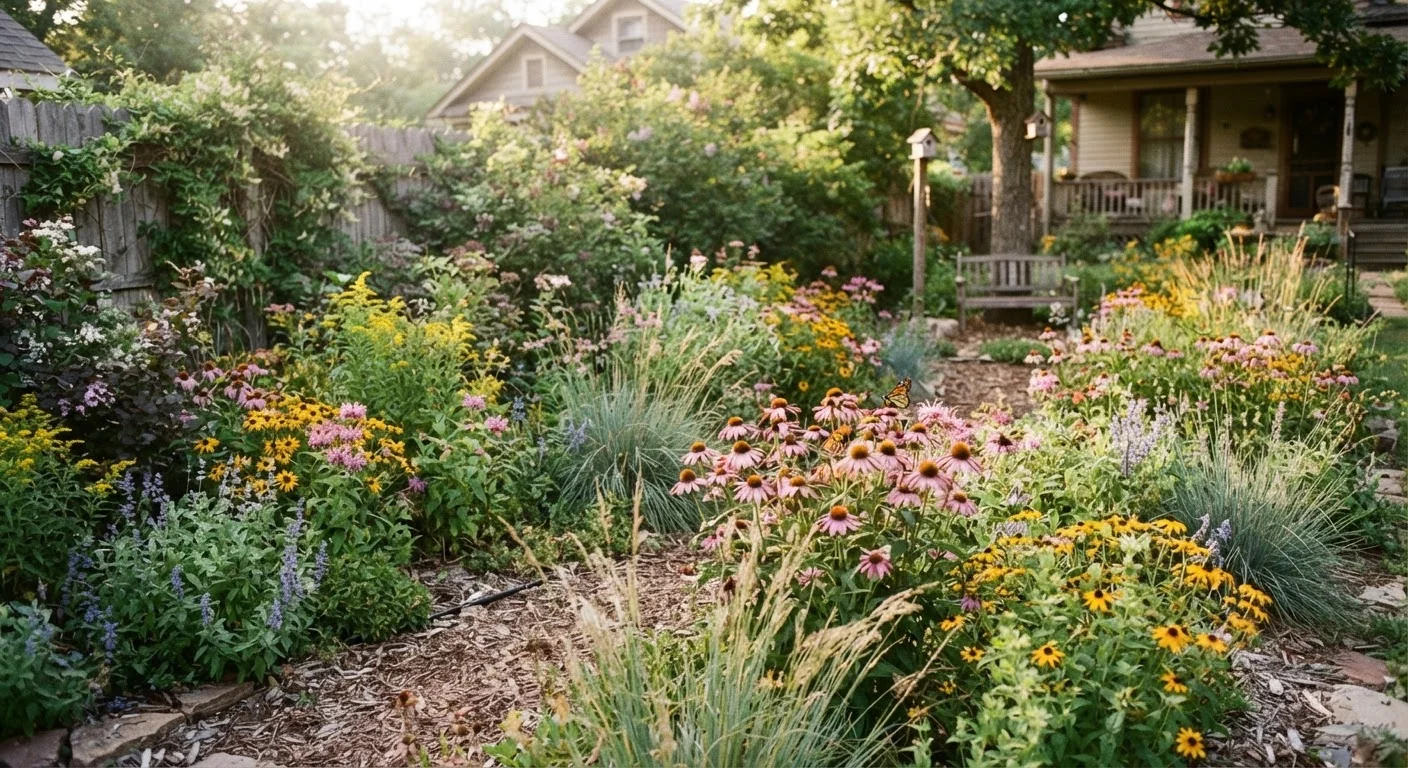
Resist the urge to tidy excessively. Native gardens operate on different aesthetics than formal landscapes, and some of what looks like disorder - seedheads, dried stems, leaf litter - serves real ecological functions. Learning to appreciate that texture is part of the shift.
Common Mistakes to Avoid
Even gardeners with good intentions can undercut a native planting with a few predictable missteps. Knowing these in advance saves frustration:
- Choosing plants by label alone: 'Native' on a tag doesn't always mean native to your region. Verify species and provenance before purchasing.
- Over-amending the soil: Adding compost or fertilizer generously before planting can work against you. Many natives are adapted to nutrient-poor soils; enriching them excessively can produce weak, floppy growth.
- Expecting instant results: The first year, a native garden may look sparse while roots establish underground. The gardening adage - 'first year sleeps, second year creeps, third year leaps' - applies well here.
- Ignoring pest context: Some insect feeding is normal and even desirable. Before intervening, read more about what garden pests actually cause damage versus what's part of a healthy ecosystem.
- Mixing incompatible microhabitats: Planting moisture-loving natives alongside drought-adapted ones creates a situation where you're always compromising the needs of one group or the other. Group plants by similar requirements.
Native plant gardening rewards patience and observation. As the planting matures, you'll spend less time maintaining it and more time watching what moves through it - which, for many gardeners, turns out to be the best part.