How to Use This Reference
Identifying a pest correctly is the first and most important step toward protecting your garden. Many problems that look like disease, drought stress, or nutrient deficiency are actually caused by insects or other small organisms working below the surface or at night. This reference covers the most common garden and lawn pests found across the United States, describing what they target, what their damage looks like, and what conditions tend to attract them.
For broader context on keeping your lawn healthy across seasons, see our month-by-month lawn care checklist - timing your observations to seasonal patterns makes pest detection much easier.
| Most widespread vegetable garden pest | Aphids (University cooperative extension services, general consensus) |
| Grub damage peak season | Late summer to early fall (USDA pest management guidelines) |
| Slugs are most active | Night and rainy periods (General horticultural reference) |
| Spider mites favor | Hot, dry conditions above 80°F (Cooperative Extension, general reference) |
| Japanese beetle adult season | June through August (most U.S. regions) (USDA APHIS pest profile) |
| Plants most vulnerable to cutworms | Seedlings and transplants (General horticultural reference) |
Common Pests: What They Are and What They Damage
Aphids
Aphids are tiny, soft-bodied insects - usually green, black, or yellow - that cluster on new growth, stems, and the undersides of leaves. They pierce plant tissue and extract sap, causing leaves to curl, yellow, or become distorted. A telltale sign is a sticky residue called honeydew on leaves, which often leads to sooty mold. Aphids reproduce rapidly and can overwhelm a plant in a matter of weeks. They're especially common on roses, beans, peppers, and ornamental shrubs.
Japanese Beetles
Adult Japanese beetles skeletonize leaves by feeding on the tissue between veins, leaving behind a lace-like appearance. They're metallic green and copper-colored and tend to congregate in groups, making damage especially concentrated. Their larvae - white grubs - live in the soil and feed on grass roots, which can cause turf to feel spongy underfoot and pull up like a loose carpet. Grub damage is a leading cause of the bare patches that develop in lawns.
Spider Mites
Spider mites are barely visible to the naked eye but cause unmistakable damage: fine webbing on leaves and a stippled, bronze, or silvery discoloration of foliage. They thrive in hot, dry conditions and can devastate tomatoes, cucumbers, and ornamental plants quickly. A simple way to check: hold a white sheet of paper under a suspect leaf and tap it - tiny moving dots indicate mites.
Cutworms
Cutworms are moth larvae that hide in the soil during the day and feed at night. They cut through plant stems at or just below the soil line - hence the name. Seedlings are especially vulnerable; a young tomato or pepper plant can be severed overnight. Damaged plants are typically found toppled near the soil surface with no visible above-ground pest.
Whiteflies
Whiteflies are small, winged insects that congregate on leaf undersides. Like aphids, they suck sap and excrete honeydew, weakening plants and promoting mold growth. Disturbing an infested plant causes a cloud of white insects to fly up briefly. They're most problematic in warm climates and greenhouses, and they target tomatoes, squash, and many ornamental plants.
Slugs and Snails
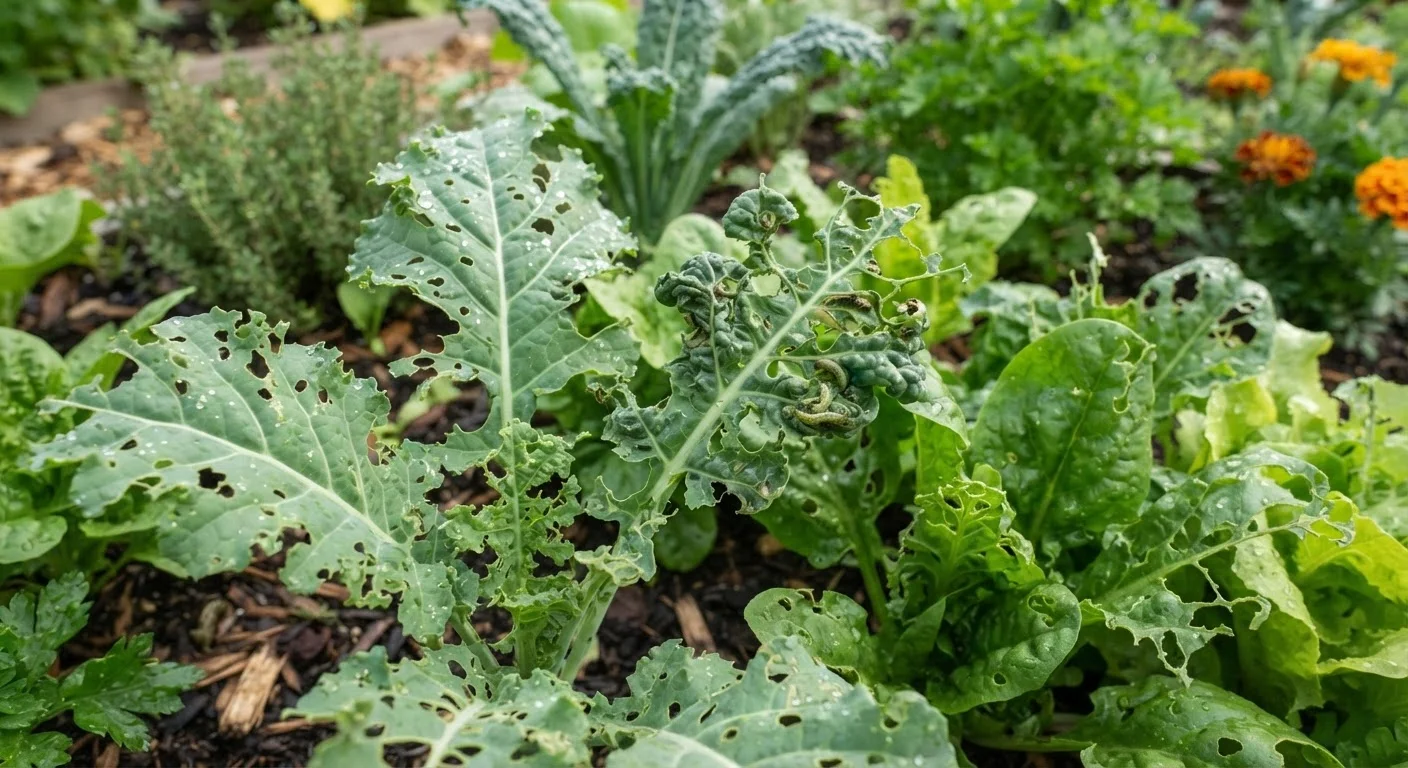
Slugs and snails rasp irregular holes through leaves, often leaving a silvery slime trail behind. They feed primarily at night or during wet weather and prefer shaded, moist areas. Hostas, lettuce, and strawberries are common targets. Raised beds and container gardens can sometimes reduce slug access, though moist soil conditions still attract them.
Honeydew
A sticky, sugary liquid excreted by sap-sucking insects like aphids and whiteflies. It coats leaves and surfaces, encouraging the growth of sooty mold fungus.
Skeletonizing
A feeding pattern where insects consume the soft leaf tissue between veins, leaving behind a transparent or lacy skeleton of the leaf structure.
White grubs
The larval stage of beetles such as Japanese beetles or June bugs. They live in the soil and feed on grass roots, causing turf to die or lift away in patches.
Stippling
A pattern of tiny pale or yellowish dots on leaf surfaces caused by piercing-sucking insects like spider mites. The dots are where individual plant cells have been drained.
Integrated Pest Management (IPM)
A science-based approach to managing pests that combines monitoring, prevention, and targeted control methods to minimize harm to people, plants, and the environment.
What Pest Pressure Signals About Your Garden's Health
Persistent pest problems are often a symptom of underlying conditions rather than bad luck. Compacted soil, over-watering, and poor plant spacing create environments where pests thrive. Native plants tend to attract beneficial insects that naturally keep pest populations in check - a strong argument for incorporating them into any yard. Regular monitoring - walking your garden weekly and checking leaf undersides, stems, and soil edges - catches infestations before they escalate. Early identification is almost always easier to address than a full-blown outbreak.