Why Bare Patches Keep Coming Back
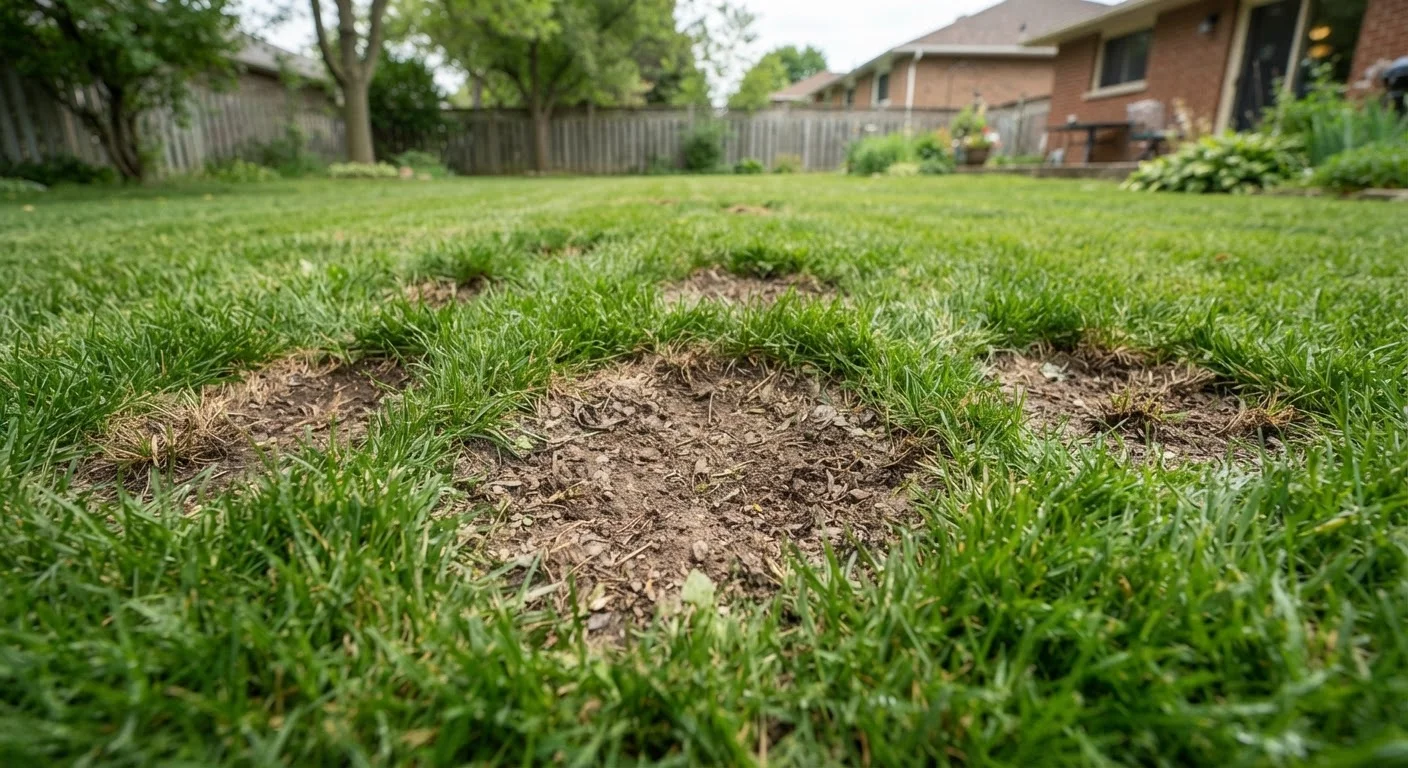
A bare patch in an otherwise healthy lawn is a signal, not just an eyesore. Grass doesn't die in isolated spots without a reason, and that reason is almost never simply "bad luck." Before reaching for a bag of seed, it's worth understanding what lawns actually need to stay healthy - and what conditions push them toward failure.
Grass requires a specific balance of light, water, air, and nutrients delivered through soil that has the right texture and structure. Disrupt any one of those factors and you create the conditions for a bare patch to form. Common culprits include soil compaction, grub damage, fungal disease, poor drainage, shade stress, and even repeated mowing errors. Pests are also a frequent - and frequently overlooked - cause. The damage caused by common lawn pests can look deceptively similar to drought stress or disease, which is why a careful diagnosis matters.
The good news is that most bare patches are repairable once the underlying problem is addressed. The mistakes below are the ones that most reliably turn a one-time patch into a recurring problem.
Mistakes That Turn Bare Patches Into Permanent Problems
Diagnose Before You Reseed
Spreading new grass seed over a bare patch without addressing the root cause is one of the most common - and costly - lawn care mistakes. If compaction, disease, or a pest infestation created the problem, fresh seed will fail under the same conditions. Always investigate the cause first, then treat it, then reseed.
Reseeding without identifying the underlying cause.
Why it happens: When a bare patch appears, the instinct is to fill it with seed as quickly as possible. Most homeowners focus on the symptom rather than investigating what caused the grass to die in the first place.
Using the wrong grass seed for the region or site conditions.
Why it happens: Seed packaging can be confusing, and many homeowners grab whatever is available without considering whether the variety suits their climate, soil, or sun exposure.
Mowing too short, causing scalping and weakening the turf.
Why it happens: Homeowners often mow low thinking it reduces how frequently they need to mow. Cutting grass too short removes too much leaf blade at once, stressing plants and leaving soil exposed to drying and weed invasion.
Watering too frequently but too shallowly.
Why it happens: Daily light watering feels responsible, but it encourages grass roots to stay near the surface rather than growing deep into the soil - making turf far more vulnerable to heat, drought, and bare patches.
Ignoring soil compaction as a recurring source of bare spots.
Why it happens: Compacted soil is invisible from above - the lawn surface can look normal until patches appear. Heavy foot traffic, clay-heavy soil, and repeated mowing patterns are common causes that go unnoticed until damage is significant.
Avoiding these mistakes puts you well ahead of most homeowners dealing with the same frustration. For a broader framework of when to reseed, aerate, or fertilize throughout the year, the seasonal lawn care checklist offers practical month-by-month guidance suited to American yards.
How to Repair a Bare Patch the Right Way
Grub Damage Can Spread Quickly
If you suspect white grubs - the larvae of beetles - are responsible for dead patches, act promptly. Grubs feed on grass roots just below the soil surface, and a moderate infestation can destroy large lawn sections within a single season. Confirm the presence of grubs by cutting back a square foot of turf and inspecting the soil beneath. Consult your local cooperative extension service for treatment guidance appropriate to your region.
Once you've identified and treated the underlying cause, repairing the patch itself is straightforward. Loosen the top 2 to 3 inches of soil with a hand rake to give seed good contact with the ground. Remove any dead thatch - the layer of decomposed grass material - that might block germination. Apply seed at the rate listed on the package for your grass type, rake lightly to press seed into the soil, and cover with a thin layer of straw or seed-starter mulch to retain moisture.
Water the repaired area gently once or twice daily until germination is visible - typically 7 to 21 days depending on the variety and weather conditions. Reduce foot traffic across the area during this period; new seedlings have shallow roots and are easily displaced. Once the grass reaches mowing height, raise your mower deck and continue following the one-third rule to avoid stressing the young turf.
If you find yourself repeatedly battling bare patches despite correct reseeding, it may be worth considering whether your climate and soil conditions are compatible with a traditional turf lawn. Native plants adapted to local conditions can be a practical and lower-maintenance alternative for problem areas that resist standard grass establishment.
This article is for general informational purposes only. Lawn care results vary based on local climate, soil type, grass variety, and site conditions. Consult your local cooperative extension service for region-specific guidance.