How Each System Actually Works
Understanding how these systems deliver heat helps explain nearly every trade-off between them.
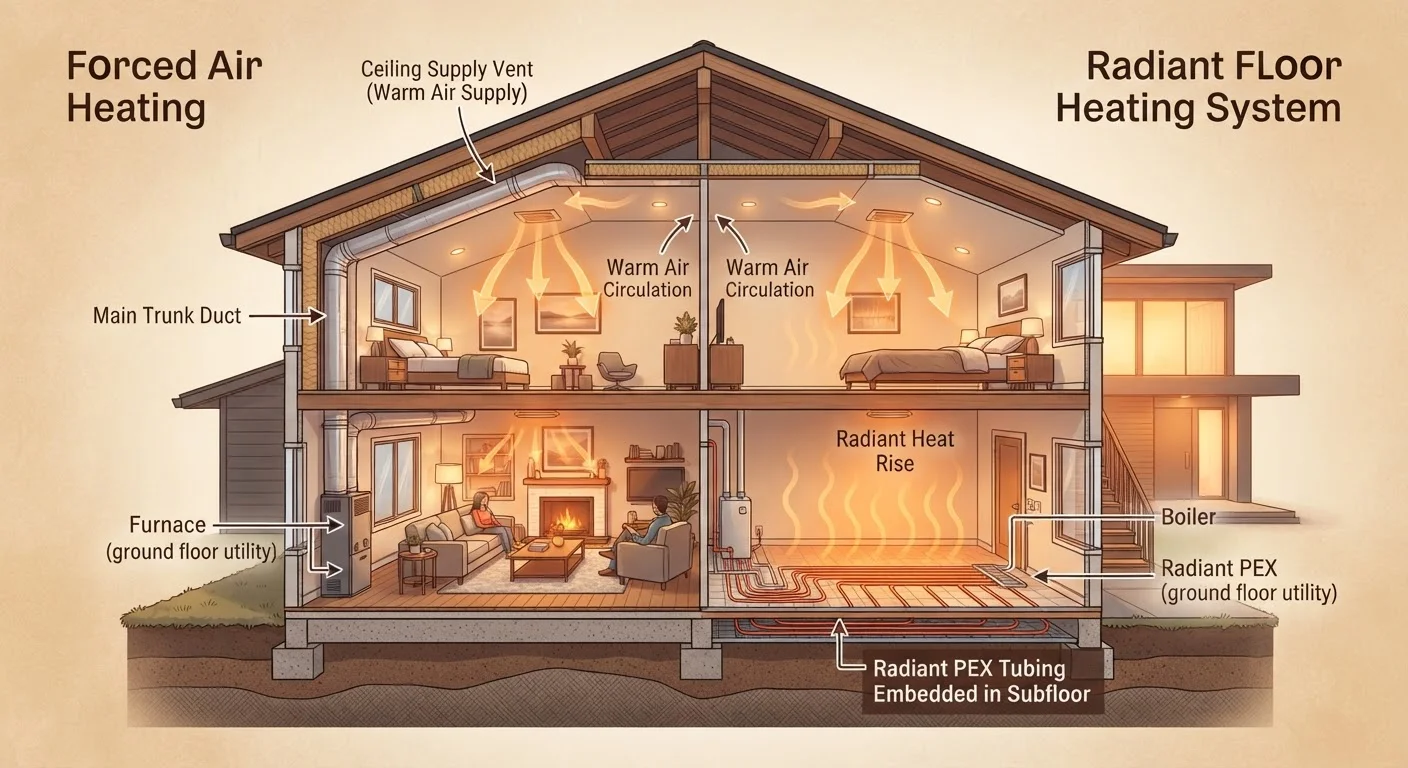
Forced air heating uses a furnace - powered by natural gas, propane, oil, or electricity - to heat air, which a blower then pushes through a network of ducts to registers (vents) throughout the home. The thermostat signals the furnace to fire up, and within minutes warm air is flowing into living spaces. The same duct system typically carries conditioned air for central air conditioning in warmer months.
Radiant heating warms surfaces rather than air. The two main types are hydronic (water-based) and electric. Hydronic systems run warm water through flexible tubing - usually installed beneath the floor - connected to a boiler. Electric radiant systems use heating cables or mats embedded in or beneath flooring. In both cases, the heated surface then radiates warmth outward and upward into the room, much like the sun warming your skin on a cool day. Radiant systems are most commonly installed in floors, though wall and ceiling panels also exist.
Because radiant heat warms objects and people directly rather than heating the air first, rooms can feel comfortable at slightly lower air temperatures - a distinction that has real efficiency implications.
Head-to-Head Comparison
Laying the two systems side by side across key homeowner concerns makes the practical trade-offs clearer.
| Criterion | Forced Air | Radiant Heating |
|---|---|---|
| Heat delivery method | Circulates warm air through ducts | Warms surfaces directly |
| Comfort consistency | Can vary; warm near ceiling | Very even; warm at floor level |
| Response time | Fast - heats quickly | Slower to heat up and cool down |
| Can also cool home | Yes, with AC unit | No - heating only |
| Typical installation cost | Lower, especially with existing ducts | Higher, especially for hydronic |
| Operating efficiency | Moderate; duct losses reduce efficiency | Higher (hydronic); varies (electric) |
| Air quality impact | Circulates dust/allergens; filter helps | No air circulation; minimal dust movement |
| Retrofit difficulty | Easy if ducts exist | Disruptive; often requires floor removal |
| Maintenance demands | Regular filter changes; annual service | Fewer parts; boiler or system checks needed |
One often-overlooked factor is heat distribution. Forced air systems can create noticeable temperature differences between floor level and ceiling - warm air rises, so your ankles may feel cooler than your head. Radiant floors heat from the bottom up, which more closely matches how people naturally prefer to feel warm. For anyone curious about how water-heating technology fits into these systems, the water heater basics guide covers how boilers and heat pump water heaters relate to home comfort systems.
Efficiency and Operating Costs
Energy efficiency for both systems depends on several variables: the fuel source, equipment age, insulation quality, and how well the system is maintained.
Forced air systems lose efficiency primarily through duct leakage and heat loss. The U.S. Department of Energy has noted that ducts passing through unconditioned spaces like attics or crawl spaces can lose a significant share of heated air before it reaches living areas. Regular duct sealing and insulation can meaningfully improve performance.
Hydronic radiant systems operate efficiently because water holds heat better than air and the distribution loop is typically well-insulated. They also work well with lower-temperature heat sources, including condensing boilers and heat pump water heaters, which operate more efficiently at lower output temperatures. Electric radiant is 100% efficient at point of use but can be expensive to operate depending on local electricity rates - it's often best suited for supplemental heating in specific rooms rather than whole-home use.
20-30%
Typical duct heat loss in forced air systems
The U.S. Department of Energy estimates that duct systems in unconditioned spaces can lose 20-30% of heated air, reducing overall system efficiency.
~$6-$16/sq ft
Approximate electric radiant installation cost per square foot
Electric radiant mat systems vary widely in installation cost depending on room size, flooring type, and labor rates in your area.
15-20 years
Average forced air furnace lifespan
With proper maintenance, gas furnaces typically last 15-20 years; hydronic radiant boilers have a similar or slightly longer service life.
Neither system automatically saves money without proper insulation, a well-sealed home envelope, and appropriate thermostat management. A home energy audit can help identify where the greatest efficiency gains are available regardless of which heating type you have.
Installation, Maintenance, and Retrofit Realities
For existing homes, installation practicality is often the deciding factor.
Forced air is the default choice in most American homes because the infrastructure - ductwork, a furnace, a thermostat - is already in place. Replacing an aging furnace with a newer, higher-efficiency model is a relatively straightforward project for a licensed HVAC technician. Maintenance centers on changing air filters regularly (typically every one to three months depending on filter type and household conditions), scheduling annual furnace inspections, and periodically having ducts cleaned or inspected for leaks.
Radiant retrofit is a different story. Installing in-floor hydronic tubing in an existing home generally requires removing and replacing finished flooring - a significant undertaking in terms of both cost and disruption. Thin-profile electric mats are a less invasive option for retrofitting individual rooms, particularly under tile in bathrooms or kitchens. Radiant systems have fewer moving parts overall, which can mean lower maintenance frequency, but boiler servicing and periodic checks of the tubing system are still necessary. Always work with a licensed plumber or HVAC professional for any boiler or hydronic system work.
If you're planning a broader interior refresh alongside a heating upgrade, it's worth thinking about how the warmth of your heat source complements your interior design choices - our guide on warm vs. cool interiors touches on how ambient temperature perception relates to color and light.
This article is for general informational purposes only. Heating system installation and modification should be performed by a licensed HVAC professional. Always verify local permit and code requirements before beginning any home improvement project.