How Each System Heats Your Water
Water heaters are one of the hardest-working appliances in any home, yet most homeowners give them little thought until something goes wrong. Understanding how each type works helps you maintain the one you have - and make a more informed choice if replacement is on the horizon.
| Typical Tank Capacity | 30-80 gallons (U.S. Department of Energy, general guidance) |
| Average Tank Lifespan | 8-12 years (U.S. Department of Energy, general guidance) |
| Average Tankless Lifespan | 20+ years with maintenance (U.S. Department of Energy, general guidance) |
| Heat Pump Efficiency Advantage | 2-3x more efficient than standard electric tank (U.S. Department of Energy, general guidance) |
| Recommended Water Heater Temperature | 120°F (49°C) (U.S. Consumer Product Safety Commission) |
| Minimum Space for Heat Pump Units | ~1,000 cubic feet of air volume (Manufacturer and DOE installation guidance) |
Tank (Storage) Water Heaters
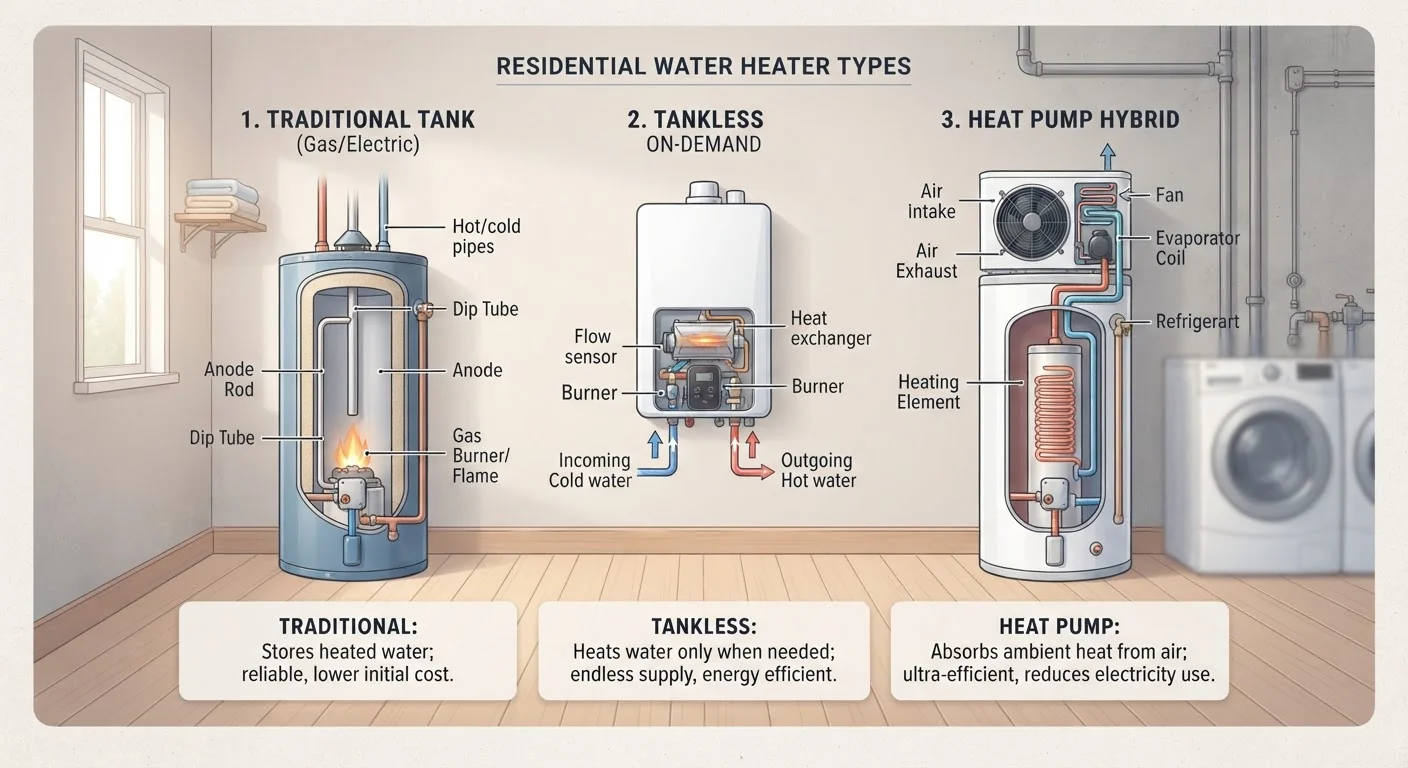
A conventional tank water heater stores a large volume of water - typically 30 to 80 gallons - and keeps it hot continuously using a gas burner or electric heating element. When you open a hot-water tap, heated water is drawn from the top of the tank while cold water enters at the bottom to be reheated. Because the unit works to maintain temperature around the clock, it consumes energy even when no hot water is being used. This is commonly called standby heat loss.
Tankless (On-Demand) Water Heaters
Tankless units heat water directly as it flows through the unit, using high-powered gas burners or electric coils. There is no storage tank, so there is no standby heat loss. However, tankless systems have a limited flow rate - measured in gallons per minute (GPM) - which means running multiple high-demand fixtures simultaneously can exceed the unit's capacity. Whole-house gas tankless units generally deliver stronger flow rates than electric models.
Heat Pump Water Heaters
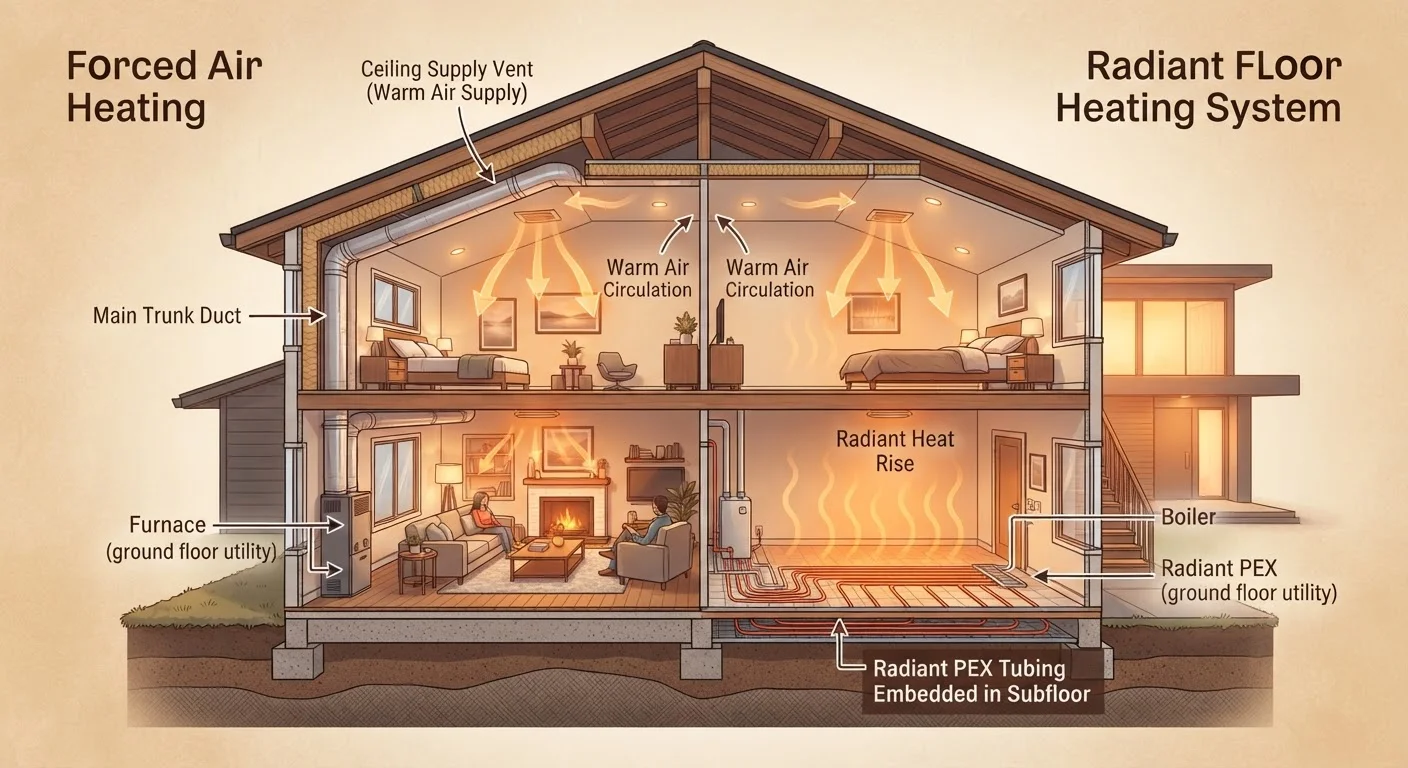
Heat pump water heaters (also called hybrid electric water heaters) do not generate heat directly. Instead, they move heat from surrounding air into the water, using electricity to power a compressor - similar to how a refrigerator works in reverse. They are significantly more energy-efficient than standard electric tank models but require installation in a space with adequate air volume and a moderate ambient temperature to operate effectively. Just as different heating systems suit different home layouts, the right water heater depends on your home's specific conditions.
Efficiency, Maintenance, and What to Watch For
Efficiency Comparison
Energy efficiency for water heaters is expressed using the Uniform Energy Factor (UEF) - a standardized rating where a higher number means greater efficiency. Heat pump models typically carry the highest UEF ratings, followed by gas tankless, electric tankless, and conventional tank units. Keep in mind that fuel source matters: natural gas generally costs less per unit of heat than electricity in most U.S. regions, which affects real-world operating costs regardless of UEF.
Standby Heat Loss
Energy wasted by a tank water heater as it continuously reheats stored water to maintain temperature, even when no hot water is being used.
Uniform Energy Factor (UEF)
A standardized efficiency rating for water heaters set by the U.S. Department of Energy. A higher UEF indicates a more energy-efficient unit.
Anode Rod
A sacrificial metal rod (typically magnesium or aluminum) inside a tank water heater that corrodes in place of the steel tank lining, extending the tank's lifespan.
T&P Relief Valve
A safety device on tank water heaters that automatically releases pressure or temperature if either exceeds safe limits, preventing dangerous over-pressurization.
Flow Rate (GPM)
The volume of water a tankless heater can heat per minute, measured in gallons per minute. Determines how many simultaneous fixtures the unit can serve.
Heat Exchanger
A component in tankless water heaters where cold water passes over heated surfaces and absorbs thermal energy before flowing to your fixtures.
Routine Maintenance by Type
- Tank water heaters: Flush the tank annually to remove sediment buildup, which insulates the heating element and reduces efficiency. Inspect the anode rod - a sacrificial metal rod that prevents tank corrosion - every two to three years and replace it when significantly depleted. Test the temperature and pressure (T&P) relief valve annually to ensure it opens freely.
- Tankless water heaters: Descale the heat exchanger annually, especially in areas with hard water. Clean the inlet filter screen periodically. Gas models require periodic burner inspection; this work should be performed by a licensed technician.
- Heat pump water heaters: Clean the air filter every few months to maintain airflow efficiency. The surrounding space should remain unobstructed. Refrigerant issues should always be handled by a licensed HVAC or appliance technician - never attempt refrigerant work yourself.
Warning Signs Across All Types
Regardless of system type, watch for discolored or rusty water (possible tank or anode rod failure), inconsistent temperatures, unusual noises such as popping or rumbling (often sediment-related), and any visible leaks around connections or the unit itself. If you notice gas odors near a gas-powered unit, leave the area immediately and contact your gas utility. Any repair involving gas lines, electrical panels, or refrigerant must be handled by a qualified, licensed professional.
This article is for general informational purposes only. Consult a licensed plumber or HVAC technician before making decisions about water heater installation, repair, or replacement. Always verify local permit and code requirements with your municipality.