What Each One Actually Does
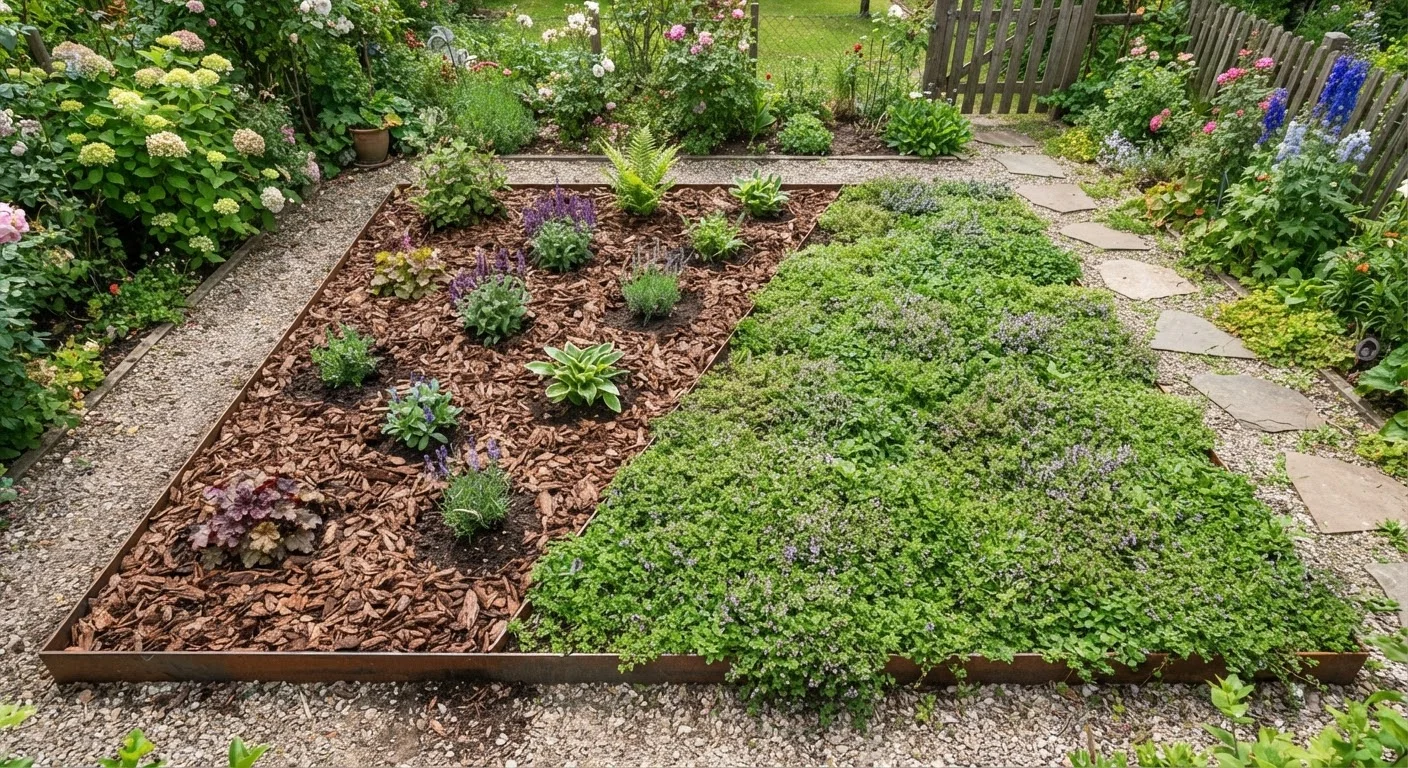
Mulch is any non-living material - shredded bark, wood chips, straw, compost, or even gravel - spread across the soil surface. Its job is passive: it insulates the soil, slows moisture evaporation, moderates temperature swings, and forms a physical barrier that blocks weed seeds from reaching light.
Ground cover refers to low-growing plants - creeping thyme, pachysandra, liriope, clover, or vinca, for example - intentionally planted to spread across an area. They do many of the same things mulch does, but through living processes: roots hold soil against erosion, dense foliage shades out weeds, and the plants cycle nutrients as they grow and shed leaves naturally.
Understanding this distinction - one is a material, one is a system - shapes every practical decision that follows. If you're also rethinking your entire planting structure, our comparison of raised beds vs. in-ground planting can help you think through that layer of the puzzle first.
Head-to-Head: Key Differences at a Glance
Both options protect your soil, but they diverge sharply on upkeep, cost over time, and how they interact with nearby plants.
| Criterion | Mulch | Ground Cover |
|---|---|---|
| Type | Non-living material | Living plants |
| Weed suppression | Effective with adequate depth | Effective once fully established |
| Erosion control | Moderate; can wash on slopes | Strong; roots anchor soil |
| Upkeep frequency | Annual replenishment needed | Minimal once established |
| Time to effectiveness | Immediate | 1-3 growing seasons |
| Competition with other plants | None | Can compete for water and nutrients |
| Soil health over time | Organic types enrich soil as they break down | Naturally cycles nutrients via leaf drop |
| Best setting | Mixed beds, vegetable gardens, new plantings | Slopes, large open areas, under trees |
One practical detail worth noting: organic mulches (wood chips, bark, straw) break down over time, gradually enriching your soil. That's a benefit, but it also means you need to replenish the layer - typically 2-4 inches - every one to two years to maintain effectiveness. Ground cover, once established, renews itself.
When Mulch Is the Right Call
Mulch earns its place in almost every garden bed at some stage. It's the practical first choice when:
- You're planting new shrubs, trees, or perennials and want to protect roots while the plants establish - without competition from a spreading neighbor plant.
- Your beds change seasonally. Vegetable gardens, annual flower beds, and cutting gardens benefit from mulch that can be turned into the soil or removed and replaced each year.
- You need fast results. A bag of mulch transforms a bare bed in an hour. Ground cover takes one to three growing seasons to fill in.
- You garden in a shaded bed where many ground covers struggle to thrive.
Pairing mulch with smart watering strategy makes a real difference; see how drip irrigation compares to sprinkler systems for garden beds to maximize moisture retention underneath your mulch layer.
When Ground Cover Makes More Sense
Ground cover plants are a long-term investment that pays off in reduced labor. Consider them when:
- You have a slope or erosion-prone area. Plant roots physically anchor soil in a way that mulch alone cannot replicate, especially in heavy rain.
- You want to reduce mowing. Replacing grass in awkward strips or under trees with a spreading ground cover eliminates trimming headaches.
- You're designing for wildlife. Many flowering ground covers support pollinators and beneficial insects. Native plant ground covers are especially effective here, providing habitat benefits alongside low-maintenance coverage.
- You want permanent visual texture. A well-chosen ground cover creates a cohesive, designed look that mulch - which needs topping off - can't maintain as reliably.
Watch for Aggressive Spreaders
Some ground cover plants - English ivy and mint are common examples - can spread well beyond their intended area and become difficult to control. Before selecting a ground cover, check whether it's considered invasive in your region. Your local cooperative extension office is a reliable resource for regionally appropriate, non-invasive options.
Ground cover also pairs naturally with thoughtful plant combinations. Explore how companion planting principles can guide you in choosing ground covers that support, rather than compete with, neighboring plants.
Can You Use Both?
Yes - and many gardeners do. A common approach is to use mulch in planting beds around trees, shrubs, and perennials, while using ground cover to fill large open spaces between defined beds or on slopes where mulch would wash away.
During the establishment phase of a ground cover planting, a thin layer of mulch between young plants can suppress weeds while the plants spread to fill gaps. Once the ground cover has closed in, the mulch layer naturally breaks down and becomes unnecessary.
Seasonal timing matters, too. If you're planning a fall garden refresh, our guide on fall garden cleanup explains what to cut back and what to leave - a useful step before you decide whether to mulch or plant ground cover going into winter.