What Actually Separates These Two Approaches
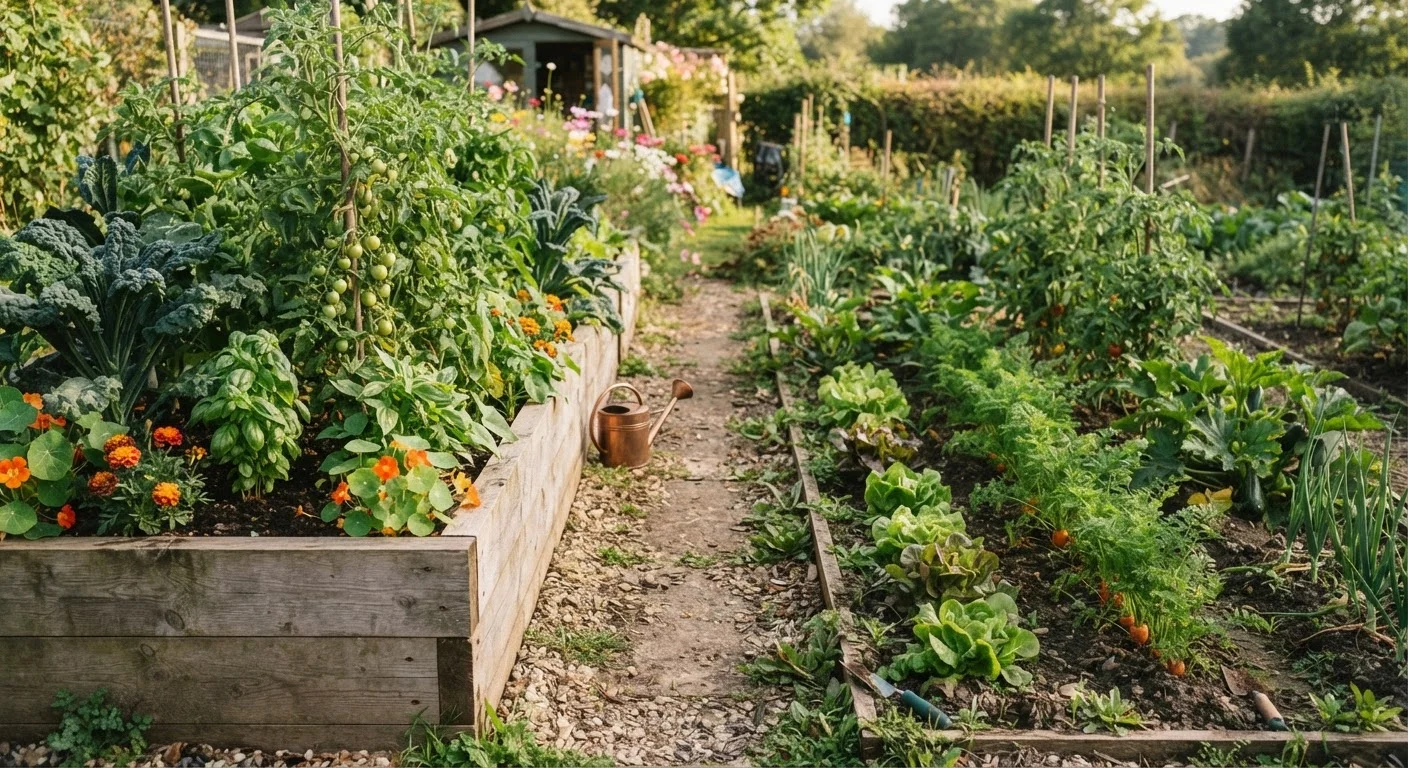
At their core, raised beds and in-ground gardens differ in one fundamental way: where your plants' roots live. A raised bed is a contained growing structure - typically built from wood, metal, or composite materials - filled with a custom soil mix you bring in. An in-ground garden uses the existing native soil in your yard, amended as needed.
That distinction shapes almost every other trade-off: drainage behavior, soil quality, cost, scalability, and physical effort. If you're just getting started, our guide to starting a vegetable garden from scratch walks through foundational decisions alongside this one.
Full control over soil quality from day one
You fill raised beds with a custom mix, so you're not relying on whatever native soil exists - a significant advantage if your ground is compacted, depleted, or contaminated.
Superior drainage in most conditions
The elevated, loose structure of raised bed soil drains freely, reducing root rot risk for moisture-sensitive crops like tomatoes and herbs.
Fewer weeds in early seasons
Starting with fresh, imported soil means fewer dormant weed seeds compared to cultivated native ground, reducing maintenance time in your first growing seasons.
Easier on your back and joints
A bed raised 12-24 inches off the ground requires far less bending, making gardening more accessible for people with mobility limitations.
Soil warms faster in spring
Raised bed soil tends to warm earlier in the season than in-ground soil, which can extend your growing window in cooler climates.
Where Raised Beds Have a Real Edge
Raised beds shine in several specific scenarios that are common for American homeowners.
Poor or contaminated native soil is one of the most compelling reasons to build up rather than dig in. If your yard has heavy clay, compacted subsoil, or a history of chemical use, filling a raised bed with clean, well-structured soil mix lets you sidestep those issues entirely.
Drainage is another advantage. Raised beds drain more freely than flat ground, which matters enormously for crops like tomatoes, carrots, and herbs that dislike waterlogged roots.
Weed and pest management can also be easier - a defined bed with a clean soil mix starts with fewer weed seeds, and physical barriers like hardware cloth on the bottom can deter burrowing pests such as voles.
Finally, the elevated height reduces bending and kneeling, which matters for gardeners with back or joint limitations.
6-8 in.
Minimum raised bed depth for most vegetables
Most extension services recommend at least 6 to 8 inches of growing medium for shallow-rooted crops, with 12 inches or more for root vegetables like carrots.
~$200-$500+
Typical startup cost for a single 4×8-ft raised bed
Material and soil costs vary by region and materials chosen; cedar and metal frames typically cost more than untreated pine or composite alternatives.
Where In-Ground Planting Wins
In-ground gardening has genuine advantages that raised beds can't easily replicate.
Scale and cost are the clearest wins. Filling a raised bed with quality growing mix adds up quickly - a single 4×8-foot bed can require several cubic feet of amended soil. In-ground plots simply use what's there, with amendments spread over time at lower cost.
Moisture retention tends to be stronger in-ground, particularly in drier climates where raised beds can dry out faster and demand more frequent watering. Pairing either system with the right watering method matters - our comparison of drip irrigation vs. sprinkler systems can help you think that through.
Large or deep-rooted plants - fruit trees, sprawling squash, corn - are generally better suited to in-ground growing where roots can spread without restriction.
Significant upfront material and soil costs
Building materials and quality soil mix for even one or two beds can run into several hundred dollars - a meaningful barrier for budget-conscious gardeners.
Dries out faster, requiring more frequent watering
The same drainage that protects roots can be a liability in dry or hot climates, where raised beds may need watering every day during peak summer heat.
Soil volume needs replenishment over time
Raised bed soil compresses and depletes nutrients season after season, requiring regular additions of compost and amendments to stay productive.
Not practical for large-scale or deep-rooted crops
Plants like corn, sprawling melons, or established fruit trees need room to spread roots widely and deeply - constraints a standard raised bed can't easily accommodate.
Factors That Should Drive Your Decision
Rather than defaulting to what's trending, consider these practical questions:
- What is your native soil like? Have it tested if you're unsure. Many county extension offices offer low-cost or free soil testing. Poor or contaminated soil is a strong argument for raised beds.
- What is your budget? Raised beds require upfront investment in materials and soil. In-ground planting costs less to start, though soil amendment is still necessary for most yards.
- How much space do you have? Raised beds work well in small or irregular spaces. Large gardens are easier and cheaper to manage in-ground.
- What are you growing? Compact, shallow-rooted crops like lettuce, radishes, and herbs thrive in raised beds. Deep-rooted or sprawling crops generally prefer in-ground conditions.
You might also consider a hybrid approach - raised beds for high-value crops like salad greens and herbs, in-ground rows for larger vegetables. For gardens with diverse planting goals, our guide on mulch vs. ground cover addresses how to protect and maintain either type of bed once it's established.
A Note on Native Soil Testing
Before investing in either approach, it's worth knowing what you're working with. Many U.S. county cooperative extension offices offer soil testing services that measure pH, nutrient levels, and organic matter. A basic soil test can reveal whether in-ground planting is viable with simple amendments or whether raised beds are a more practical path. Contact your local extension office to find out what's available in your area.