How Each System Actually Works
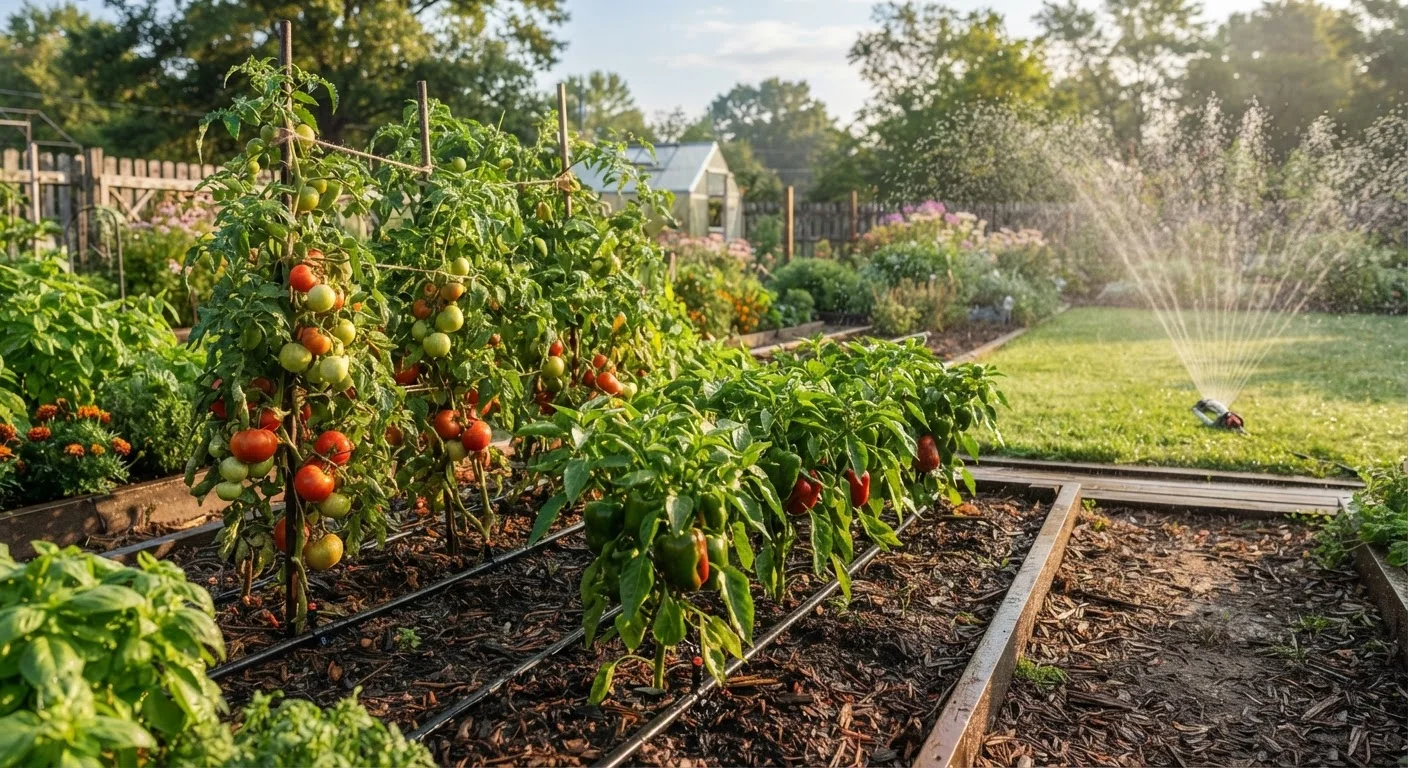
Understanding what differentiates these two systems starts with how they deliver water. Drip irrigation uses a network of flexible tubing and small emitters - also called drippers - placed near the base of each plant. Water seeps out slowly, soaking into the root zone at a rate the soil can absorb without pooling or runoff. Sprinkler systems, by contrast, spray water through the air via rotating or fixed heads, mimicking rainfall over a broad area.
Drip systems operate at low pressure and use significantly less water per hour than sprinklers. Sprinklers excel at uniformly moistening large surface areas quickly, which is why they remain the standard for turf grass. Neither approach is universally superior - their effectiveness depends heavily on what you're growing and where.
If you're thinking through your broader garden layout, the garden planning principles you establish before installing irrigation will shape which system fits your space best.
Side-by-Side: Key Differences at a Glance
The table below compares drip irrigation and sprinkler systems across the factors most homeowners care about when making their decision.
| Criterion | Drip Irrigation | Sprinkler Systems |
|---|---|---|
| Water delivery method | Slow emitters at root zone | Overhead spray over broad area |
| Best suited for | Beds, vegetables, containers | Lawns, large open spaces |
| Water efficiency (garden beds) | High - minimal evaporation loss | Lower - significant evaporation |
| Foliage wetting | Keeps leaves dry | Wets leaves and stems |
| Upfront installation cost | Moderate to higher | Lower for lawns |
| DIY friendliness | Good - no trenching required | Varies - in-ground lines need trenching |
| Maintenance demands | Emitters can clog; periodic flushing needed | Heads can break or misalign over time |
| Weed suppression | Better - dry surface discourages weeds | Less effective - surface moisture promotes weeds |
One often-overlooked consideration is foliage moisture. Sprinklers wet plant leaves, which can promote fungal diseases in humid climates or on susceptible plants like tomatoes and squash. Drip systems keep foliage dry, a meaningful advantage in disease management.
Water Efficiency and Cost Over Time
Water efficiency is where drip irrigation holds its clearest advantage for garden beds. Because water goes directly to the root zone with minimal surface exposure, less is lost to evaporation - particularly important in warmer, drier regions. Studies from university cooperative extension programs consistently note that drip irrigation can use substantially less water than overhead systems for equivalent plant coverage in garden beds, though actual savings vary by climate, soil, and plant density.
30-50%
Potential water savings with drip vs. sprinklers in garden beds
University cooperative extension programs commonly cite this range, though savings depend on climate, soil type, and system design.
~1 GPH
Typical drip emitter flow rate
Standard drip emitters release roughly one gallon per hour, compared to the much higher output of most sprinkler heads.
50-70%
Estimated irrigation water lost to evaporation from sprinklers
Watering during hot or windy midday conditions significantly increases evaporative loss from overhead spray systems.
Sprinklers involve lower upfront installation costs for lawns, but they can contribute to higher water bills in garden contexts where much of the spray misses plant roots entirely. Pairing either system with a programmable timer or smart controller improves efficiency regardless of which you choose. You can also reduce overall irrigation demand by applying mulch or ground cover around beds to retain soil moisture between watering cycles.
Choosing Based on Your Garden Type
The layout and content of your garden should drive your decision more than any other factor. Here's a practical breakdown:
- Vegetable and herb gardens: Drip irrigation is widely preferred. Consistent moisture at the root level supports steady growth, and keeping leaves dry reduces pest and disease pressure.
- Flower beds and perennial borders: Drip systems work well here too, especially in mixed plantings where individual emitters can be adjusted for different plant needs.
- Lawn areas: Sprinklers are the practical choice. Turf requires uniform overhead coverage that drip systems aren't designed to provide.
- Container gardens: Drip emitters adapt easily to pots and raised planters. See our container gardening guide for more on managing moisture in confined spaces.
- Slopes and sandy soils: Drip irrigation reduces runoff on slopes and allows slow absorption in fast-draining soils. Sprinklers on slopes often cause water to sheet off before it soaks in.
Many homeowners with varied yards use both systems - drip lines in planting beds and sprinklers for the lawn - controlled through a single multi-zone timer. This hybrid approach lets you match the delivery method to each area's actual needs. You should also reconsider your lawn watering habits regardless of which system you install, since common mistakes can undermine even the best setup.