Why Watering Myths Spread So Easily
Lawn watering feels intuitive - grass is a plant, plants need water, so more water should mean better grass. That logic is close enough to true that it sticks, even when the details are badly wrong. Many watering habits get passed down from neighbors, repeated on garden forums, or inferred from observing one good or bad season. The problem is that turf grass responds to watering patterns over weeks, not days, so cause and effect are easy to misread. By the time damage appears - whether from drought stress, root rot, or fungal disease - it's rarely obvious that watering habits caused it.
Understanding the actual science behind how grass absorbs moisture, where roots grow, and how soil holds water gives you a much more reliable foundation than folk wisdom. The myths below are among the most widespread, and correcting them can make a meaningful difference in your lawn's health and your water bill.
Myth
Watering your lawn every day keeps it healthy and green.
Fact
Frequent shallow watering trains roots to stay near the surface, making grass weaker and more vulnerable to heat and drought stress.
Grass roots follow water. When you water lightly every day, moisture only penetrates the top inch or two of soil, so roots have no reason to grow deeper. Shallow-rooted grass wilts faster during dry spells and struggles in compacted or clay-heavy soils. Instead, water deeply two to three times per week, allowing moisture to reach four to six inches down. This encourages roots to extend downward, building resilience. A simple screwdriver test works well: push it into the soil after watering - it should slide in easily to about six inches if you've applied enough.
Myth
Watering at midday scorches grass because the water droplets act like magnifying glasses.
Fact
Water droplets do not focus sunlight intensely enough to burn grass leaves - the real problem with midday watering is rapid evaporation.
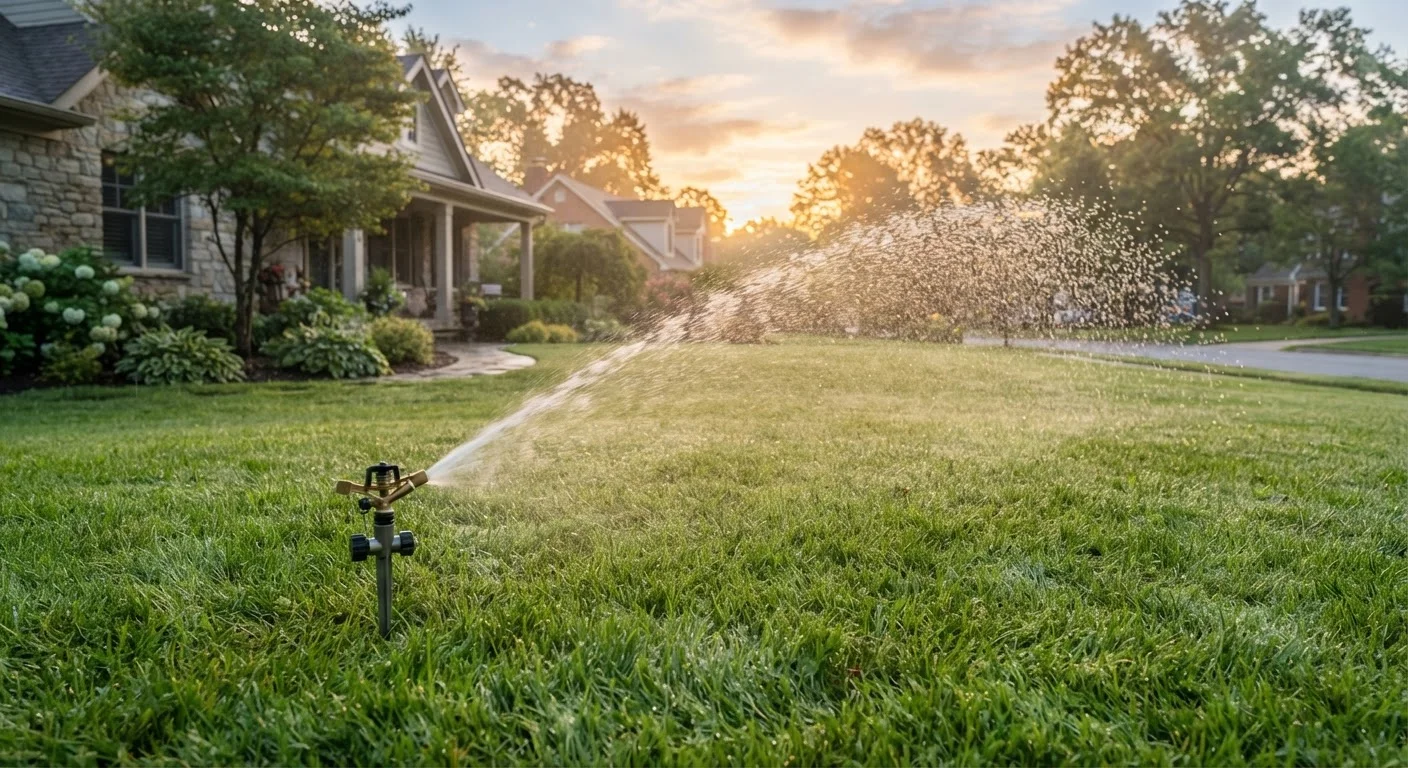
The "magnifying glass" burn theory has circulated for decades, but researchers have found no credible evidence that droplets on grass blades cause leaf scorch under normal outdoor conditions. What midday watering does do is waste a significant portion of the water you apply. High temperatures and afternoon winds can cause 30-50% of water to evaporate before it even reaches the root zone. Early morning - roughly between 6 a.m. and 10 a.m. - remains the best window. The air is cooler, wind is typically calmer, and grass has time to dry before nightfall, reducing disease risk.
Myth
If the grass looks green, it doesn't need water.
Fact
Color alone is an unreliable indicator of soil moisture; grass can look fine while the root zone is dangerously dry - or dangerously wet.
Visual cues are a starting point, not a watering plan. A better indicator is the "footprint test": walk across your lawn and look back. If the grass springs back within a few minutes, moisture levels are adequate. If your footprints linger, the grass blades lack the turgor pressure to recover - a reliable sign of drought stress. Investing in an inexpensive soil moisture meter gives you an even clearer picture, particularly during hot summers. Pair this habit with a seasonal lawn care checklist to align watering with your grass's actual growth cycles.
Myth
More water always means healthier grass.
Fact
Overwatering is one of the most common causes of lawn decline, promoting root rot, fungal disease, and weed invasion.
Turf grasses generally need about one inch of water per week from combined rainfall and irrigation. Consistently exceeding that can be just as damaging as a drought. Saturated soil blocks oxygen from reaching roots, essentially suffocating them. It also creates the warm, wet conditions that fungal pathogens thrive in. Weeds like sedges and moss are well adapted to waterlogged conditions and will quickly colonize stressed patches. If you use an automatic sprinkler system, installing a rain sensor or smart irrigation controller can prevent unnecessary watering after rainfall. For a deeper look at delivery methods, see our comparison of drip irrigation versus sprinkler systems.
[important_callout]Myth
Watering at night is fine since it avoids the heat of the day.
Fact
Nighttime watering leaves grass wet for hours, creating prolonged conditions that encourage fungal diseases.
While evening watering does avoid peak evaporation, it comes with a significant trade-off: grass that stays damp through the night is highly susceptible to fungal problems including brown patch, gray leaf spot, and dollar spot. These diseases spread rapidly in humid, low-light conditions and can cause substantial damage before you even notice discoloration. Morning watering gives grass blades time to dry naturally as temperatures rise, striking the right balance between moisture retention and disease prevention.
Putting Better Watering Habits Into Practice
Adjusting your watering routine doesn't require expensive equipment. Start by checking your soil type: sandy soils drain quickly and may need slightly more frequent watering in smaller amounts, while clay soils hold moisture longer and are especially prone to waterlogging. A simple soil test from your local cooperative extension office can clarify what you're working with.
Set your sprinkler or irrigation system to run in the early morning, and calibrate how long it runs by placing empty tuna cans on the lawn - once they collect about an inch of water, you've hit the right amount. Track rainfall with a basic rain gauge and subtract that from your weekly target before running the sprinkler. These low-tech methods are often more reliable than assumptions. Pests can also create symptoms that look like water stress, so if patchy or yellow areas persist despite correcting your irrigation, consult a resource like our guide to common garden pests and the damage they cause to rule out an insect or disease problem.
Don't Ignore Your Local Water Restrictions
Many municipalities impose seasonal watering schedules or outright bans during drought conditions. Watering on restricted days can result in fines. Check with your local water authority before setting up any automated irrigation schedule, and adjust your routine accordingly throughout the year.
Consistent, well-timed watering is one of the simplest things you can do for a healthier, more resilient lawn - and correcting these myths is the first step toward getting it right.