Why Placement Decisions Matter More Than Pot Choice
It's tempting to select a plant based on how it looks in a nursery or how well it matches your décor, then find a spot for it afterward. In practice, that sequence tends to produce struggling plants and eventual disappointment. Where you place a plant - the light it receives, the humidity around it, the airflow it gets - determines whether it thrives or slowly declines, regardless of how carefully you water it.
The good news is that with a little planning, you can meet both goals: a beautiful, cohesive interior and plants that genuinely flourish. The key is understanding your home's actual conditions before making placement decisions.
Light Levels Vary More Than You Think
A spot that looks bright to human eyes may deliver far less usable light than a plant needs. Direct sun means the sun's rays physically land on the plant for several hours daily. Bright indirect light means strong ambient light without direct rays. Low light means no direct sun and limited ambient brightness - not darkness. Understanding these distinctions helps you read plant care labels accurately and avoid mismatches.
Reading Your Home's Light Before You Place Anything
Light is the non-negotiable starting point for every indoor plant placement decision. Unlike water or fertilizer, you can't easily supplement a room with more natural light after the fact. Before positioning any plant, take time to observe how light moves through each room across the day.
Test Light With Your Phone Camera
Point your smartphone camera at the brightest light source in the room from your potential plant location. If the camera immediately dims and the room looks dark in the frame, that spot has low light. If the image stays balanced and bright, you likely have adequate indirect light. This is a rough test, not a measurement, but it gives you a useful starting point without any special equipment.
South-facing windows typically offer the most intense light for the longest duration - well suited to succulents, cacti, and other sun-loving species. East-facing windows provide gentle morning light, which suits many tropical foliage plants. North-facing windows offer the least intensity and work best for shade-tolerant species like pothos, ZZ plants, and cast iron plants. West-facing windows deliver strong afternoon sun that can scorch sensitive leaves.
Track light conditions in each room at morning, midday, and late afternoon to build an accurate picture before you commit to any arrangement.
Designing With Plants as Living Décor
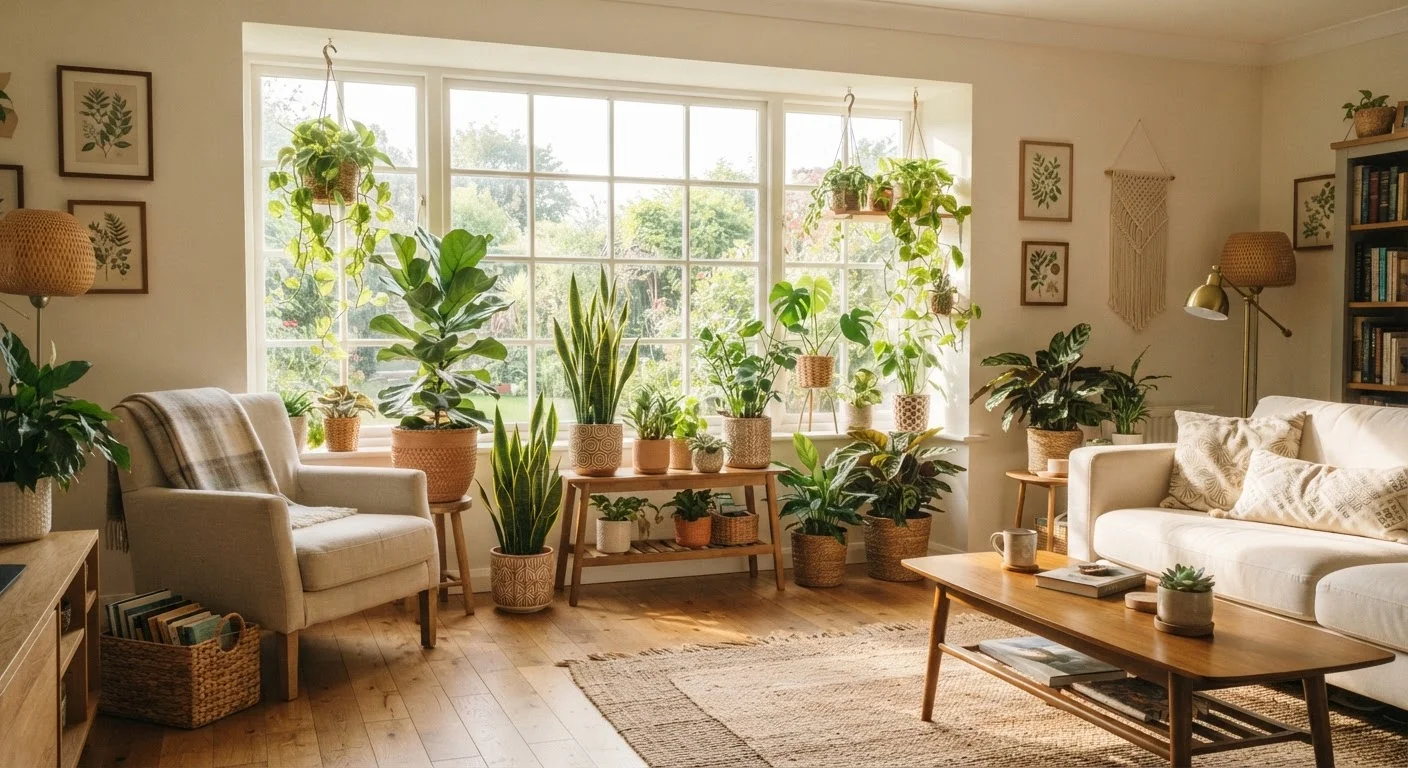
Once you know your light zones, you can make placement decisions that serve both the plants and the room. Think of plants as living architectural elements: they add texture, color, and movement that static furniture cannot provide.
Map your room's light zones before you buy or move any plant.
Light intensity drops sharply as you move away from windows - even just a few feet can cut available light by half or more. Placing a high-light plant in a low-light spot is the single most common cause of indoor plant decline. Knowing your zones lets you shop for plants that will actually succeed in each location.
Group plants with similar humidity preferences together.
Clustering plants creates a microclimate with slightly elevated humidity as each plant releases moisture through transpiration. This benefits humidity-loving species like ferns, calatheas, and peace lilies without requiring constant misting. It also simplifies your watering schedule since plants with like needs can be checked and watered at the same time.
Use height and scale intentionally to complement the room's proportions.
Tall, upright plants draw the eye upward in rooms with low ceilings, creating a sense of height. Trailing plants spilling from shelves or macramé hangers add softness and visual rhythm. Matching plant scale to furniture scale prevents a space from feeling cluttered or visually unbalanced. This principle works especially well in smaller rooms - for more ideas, see our guide on making a small room feel larger.
Never block a plant's primary light source with furniture or décor.
Plants orient growth toward their light source, and anything that partially blocks that source will cause uneven, lopsided growth over time. It also forces the plant to work harder to photosynthesize, weakening it and making it more susceptible to pests. Placement should keep the path between the plant and its light source as clear as possible.
Ensure adequate airflow around each plant, especially in corners.
Stagnant air encourages fungal diseases like powdery mildew and creates ideal conditions for spider mites and fungus gnats. Good airflow helps soil dry at an appropriate rate, supports stem strength, and mimics the natural outdoor conditions most plants evolved in. This matters even for plants in otherwise ideal light conditions.
Rotate plants a quarter turn every two to four weeks.
Plants naturally grow toward their light source - a phenomenon called phototropism. Without rotation, one side of the plant becomes dense and lush while the other thins out and leans, producing an unbalanced, unattractive shape. Regular rotation produces even, full growth and keeps plants looking their best as living décor.
For rooms where space is at a premium, vertical thinking pays off. Wall-mounted planters and tall floor plants draw the eye upward, adding perceived height. If you're working to make a smaller room feel more spacious, combining strategic plant placement with the design principles covered in our guide to making small rooms feel larger can produce a striking result without any renovation.
Layering plant heights - low, medium, and tall - within a single room creates visual depth and interest. Aim for odd-numbered groupings of three or five plants; this tends to look more natural and intentional than even-numbered clusters.
Quick Steps You Can Take Today
You don't need to overhaul your entire interior to improve your plants' health and your room's feel. Small, targeted adjustments often produce noticeable results within a few weeks.
For those interested in extending these principles beyond the home, our resources on container gardening offer practical guidance on applying similar placement and care logic to outdoor and patio containers. And for a broader look at planning plants within a given space, the garden planning principles article covers approaches that translate well even to indoor arrangements.