Why Small Rooms Feel Smaller Than They Are
Square footage is fixed, but the way a room is perceived is not. Visual cues - color, light, line of sight, and the scale of objects within the space - all influence how large or confined a room feels. Most rooms that feel cramped aren't actually too small for comfortable living; they're simply arranged or decorated in ways that work against the space rather than with it.
The strategies in this guide require no structural changes. They work by manipulating how your eye moves through the room, where it rests, and how much uninterrupted space it can perceive. Whether you're working with a studio apartment, a small bedroom, or a compact living room, the same principles apply.
Assess Before You Buy Anything
Many small-room problems stem from overcrowding, not the room itself. Before purchasing new furniture or decor, use a room evaluation checklist to identify what's actually working against the space. Spending money without this step often makes the problem worse, not better.
If you're also considering a bathroom refresh, many of these same principles apply - our guide on small bathroom renovations explores how light, layout, and storage choices transform compact spaces.
Step-by-Step: Making the Most of Your Space
Declutter and clear visual noise first
No design technique compensates for a crowded room. Start by removing everything that doesn't serve a clear purpose or bring genuine value to the space. Pay attention to surface clutter - stacks on coffee tables, side tables, and shelving - as these fragment the eye and compress the perceived space.
Our article on decluttering a living space walks through a practical method for reducing visual load while keeping the items you actually need within reach.
Choose a light, cohesive color palette
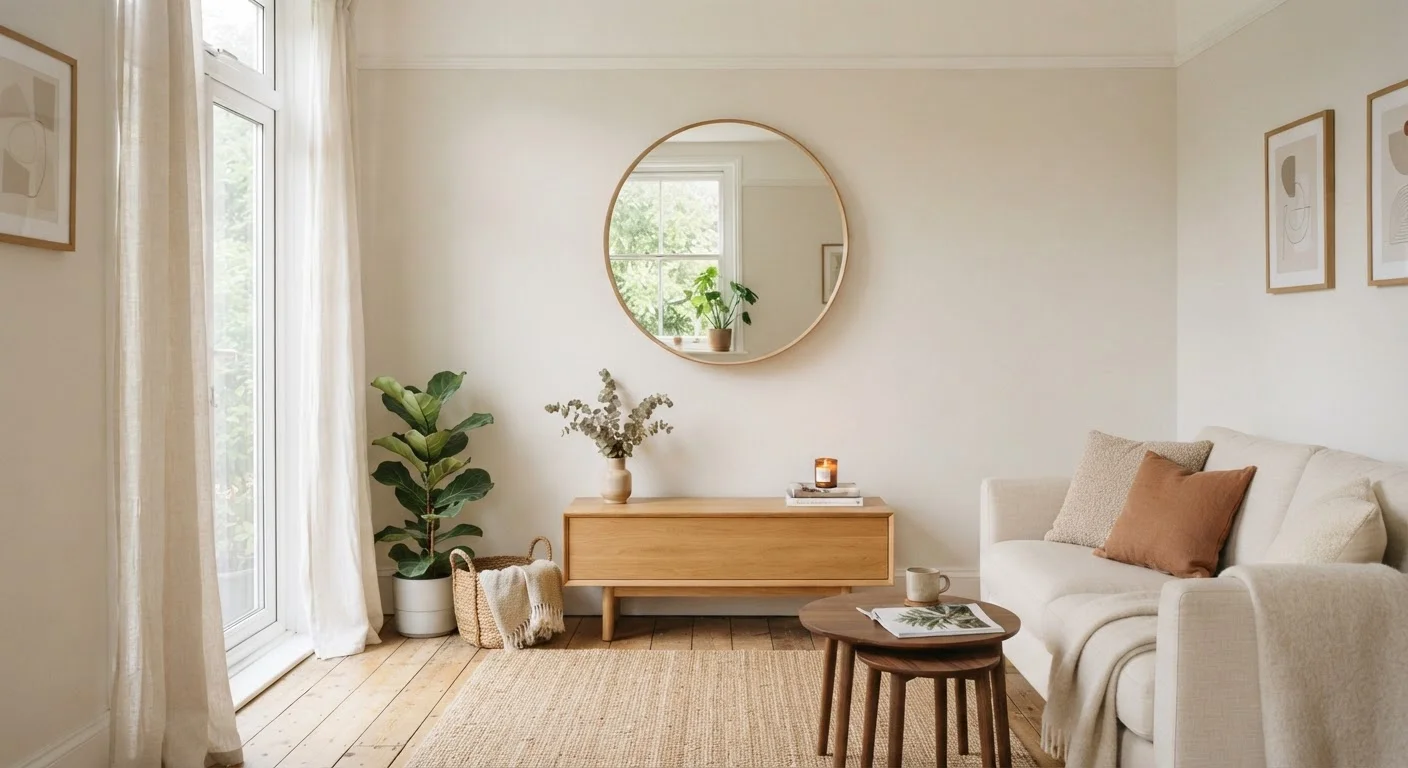
Light colors reflect more light and recede visually, making walls feel farther apart. Soft whites, warm creams, pale grays, and muted sage greens all work well. Using a consistent palette across walls, trim, and larger furniture pieces reduces visual interruptions that fragment a small space.
Avoid high-contrast patterns on large surfaces - they draw attention to boundaries. If you want visual interest, introduce texture through fabric and materials rather than bold color contrasts.
Place mirrors to reflect light and create depth
A large mirror hung opposite a window reflects natural light deep into the room and creates the perception of an additional space behind the glass. The mirror should be positioned to reflect something visually appealing - a window, a plant, or an open wall - rather than another cluttered surface.
Avoid hanging multiple small mirrors, which can feel decorative without delivering a meaningful spatial effect. One large mirror, or a pair of substantial ones, is more effective than a grouping of small frames.
Scale furniture to the room and rearrange thoughtfully
Oversized furniture is one of the most common reasons small rooms feel cramped. Choose pieces that fit the room's proportions. A sofa with exposed legs creates a visual gap between the seat and the floor, which makes the room feel more open than a piece that sits flush to the ground.
Pull furniture slightly away from walls - even a few inches - to create breathing room that paradoxically makes the overall space feel larger. Refer to our guide on furniture arrangement layouts for floor plan ideas suited to different room shapes. If you're considering dual-purpose pieces, our overview of multifunctional furniture trade-offs covers what to weigh before committing.
Hang curtains high and wide to frame windows
Curtain rods mounted close to the ceiling - rather than just above the window frame - draw the eye upward and make the room feel taller. Extending the rod several inches beyond the window frame on each side allows curtains to stack off the glass when open, keeping the window fully exposed for maximum light.
Choose light, sheer fabrics that filter rather than block daylight. For more on how textiles affect proportion and visual style, see our piece on rugs, curtains, and throw pillows.
Add layered lighting at multiple heights
A single overhead fixture casts shadows downward and tends to flatten a room visually. Adding floor lamps, table lamps, or wall sconces at different heights distributes light evenly and makes the full volume of the room visible.
Warm-toned bulbs (around 2700-3000K color temperature) tend to feel more inviting in living spaces, while cooler tones can feel clinical in smaller rooms. For a deeper look at how ambient, task, and accent lighting work together, see our article on layered lighting.
Paint the Ceiling a Shade Lighter
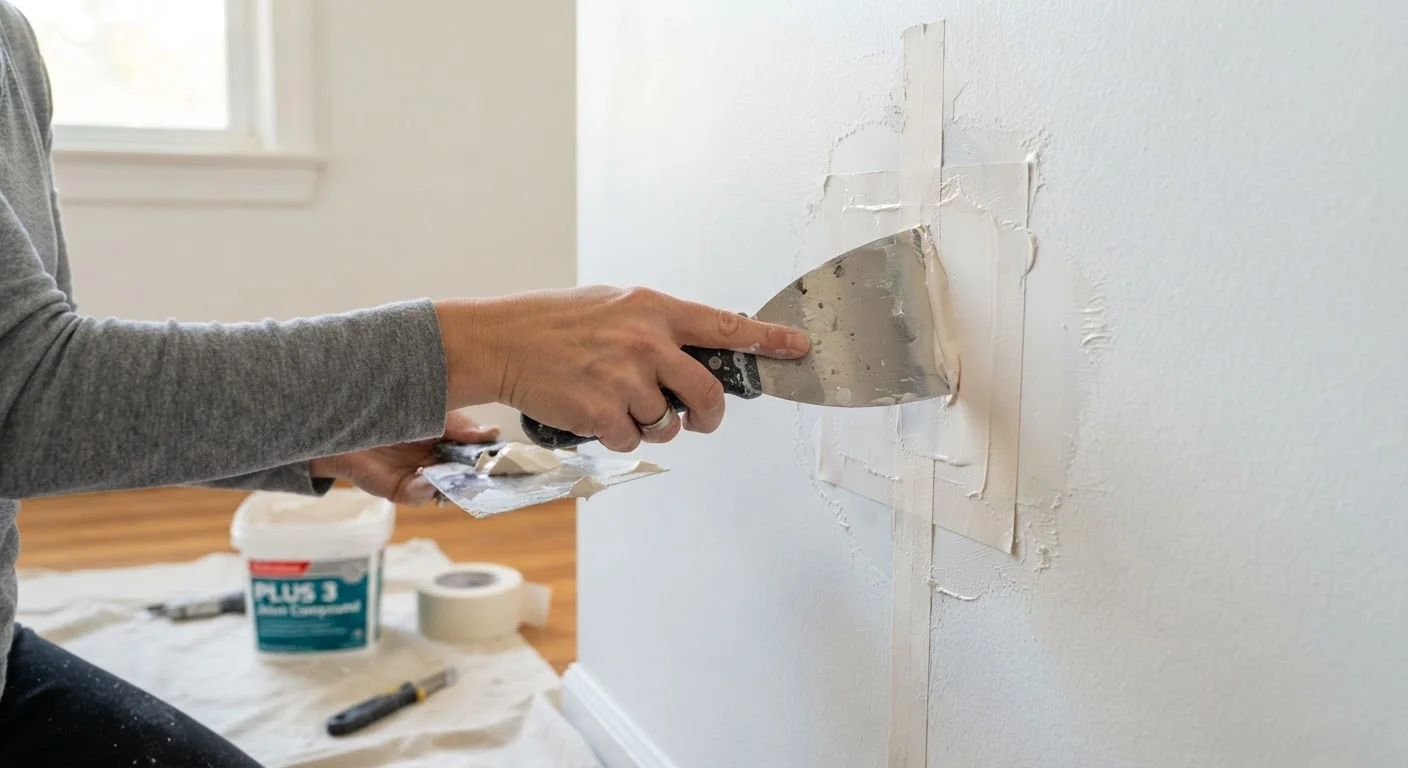
If your walls are already light, painting the ceiling one shade lighter than the walls creates the illusion of more vertical space. This is a low-cost, high-impact move that many designers use in compact rooms. See our guide on painting interior walls for prep tips that ensure a clean result.
For renters or anyone hesitant to make permanent changes, most of these techniques - rearranging furniture, adding mirrors, swapping curtain hardware, and adjusting lighting - leave no lasting trace. Our article on rental-friendly interior updates offers additional ideas tailored specifically for non-permanent situations.
Avoid Too Many Small Decorative Items
A room filled with many small objects tends to read as cluttered and chaotic, which visually shrinks the space further. Fewer, larger statement pieces are almost always more effective in a compact room than a collection of small accents scattered across surfaces.