Why Renters Deserve Great Interiors Too
Living in a rental doesn't mean surrendering your sense of style. Whether you're in a studio apartment or a three-bedroom house, the same design principles that make owned homes feel personal and comfortable apply to rented spaces - the key is choosing approaches that leave zero lasting trace when you move out.
The updates below are practical, reversible, and widely available. Before you start, do two things: read your lease carefully for any restrictions on wall treatments or modifications, and complete a thorough move-in walkthrough. Our walk-through checklist explains exactly how to document existing damage so no update you make gets blamed on you later. With those bases covered, you're ready to personalize.
Use Peel-and-Stick Wallpaper as a Feature Wall
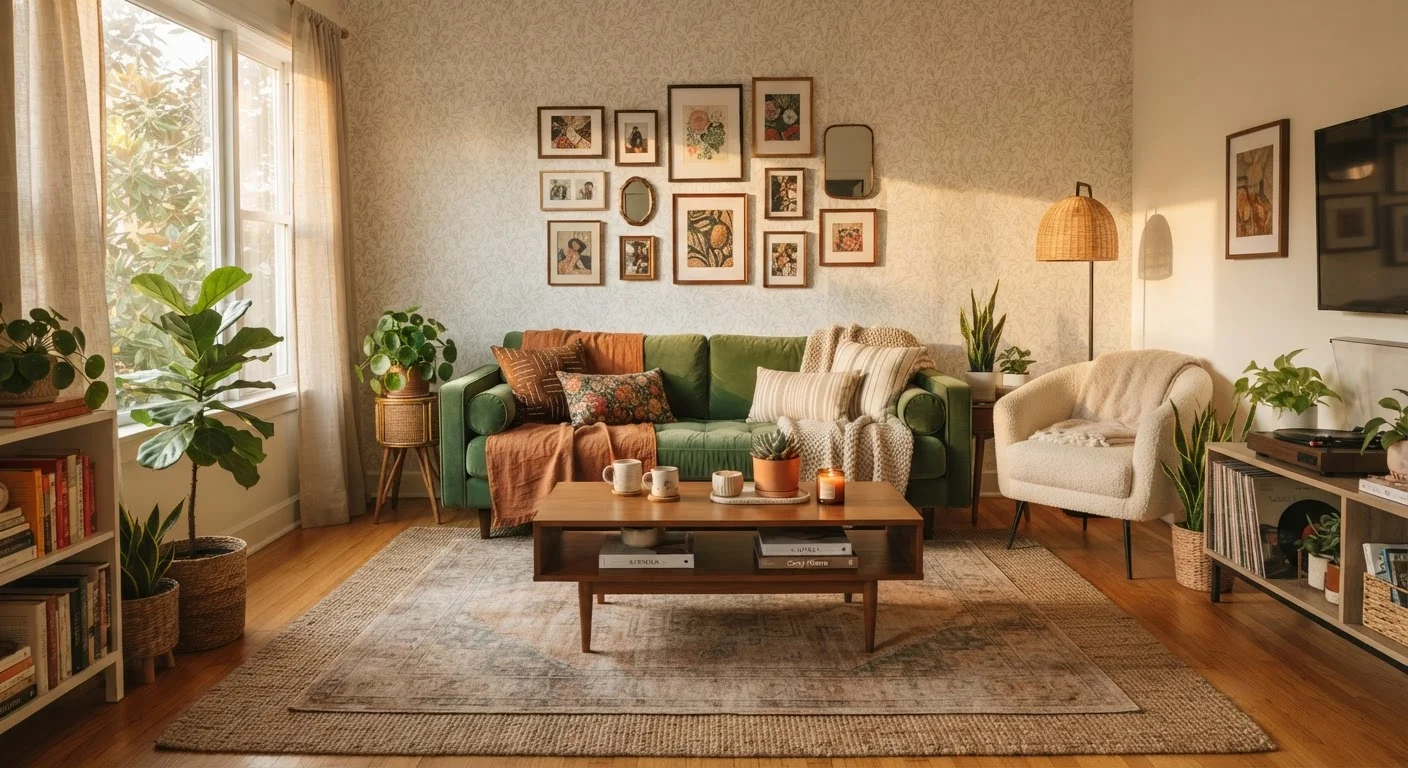
Removable wallpaper has improved dramatically in quality over the past decade. Modern peel-and-stick options adhere firmly to painted drywall during use but release cleanly when removed - leaving no residue or surface damage on walls in good condition. A single accent wall behind a bed or sofa can anchor an entire room's design without touching a single paintbrush.
Before purchasing, measure your wall carefully and order slightly more than you think you need to account for pattern matching. Clean the wall surface thoroughly and let it dry completely before application. Follow the manufacturer's instructions precisely, as application technique affects how cleanly the paper removes later.
One peel-and-stick accent wall can anchor an entire room's design without a paintbrush in sight.
Hang Art and Mirrors With Adhesive Strips
Adhesive hanging strips - the kind designed specifically to hold framed items - have become a genuine game-changer for renters. When matched to the correct weight limit and removed according to the product instructions (typically pulling the tab straight down rather than pulling outward), they leave walls intact.
Group smaller frames into a gallery arrangement for visual impact, or center a large mirror above a console table to reflect light and add perceived depth. Always check the weight rating on the packaging against the actual weight of what you're hanging, and test on a small inconspicuous area first if you're unsure how your walls will respond.
Adhesive strips removed correctly leave painted walls completely undamaged - no patch, no touch-up needed.
Layer Area Rugs to Define Zones and Add Warmth
Bare floors - especially the vinyl, laminate, or tile common in rentals - can make a space feel cold and institutional. Area rugs instantly add warmth, texture, and visual structure. In an open-plan space, a large rug under a seating arrangement defines the living zone, while a smaller rug at the foot of a bed grounds the bedroom area.
Layering two rugs - a neutral flatweave base with a smaller patterned or textured rug on top - is a cost-effective way to add depth. Use a quality rug pad underneath to prevent slipping and protect both the rug and the floor beneath it, which also matters for your deposit.
A well-placed area rug defines a room's zones and softens a space in minutes with no tools required.
Swap Curtains for Renter-Friendly Window Treatments
The curtains that come with most rentals are functional at best. Swapping them out for something you've chosen - linen panels, blackout curtains, sheer layers - makes an immediate, room-wide difference. The key is using tension rods inside the window frame (no hardware needed) or using the existing rod with curtains you source yourself, then storing the landlord's originals safely and rehung before move-out.
If your lease prohibits removing the landlord's curtains at all, consider adding a secondary sheer panel on a tension rod inside the frame to soften light and add texture without disturbing the existing setup.
Storing your landlord's original curtains and rehanging them at move-out is the simplest swap a renter can make.
Invest in Freestanding Furniture That Solves Storage Problems
Most rental units lack built-in storage, and drilling into walls for shelving is usually restricted. Freestanding bookcases, ladder shelves, storage ottomans, and wardrobe units solve the problem without a single anchor bolt. A tall bookcase can also act as a room divider in a studio, creating visual separation between sleeping and living areas.
The decluttering guide is a helpful companion here - having smart storage only works if what goes into it is genuinely useful. Choose pieces with clean lines that will move to your next home easily, and you're building a furniture collection, not just solving a temporary problem.
Freestanding shelving solves rental storage gaps without a single anchor bolt or landlord call.
Refresh Lighting With Plug-In Fixtures and Bulb Swaps
Overhead lighting in rentals is often unflattering - a single ceiling fixture with a harsh bulb rarely creates a welcoming atmosphere. You can improve this significantly without any wiring. Swap the bulb for a warmer color temperature (look for bulbs labeled 2700K-3000K), which immediately softens the quality of light in the room.
Add plug-in sconces, arc floor lamps, or table lamps to create layered lighting at multiple heights. Plug-in pendant lights - which hang from a hook and route a cord along the wall - can even mimic the look of hardwired pendants above a dining table or nightstand. Before move-out, simply reinstall the original bulb and remove any adhesive hooks.
Swapping one overhead bulb for a warmer color temperature changes a room's entire mood instantly.
Use Removable Tile Stickers in Kitchens and Bathrooms
Dated backsplash tile and bathroom floors are among the most common complaints renters have about their spaces - and one of the easiest things to address temporarily. Peel-and-stick tile stickers apply directly over existing tile and grout lines, transforming the look of a backsplash or floor without any adhesive that penetrates the original surface.
Look for products specifically marketed as removable and test one tile in a corner before committing to the full surface. Heat and steam in kitchens and bathrooms can affect adhesion over time, so choose products rated for those conditions. For renters thinking beyond surface updates, the bathroom renovation guide shows what permanent changes are possible if you ever do own your space.
Tile stickers placed over existing surfaces can completely transform a dated kitchen or bathroom - temporarily.
Building a Space That Feels Truly Yours
The best rental interiors share one trait: they're layered thoughtfully rather than decorated all at once. Start with the largest visual surfaces - walls and floors - then move to furniture arrangement and finally accessories. If a room still feels cramped after styling, our guide on making a small room feel larger offers non-destructive tricks using mirrors, scale, and light that work especially well in rentals.
Not sure where to begin? Run through the room refresh checklist before spending a dollar - it helps identify which changes will have the most impact so you invest wisely. The goal isn't to replicate a showroom; it's to create a space that supports how you actually live, within the boundaries your lease allows.
Document Everything Before and After
Before applying any removable product - wallpaper, tile stickers, adhesive hooks - photograph the surface in good lighting. Do the same when you remove them at move-out. This visual record protects you if a landlord questions whether damage was pre-existing or update-related. Store photos with timestamps in a dedicated folder so they're easy to retrieve.