
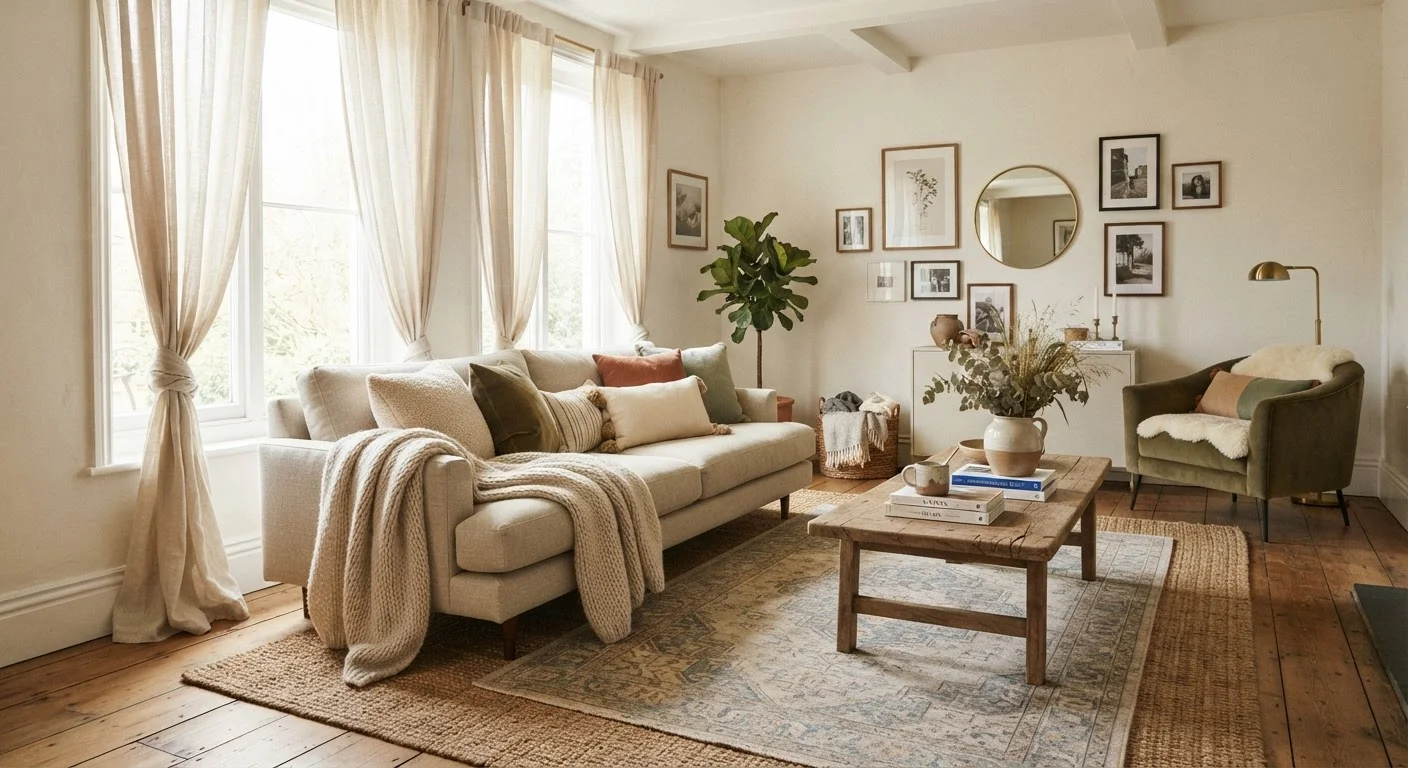
Why Soft Furnishings Matter More Than You Think
Hard surfaces - wood floors, painted walls, glass windows - define a room's bones, but they also reflect sound, radiate cold, and create visual flatness. Soft furnishings are what convert a structurally complete room into one that actually feels livable. Textiles absorb sound, retain warmth, introduce tactile richness, and break up the monotony of hard lines.
This isn't purely aesthetic. A rug underfoot reduces noise transmission between floors. Heavy curtains provide meaningful insulation at windows. Even throw pillows add a layer of ergonomic comfort that a bare sofa can't offer. Understanding these functional roles gives you a framework for making smart textile choices - not just instinctive ones. If you're starting a room from scratch, this beginner's walkthrough can help you build the full picture before you shop.
Before committing to a rug color, place a large fabric swatch or even a sheet of colored paper on the floor in the actual room and live with it for a day. Artificial light and room color will shift how any rug reads.
Rug colors appear significantly different in showroom lighting versus home lighting, and a costly mistake is nearly impossible to reverse once a large rug is purchased and unrolled.
When in doubt about curtain length, go longer rather than shorter - you can always hem, but you cannot add fabric. Order panels that reach the floor and adjust from there.
Curtains that fall short of the floor are the single most common proportion error in DIY-decorated rooms, and the fix often costs more than getting it right the first time.
How Rugs Anchor a Room
A rug does two things simultaneously: it defines a zone within a larger space and it visually ties the furniture in that zone together. The most common mistake homeowners make is choosing a rug that's too small - floating a 5×7 rug in the center of a seating area leaves furniture looking like it belongs in separate rooms.
As a reliable rule of thumb, the front legs of every major sofa and chair in a seating area should sit on the rug. In a dining area, the rug should be large enough for chairs to remain on it when pulled out. These proportions create cohesion rather than fragmentation.
Rug texture also shapes the room's mood. A flat-woven cotton rug reads as casual and easy to maintain, while a plush wool pile signals warmth and formality. Natural fiber rugs (jute, sisal, seagrass) add organic texture and work well in high-traffic areas. If your space feels acoustically harsh or echoey, a thicker, denser pile rug will make a noticeable difference. For more ideas on making a smaller room feel more spacious, see how strategic choices can visually expand a cramped room.
~10 dB
Sound reduction from adding a large area rug
Acoustic studies on hard-floor rooms consistently show that textile floor coverings reduce reflected sound and echo by a meaningful margin in everyday living spaces.
2-3x
Perceived ceiling height increase from high-hung curtains
Interior design research and practitioner consensus indicate that mounting curtain rods near the ceiling rather than the window frame dramatically exaggerates perceived room height.
Curtains: Light, Height, and Proportion
Curtains have an outsized impact on how tall and wide a room feels - arguably more than any other soft furnishing. The key variable isn't which curtains you choose, but where you hang them. Mounting curtain rods close to the ceiling (rather than just above the window frame) draws the eye upward and makes ceiling height feel significantly greater than it is. Extending rods 8-12 inches beyond the window frame on each side also makes windows appear wider and allows more natural light to enter when panels are open.
For length, curtains that graze the floor or pool very slightly look intentional and elegant. Curtains that stop several inches short of the floor read as an error in proportion. If your room receives strong natural light and you want to manage both glare and warmth, consider layering sheer panels behind heavier drapes - you gain light control without sacrificing softness. This approach also complements using your home's natural light to guide color choices.
Fabric weight matters here too. Lightweight linen or voile creates an airy, relaxed feel. Velvet or wool blends absorb sound, provide privacy, and add visual weight - useful in rooms that feel sparse or too open.
Throw Pillows: The Finishing Layer
Throw pillows are the most flexible and affordable tool in the soft furnishing toolkit. They can introduce a new color, add a contrasting texture, or reinforce the room's existing palette - all without a significant investment. They're also the easiest element to swap seasonally, making them a practical way to refresh a space without redecorating.
The most visually effective approach uses pillows in varying sizes and at least two different textures. On a standard three-cushion sofa, a common starting arrangement is two larger pillows (22-24 inches) flanking the sofa, two medium pillows in a contrasting fabric, and one smaller lumbar pillow at the center. This graduated sizing creates depth without appearing fussy.
Resist the urge to match everything perfectly. Pillow covers in the same color family but different weaves - say, a linen and a chunky knit in the same warm cream - create far more visual interest than an identical matching set. The design principle of texture variation applies here just as much as it does to furniture and finishes.
Coordinating Textiles Without Overcomplicating Things
One of the most common decorating pitfalls is mixing too many patterns or colors across soft furnishings until the room feels chaotic. A simple framework: work with a maximum of two or three colors drawn from your existing furniture or wall color, and vary the scale of any patterns you use rather than mixing multiple patterns of the same scale.
For example, a large-scale geometric rug can pair well with a smaller-scale geometric pillow print, as long as the colors share a common thread. A solid curtain in a neutral that appears in both the rug and the pillows acts as a unifying element. If you want to check your room's current palette before making purchases, this room refresh checklist can help you audit what's already working. You might also find the research on color and mood useful when deciding whether to introduce a warmer or cooler accent textile.
Start with One Anchor Textile
If you feel overwhelmed coordinating rugs, curtains, and pillows simultaneously, choose one textile first - typically the rug, since it's the largest - and build your palette from there. Pull two colors from the rug for pillows and one neutral from it for curtains. This approach naturally limits your palette without requiring any formal design training.
Practical Considerations: Durability, Care, and Cost
Aesthetics aside, textiles need to hold up to real life. High-traffic areas warrant durable, easy-clean fabrics: solution-dyed acrylics and tightly woven synthetics resist staining better than loosely woven natural fibers. For households with pets or young children, removable, machine-washable pillow covers and flat-woven rugs that can be taken outside and beaten clean are worth prioritizing.
Curtain care is often overlooked. Most fabric panels benefit from occasional gentle washing or dry cleaning to remove dust, which can degrade fibers over time. Check care labels before purchasing - dry-clean-only curtains represent an ongoing maintenance cost worth factoring in.
Cost doesn't have to mean compromise. Layering a modest flat-weave rug over a larger neutral jute base rug creates the look of a custom large-format rug at a fraction of the price. Curtains made from quality fabric in a simple style frequently look more considered than cheaper curtains with elaborate detailing. Focus your budget on the item with the largest visual footprint - typically the rug - and economize on the items that are easier and cheaper to replace, like throw pillow covers.