
Why Multifunctional Furniture Has Become So Common
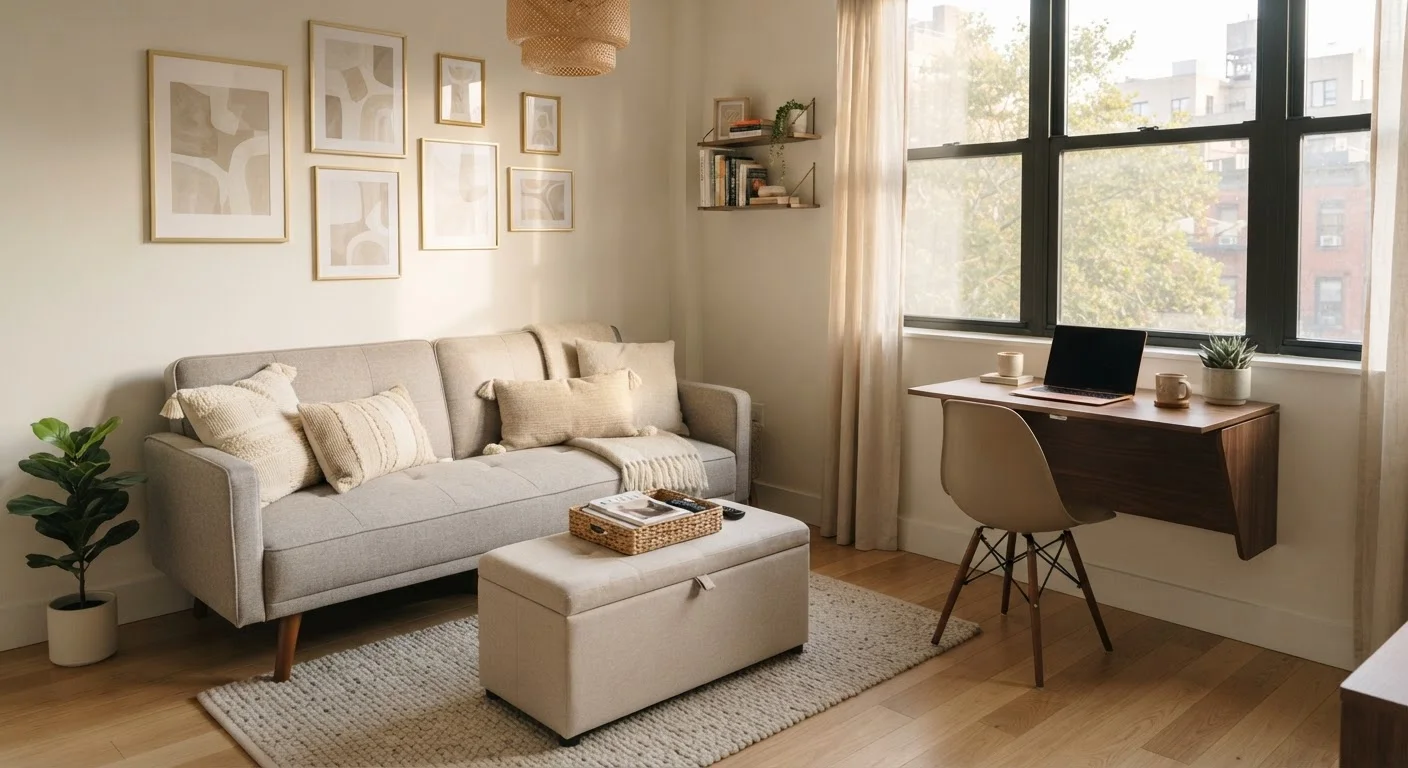
As average American home sizes have remained flat or declined in many urban markets, the appeal of furniture that pulls double duty has grown steadily. A sofa that converts to a guest bed, an ottoman that stores extra blankets, or a wall-mounted desk that folds flush when not in use - these pieces promise to solve two problems with one purchase.
But the trade-offs are real, and they're worth understanding before you shop. See our room evaluation checklist before committing to any new piece, and consider how dual-purpose furniture fits into your overall strategy for a small room.
The Real Advantages
When multifunctional furniture works well, it works genuinely well. Here's where these pieces consistently deliver:
Maximizes usable space in smaller rooms
A sofa bed or daybed eliminates the need for a separate guest room, freeing square footage for everyday living. In studio apartments or compact homes, this can be the difference between a functional layout and a cramped one.
Reduces the number of pieces you need to buy
Purchasing one piece that serves two functions typically costs less than buying two dedicated items. This is particularly useful when furnishing a new home or working within a tight budget.
Encourages intentional, organized living
Many multifunctional pieces - like storage benches or ottomans with interior compartments - naturally prompt tidier habits by giving common items a designated home.
Adapts well to changing life stages
A home office with a fold-down murphy bed can transition into a nursery or guest room as needs shift. Flexibility over time adds long-term value beyond the initial purchase.
Can simplify decorating in multipurpose rooms
When one piece serves the room's core functions, there's less visual noise to manage and fewer coordination decisions to make around additional standalone furniture.
Storage benefits, in particular, are hard to overstate. A well-chosen storage ottoman or bench can dramatically reduce visual clutter - something our guide on decluttering without losing useful items covers in depth.
The Honest Disadvantages
Every dual-purpose piece involves compromise. Understanding the specific limitations of common categories helps you set realistic expectations:
Neither function performs as well as a dedicated piece
A sofa bed's mattress is almost always thinner and less supportive than a standalone bed. A fold-down desk typically has less surface area than a fixed desk. The compromise is built into the design.
Conversion mechanisms add wear points over time
Hinges, sliders, pull-out frames, and locking pins all represent potential failure points. Mechanisms that are used frequently - especially in rental settings or high-traffic homes - may need maintenance or replacement sooner than expected.
Higher upfront cost for quality versions
Well-made multifunctional furniture with reliable mechanisms typically costs more than comparable single-function pieces. Budget versions often sacrifice the very durability that makes them practical.
Heavier and harder to move or rearrange
The internal frameworks that enable conversion add significant weight. This makes repositioning within a room or moving to a new home more physically demanding and potentially costly.
Transition time can disrupt daily routines
Converting a sofa to a bed or folding down a wall desk takes time and effort that dedicated furniture doesn't require. If the secondary function is needed frequently, the friction adds up.
Style options are often more limited
Manufacturers prioritize functionality in the design of convertible pieces, which can mean fewer aesthetic choices compared to traditional furniture. Finding something that matches an existing room's style may require more searching.
When Multifunctional Isn't the Answer
If a room has a single, clear primary purpose - a dedicated bedroom, a formal dining room, a focused home office - multifunctional furniture often introduces unnecessary complexity without meaningful benefit. Dual-purpose pieces shine in genuinely multipurpose spaces. In rooms with a fixed, single function, investing in one well-made dedicated piece will typically outperform a convertible alternative in both comfort and longevity.
For rooms with multiple functions - like a living-dining combination or an office-guest room - furniture layout planning can help you use multifunctional pieces more strategically.
Common Categories and What to Watch For
Different types of multifunctional furniture carry different trade-off profiles:
- Sofa beds: Thinner mattresses are the standard compromise. If a guest will use one for more than two or three nights, comfort becomes a legitimate concern. Pull-out frames also add significant weight, making rearrangement difficult.
- Storage ottomans: Among the most practical dual-purpose pieces - the trade-off is mainly structural; a lid that opens for storage can't support the same weight as a solid frame.
- Fold-down wall desks: Excellent for occasional work-from-home use, but surface area is usually limited. They work well when paired with good vertical storage nearby.
- Extendable dining tables: A smart choice for small dining areas that occasionally host larger groups. The mechanism adds cost and can loosen over time with frequent use.
- Daybed frames: Versatile for guest rooms that also serve as offices or hobby spaces, though styling them to look intentional takes some effort.
~350 sq ft
Average US studio apartment size
According to RentCafe data, the average American studio apartment is approximately 350 square feet, making space-saving furniture particularly relevant for this housing category.
1 in 5
US households in spaces under 1,000 sq ft
U.S. Census Bureau housing data indicates a notable share of American households occupy relatively compact living spaces where multifunctional furniture offers the most practical benefit.
Whatever category you're considering, connect your choice to your actual lifestyle - how often will each function be used? That single question does more work than any feature comparison.
How to Decide If a Piece Is Right for Your Home
A few practical questions can cut through the appeal of a well-photographed multifunctional piece:
- How often will you use both functions? If the secondary function happens fewer than once a month, a simpler dedicated piece may serve better.
- Does the mechanism feel durable in person? Hinges, sliders, and fold-out frames vary widely in quality. Test them in a showroom if possible.
- Will this piece anchor the room or just fill it? Multifunctional furniture sometimes creates visual clutter rather than reducing it - especially bulkier convertible sofas or beds with complex frames. See our guide on storage solutions that actually fit your space for related thinking.
- Does the price reflect both functions? A piece priced at roughly the cost of one function but promising two is almost always cutting corners somewhere. Households balancing tight budgets can explore how spending decisions around the home connect to broader financial planning - including how couples navigate shared expenses, as covered in our guide on household budgeting strategies.