Understanding What Each Storage Style Actually Does
Before choosing between open shelving and closed cabinets, it helps to understand the core trade-off: visibility versus concealment. Open shelving puts everything on display, which encourages curation but demands ongoing tidiness. Closed cabinets hide contents behind doors, offering a uniform appearance at the cost of visual breathing room.
Neither approach is universally superior. The right choice depends on the room in question, how the space is used, and - honestly - how much time you're willing to spend organizing. Reducing visual clutter is easier when storage naturally contains and conceals; open shelving shifts that responsibility to the homeowner.
| Criterion | Open Shelving | Closed Cabinets |
|---|---|---|
| Visual effect | Airy, open, spacious | Uniform, contained, tidy |
| Dust and grease exposure | High - requires frequent cleaning | Low - contents protected |
| Organization demand | High - clutter is visible | Low - mess stays hidden |
| Installation complexity | Generally simpler and lower cost | More involved; higher cost |
| Display potential | Excellent for curated items | Limited - contents not visible |
| Best room fit | Living rooms, open kitchens | Bathrooms, bedrooms, busy kitchens |
| Accessibility | Instant - no doors to open | Requires opening door or drawer |
Kitchen Considerations: Display vs. Function
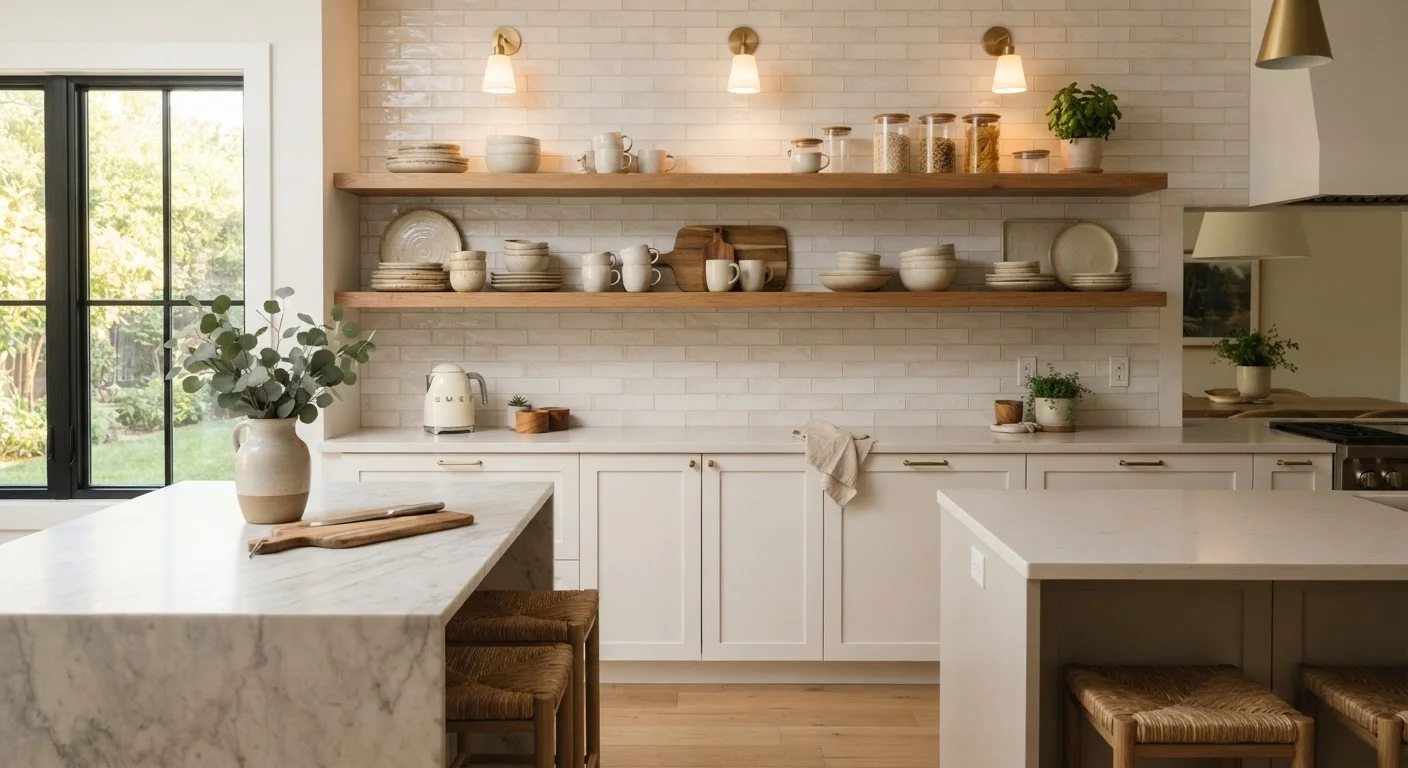
In kitchens, open shelving works well for items you reach for daily - everyday plates, glasses, and a small collection of cookbooks. It keeps the space feeling less enclosed, which matters in galley-style or smaller kitchens. However, kitchens generate grease and steam, which settle on exposed surfaces. Items on open shelves near the stove will need more frequent cleaning than those stored behind cabinet doors.
Closed cabinets shine for storing pantry staples, cleaning supplies, and anything that doesn't benefit from being on display. They're also more forgiving of imperfect organization - a messy cabinet is invisible. A practical middle ground many homeowners land on: open shelving for frequently used, visually tidy items; closed lower cabinets for everything else.
~60%
Homeowners prefer hybrid kitchen storage
Industry surveys from kitchen design organizations consistently find that most homeowners opt for a mix of open and closed storage rather than one approach exclusively.
2-3×
More frequent cleaning needed for open shelves near stoves
Home organization experts generally recommend cleaning open kitchen shelves two to three times more often than cabinet interiors due to grease and airborne residue.
Living Rooms and Bedrooms: Different Needs, Different Answers
In living rooms, open shelving gives you a chance to express personality. A well-styled bookcase or set of floating shelves displaying plants, framed photos, and meaningful objects can anchor a room visually. For guidance on how shelving interacts with overall room layout, furniture arrangement strategies can help you position storage so it complements rather than competes with your floor plan.
Bedrooms are a different story. Sleep environments benefit from visual calm, and exposed shelving filled with clothing, accessories, or miscellaneous items can make a bedroom feel busier than it should. Closed wardrobes and dressers keep the room looking ordered without requiring daily tidying. That said, a single open shelf for a lamp, a book, and a plant can add warmth without creating clutter. In smaller bedrooms, floating open shelves above furniture can draw the eye upward and add storage without consuming floor space.
Bathrooms and Other Spaces: Where Practicality Leads
Bathrooms present their own challenges. Humidity and moisture make open shelving risky for items that can warp, rust, or mildew - think extra toilet paper, towels stored long-term, or toiletry packaging. Closed cabinets protect these items better. However, a small open shelf above the toilet for a candle, a plant, or hand towels adds personality without much risk. For a deeper look at how storage interacts with bathroom function, small bathroom renovation principles apply directly here.
In home offices or multi-use rooms, the hybrid approach again tends to win. Keep reference materials and frequently used supplies on open shelves for easy access. Store anything that creates visual noise - cables, paperwork stacks, off-season items - behind closed doors. The goal in any room is storage that serves your actual habits, not a design ideal that fights against how you naturally live.
This article provides general home improvement guidance for informational purposes only. Costs, structural suitability, and installation requirements vary by home; consult a qualified contractor when in doubt.