Your Brain Is Not a Neutral Shopper
Most people assume that when they overspend, the cause is simple: weak willpower, or a good deal they couldn't pass up. The reality is more structural. Modern retail - both physical and online - is built around a detailed understanding of how human decision-making actually works, and that understanding is applied systematically to increase the amount you spend.
Cognitive biases are consistent, predictable patterns in how the brain processes information and makes choices. They are not flaws unique to impulsive or uninformed shoppers; they are features of human cognition that affect everyone. Retailers, app designers, and brand strategists invest heavily in applying findings from behavioral economics to exploit these patterns at scale.
Understanding that the game is rigged - not against stupid people, but against normal human psychology - is the first step toward shopping with more intention. The techniques described below are not theoretical. They appear in grocery stores, e-commerce checkouts, and fast-fashion apps alike.
The Tactics That Reliably Loosen Your Wallet
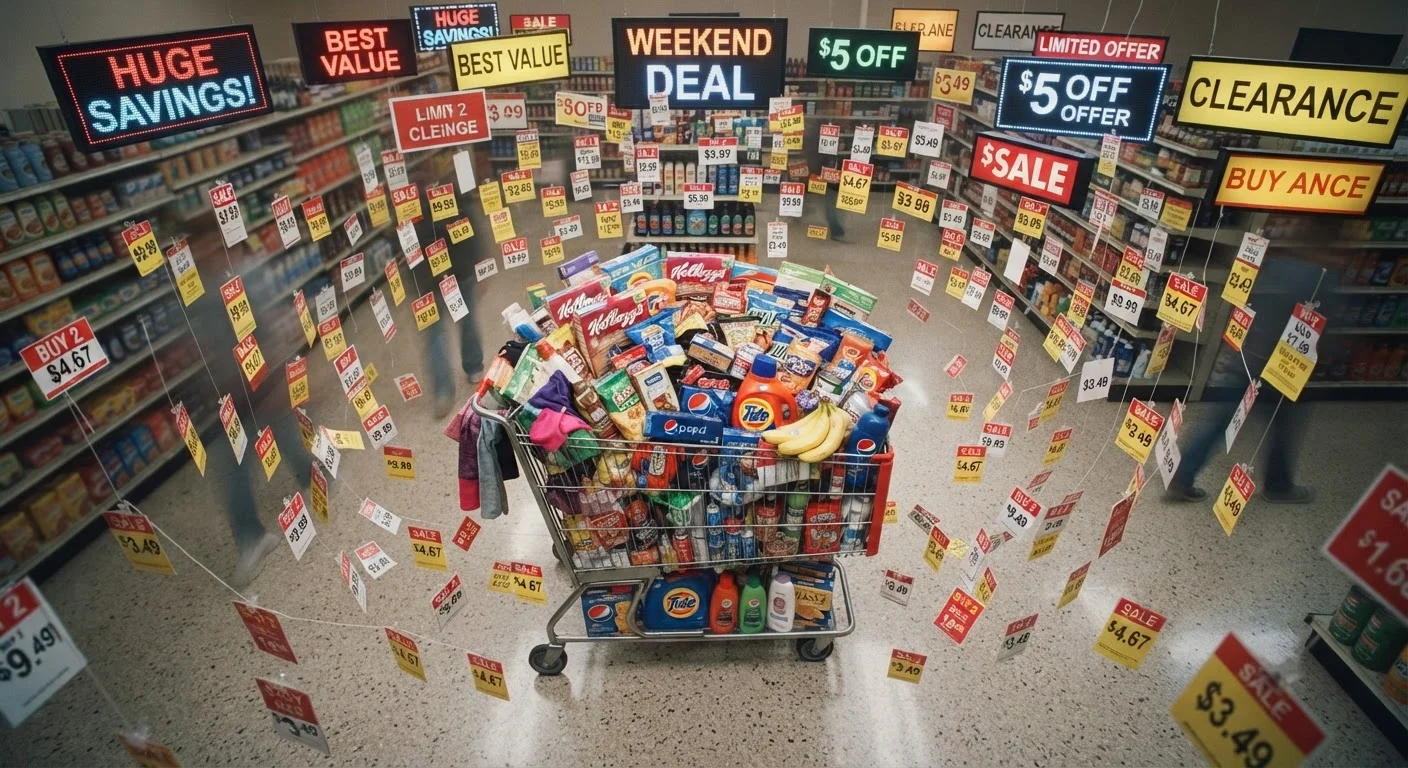
Anchoring. When you see a crossed-out price next to a sale price, your brain uses that original figure as an anchor - a reference point that makes the current price feel like a relative bargain, regardless of whether the anchor was ever a realistic price. Research in behavioral economics has consistently demonstrated that first-seen numbers influence subsequent evaluations even when people know to discount them. For a deeper look at how pricing displays are constructed, see our guide on retail pricing illusions.
Scarcity and urgency cues. "Only 2 left in stock" and "Offer ends in 3 hours" are designed to trigger loss aversion - the brain's tendency to weight potential losses more heavily than equivalent gains. Under time pressure, shoppers evaluate less carefully and decide faster, which typically benefits the seller.
Social proof. Star ratings, review counts, and "bestseller" labels leverage the human tendency to infer quality from the behavior of others. A product with 4,000 reviews feels safer than one with none, even when the review content is not examined closely.
Choice architecture and defaults. The order items appear in, which option is pre-selected at checkout, and whether "add protection plan" is checked by default all influence outcomes without the shopper consciously registering the nudge. Online platforms use recommendation algorithms to further shape which products enter your consideration set.
Pause Before You Add to Cart
Before completing any unplanned purchase, ask two questions: Did I come here for this item? Would I want it at full price? These prompts engage slower, deliberate thinking and interrupt the automatic response that most retail environments are designed to trigger. Even a 30-second pause can meaningfully change the outcome.
The Environment Is Part of the Strategy
Physical store design is a mature discipline aimed at maximizing exposure and dwell time. Essentials like dairy and bread are placed at the back of grocery stores so shoppers pass more products to reach them. End-cap displays (the shelves at the end of aisles) command premium placement fees from brands precisely because of their outsized influence on purchase rates. Scent, music tempo, and lighting are all variables that research has linked to time spent in store and average transaction size.
Online, the equivalent mechanisms are frictionless checkout, one-click purchasing, and the removal of any pause that might invite reconsideration. The easier a platform makes it to spend, the more you tend to spend - a pattern evident in the rise of in-app purchasing and auto-renewing subscriptions.
Payment method is a related factor. Behavioral studies suggest that digital payment reduces the psychological "pain" associated with spending, because handing over a card or tapping a phone does not carry the same visceral sense of loss as counting out cash. The cash versus card research is worth examining if you find digital spending harder to monitor.
Building Habits That Restore Your Deliberation
Awareness of these tactics is useful, but it is not a reliable shield on its own - biases operate largely before conscious reasoning engages. What works more reliably is creating structure that forces a pause before spending decisions are made.
A written shopping list - reviewed before entering a store or opening an app - reduces impulse additions by establishing a clear scope. A firm per-trip budget, rather than a vague intention to "spend less," gives you a concrete limit to work against. For non-essential purchases, a waiting period of 24 to 48 hours allows the initial emotional response to subside before money changes hands. Strategies like these are explored in detail in our piece on impulse control strategies.
Tracking what you actually spend - not just what you budget - is the feedback loop that makes all of this concrete. Without a record, it is easy to systematically underestimate your spending. Spending tracking methods that work for different lifestyles are a natural complement to the awareness built here.
The goal is not to become a joyless, hyper-analytical shopper. It is to make the choices that matter to you intentionally, rather than by default.