
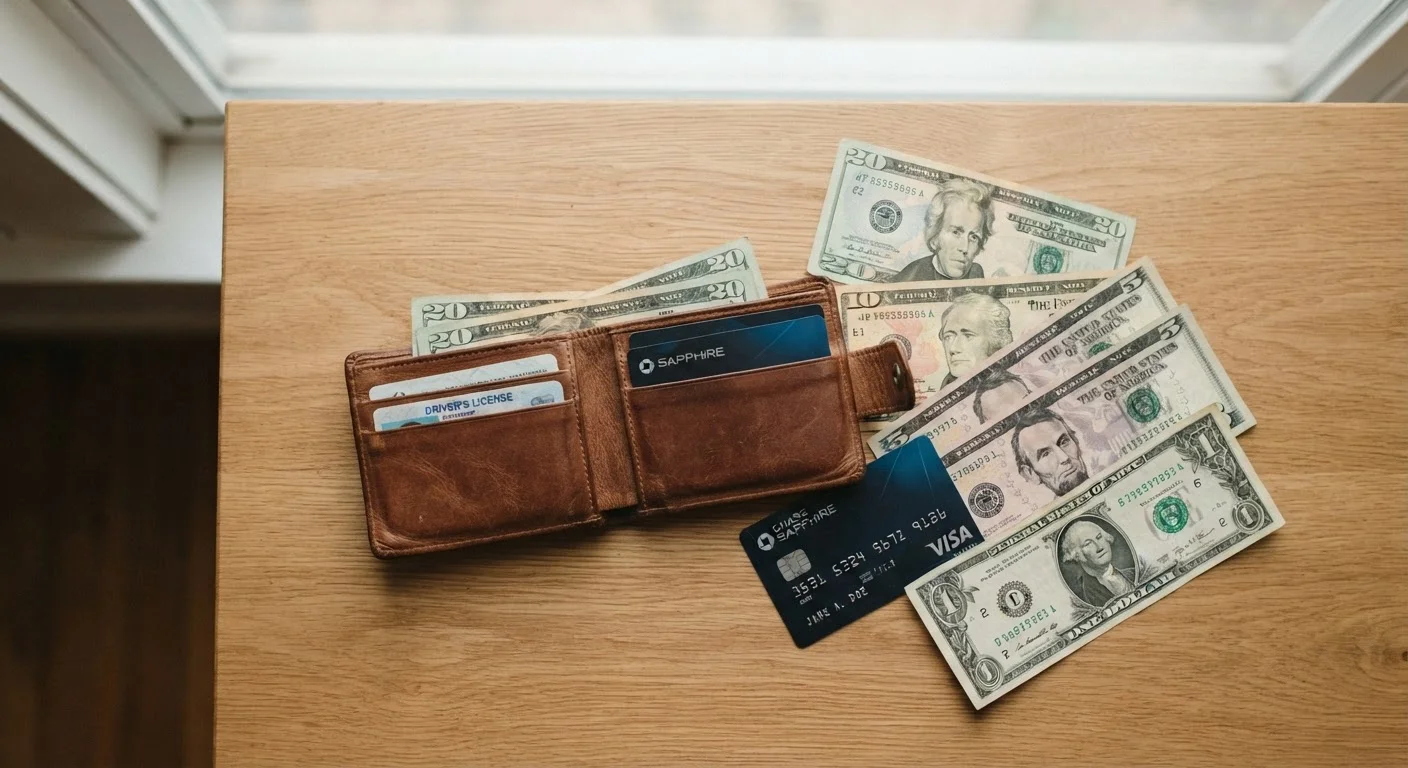
The Behavioral Gap Between Cash and Card
Pay with cash and you feel the transaction. Pay with a card and the same purchase barely registers. This isn't a personality flaw - it's a well-documented behavioral pattern that researchers call the "pain of paying." The physical act of handing over bills creates a mild psychological friction that slows spending decisions. Swiping or tapping a card removes that friction almost entirely.
A frequently cited body of research, including work by behavioral economists Drazen Prelec and Duncan Simester, found that people willingly pay significantly more for the same item when using credit rather than cash. The act of decoupling payment from purchase - you spend now and settle later - weakens the psychological cost signal. Debit cards fall somewhere in the middle: the money leaves your account immediately, but you still don't experience the same tactile loss as handing over bills.
Understanding this gap doesn't require you to abandon cards entirely. It requires you to recognize when the gap is working against your intentions. For a deeper look at the psychological mechanics retailers exploit to compound this effect, see the psychology behind why you spend more than you mean to.
| Criterion | Cash | Card (Debit & Credit) |
|---|---|---|
| Psychological spending brake | Strong - physical loss is felt | Weak - payment is abstract |
| Fraud protection | None - lost cash is gone | Strong - federal and issuer protections |
| Spending record | Manual tracking required | Automatic itemized statements |
| Acceptance | Limited online; some vendors card-only | Near-universal, including online |
| Credit building | None | Yes, with responsible use |
| Overspending risk | Low - hard limit at balance on hand | Higher, especially with credit |
| Purchase protections | None | Often included with credit cards |
Where Cards Have a Genuine Edge
Behavioral tendencies don't tell the whole story. Cards carry real, practical advantages that cash simply cannot replicate.
- Fraud protection: Federal law limits your liability on unauthorized credit card charges to $50, and most major issuers offer zero-liability policies. Cash lost or stolen is gone.
- Spending records: Card statements create an automatic, searchable spending log. This can actually support budgeting when you review it actively.
- Purchase protections: Many credit cards offer extended warranties, purchase protection, or dispute resolution that add measurable value on larger purchases.
- Credit building: Responsible card use contributes to your credit history - a factor that affects loan rates, rental applications, and more. For context on how credit products work, the difference between secured and unsecured credit cards is a useful starting point.
The catch: these benefits are most valuable when you pay your balance in full each month. Carrying a balance introduces interest charges that can erase any rewards earned and then some. If you've ever wondered exactly how those charges are calculated, the anatomy of a credit card interest charge breaks it down clearly.
Practical Strategies That Use Both Intelligently
The most effective approach for many consumers isn't an all-or-nothing choice - it's a deliberate split. Assign payment methods to spending categories based on where you're most vulnerable to overspending.
Cash for discretionary, cards for fixed: Using physical money for categories like dining out, entertainment, or impulse shopping applies natural friction where your budget is most at risk. Cards work well for recurring, predictable expenses - utilities, subscriptions, and planned purchases - where the psychological decoupling effect is less dangerous.
This logic underpins methods like envelope budgeting, where cash is divided into labeled categories at the start of a period. The digital equivalent of this approach is explored in envelope budgeting in a digital age, which translates the core discipline into modern tools without requiring physical bills.
Another complementary move is paying yourself first - automatically routing savings before your spending money is accessible. This structurally limits what's available to spend regardless of payment method, reducing the behavioral risk that cards introduce.
This article is for general informational and educational purposes only and does not constitute personalized financial advice. Readers should consult a qualified financial professional for guidance specific to their situation.