Why 'Ethical' Language on Labels Is Often Vague by Design
Walk through any grocery or home goods aisle and you'll encounter a parade of terms - sustainable, ethical, responsible, conscious - printed on packaging in earthy tones and nature-inspired fonts. These words carry emotional weight, but most of them carry no legal weight whatsoever. In the U.S., there is no federal regulatory body that standardizes what "sustainable" or "ethical" must mean before a brand can print it on a box.
That gap is not accidental. Vague language is commercially useful. It allows companies to signal virtuous positioning without committing to verifiable standards. For shoppers, this means the presence of ethical-sounding language on a product is not, on its own, evidence of anything meaningful.
The more useful question to ask is: who verified this claim, and how? Self-declared marketing language and independently audited certification marks are not the same thing, and that distinction matters considerably when you're trying to make an informed choice. For a broader breakdown of commonly misused product terminology, see our product evaluation glossary.
Common Misconceptions, Corrected
Shoppers encounter a consistent set of misunderstandings around ethical consumption claims. The myth-and-fact pairs below address the ones that create the most confusion at the point of purchase.
Myth
If a product says 'fair trade,' it means all workers in the supply chain were paid fairly.
Fact
Fair trade certification applies only to the specific stage of the supply chain covered by the certifying program - not necessarily every link from raw material to finished product.
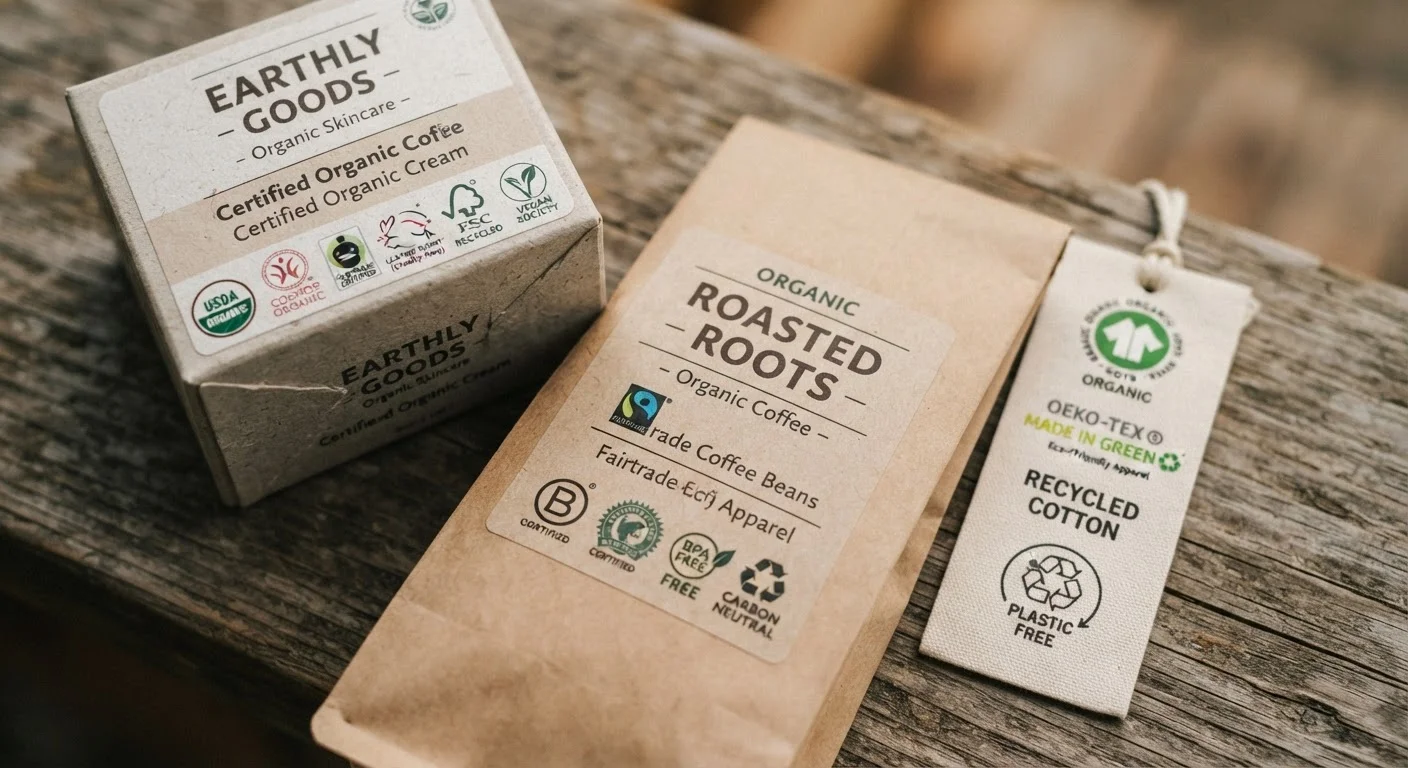
The most widely recognized fair trade programs, such as Fairtrade International and Fair Trade USA, focus on specific producer groups - often farmers at the commodity level (coffee, cocoa, cotton). They establish minimum price floors and community premiums for those groups. However, processing, manufacturing, and transportation workers further down the chain may not be covered by the same standards. A fair trade-certified coffee product, for example, addresses how coffee farmers are compensated but does not necessarily govern conditions at a roasting facility or packaging plant.
This is not a reason to dismiss fair trade certification - verified standards at the farm level represent a meaningful commitment. But shoppers should understand that the label describes a partial picture, not a guarantee of ethical treatment at every production stage.
Myth
A product labeled 'sustainable' has been independently verified to have a lower environmental impact.
Fact
'Sustainable' is an unregulated marketing term in the U.S. - any brand can use it without meeting defined criteria or undergoing outside review.
Unlike certifications such as USDA Organic or Energy Star, the word "sustainable" has no legally defined standard in American consumer product markets. The Federal Trade Commission's Green Guides provide some guidance on environmental marketing claims, but "sustainable" is broad enough that enforcement is limited and inconsistent.
When you see "sustainable" on a label, the relevant follow-up questions are: sustainable in what dimension - materials, manufacturing, packaging, transport? Over what time horizon? Verified by whom? A brand that uses recycled packaging but operates energy-intensive manufacturing can technically make sustainability-adjacent claims without misrepresenting any single measurable fact.
Myth
Buying ethical products is enough to meaningfully reduce a company's harmful practices.
Fact
Individual purchasing choices are one signal among many that influence company behavior, but systemic change typically requires policy, industry standards, and collective pressure alongside consumer demand.
Consumer demand does influence corporate decision-making - companies track purchasing data and respond to market signals. But the relationship between individual buying choices and structural change in supply chains or environmental practices is not linear or guaranteed. A company may expand its ethical product line while maintaining unchanged practices across the rest of its business, a strategy sometimes called "halo marketing."
This is not an argument for fatalism or disengagement. It's a reason to understand ethical consumption as one tool, not the only tool. Readers interested in how consumer spending patterns connect to broader economic forces can explore how consumer spending signals broader economic shifts.
Myth
Higher-priced 'ethical' products are always produced under better conditions than cheaper alternatives.
Fact
Price premium does not reliably correlate with ethical production standards - some expensive products lack any independent verification, while some value-priced products carry credible certifications.
Premium pricing in the ethical consumption space is often driven by branding, retail positioning, and ingredient sourcing costs - not solely by investments in better labor or environmental practices. A high price point signals a market segment, not a supply chain audit. Conversely, some retailers and producers with lower price points carry rigorous third-party certifications because they've made operational decisions that prioritize certified sourcing.
The reliable proxy for ethical production standards is independent verification - published criteria, auditable supply chain data, and certification bodies with conflict-of-interest protections - not the retail price. Shopping on price alone in either direction is not a reliable ethical consumption strategy.
Myth
Choosing 'recycled' or 'recyclable' packaging automatically makes a product more environmentally responsible.
Fact
Recycled content and recyclable design are meaningful attributes, but their environmental value depends heavily on local recycling infrastructure and consumer behavior after purchase.
"Recyclable" means a product can be recycled under the right conditions - it does not mean it will be. Recycling rates for many materials, including certain plastics, remain low in the U.S. due to gaps in municipal collection programs and commodity market limitations. The actual environmental outcome of recyclable packaging depends on whether the local system accepts it, whether the consumer sorts and cleans it correctly, and whether there's a viable market for the recovered material.
Similarly, "recycled content" is a spectrum: a product with 10% post-consumer recycled material and one with 80% are both technically "made with recycled content." Shoppers benefit from looking for the percentage disclosed on packaging and checking whether the claimed recyclability applies to their local program.
What Actually Signals a Credible Claim
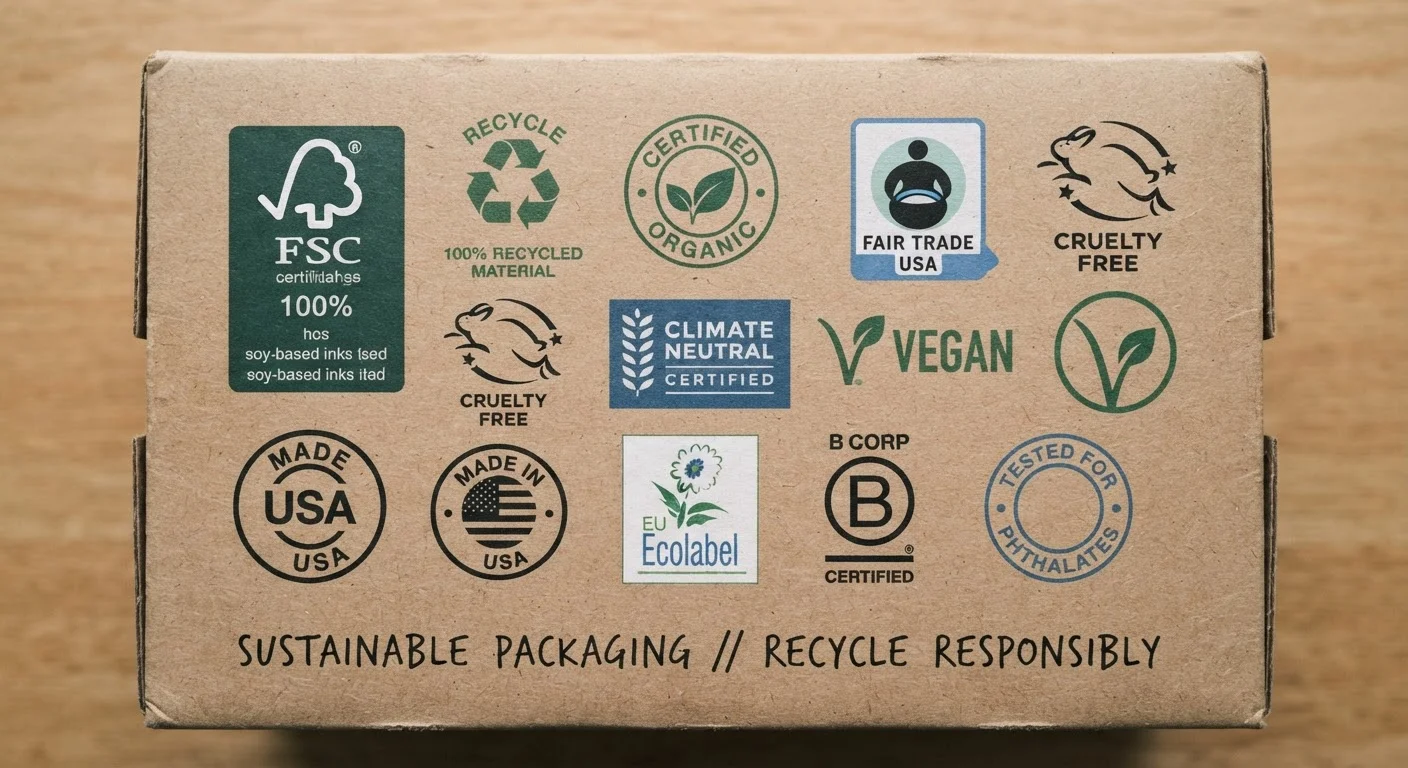
When evaluating ethical or sustainability claims, third-party certifications with published standards and independent auditing are generally more reliable than anything a brand says about itself. Some certification marks have rigorous requirements - covering supply chain audits, environmental benchmarks, or worker wage and safety standards. Others are effectively self-awarded and require no external verification at all.
This doesn't mean every certified product is flawless, or that uncertified products are automatically problematic. Certification programs have their own limitations: they cost money to obtain, which can disadvantage small producers, and their scope is often narrow. A product certified for its labor practices may still have a significant environmental footprint, and vice versa.
Our article on which certification labels are meaningful breaks down the marks that carry genuine independent verification versus those that function primarily as marketing tools. And for readers interested in how product sourcing and consumption patterns connect to broader economic forces, our introduction to the circular economy provides useful context.
The honest takeaway: ethical consumption is less a destination than a habit of asking better questions. Greenwashing - the practice of overstating environmental or social credentials - is widespread enough that skepticism is warranted by default. Our guide to reading between the lines of green product claims offers practical tools for spotting the difference.