
Why Product Language Is Worth Decoding
Product listings, spec sheets, and packaging are written to sell - not to inform. Phrases like "commercial grade," "clinically tested," or "up to" a certain performance figure are chosen carefully to imply quality without committing to it. Understanding what these terms actually mean, versus what they suggest, puts you in a stronger position before any purchase.
This glossary covers the terms shoppers encounter most often and most frequently misread. Whether you're researching electronics, appliances, tools, or household goods, these definitions will help you evaluate what's real and what's just well-worded. For a structured way to apply this vocabulary before a purchase, see the pre-purchase checklist or guide to decoding product specs.
Up to
A qualifier that indicates the maximum possible performance under ideal conditions - not typical real-world results. "Up to 500 Mbps" means that speed is theoretically achievable, not what most users will experience.
Commercial grade
A marketing phrase suggesting the product is built for business or heavy-duty use. Without third-party certification, it reflects a manufacturer's own claim and carries no standardized meaning.
Clinically tested
Indicates the product was used in some form of trial, but does not specify the trial's scope, independence, or outcome. It does not mean the product was proven effective - only that testing occurred.
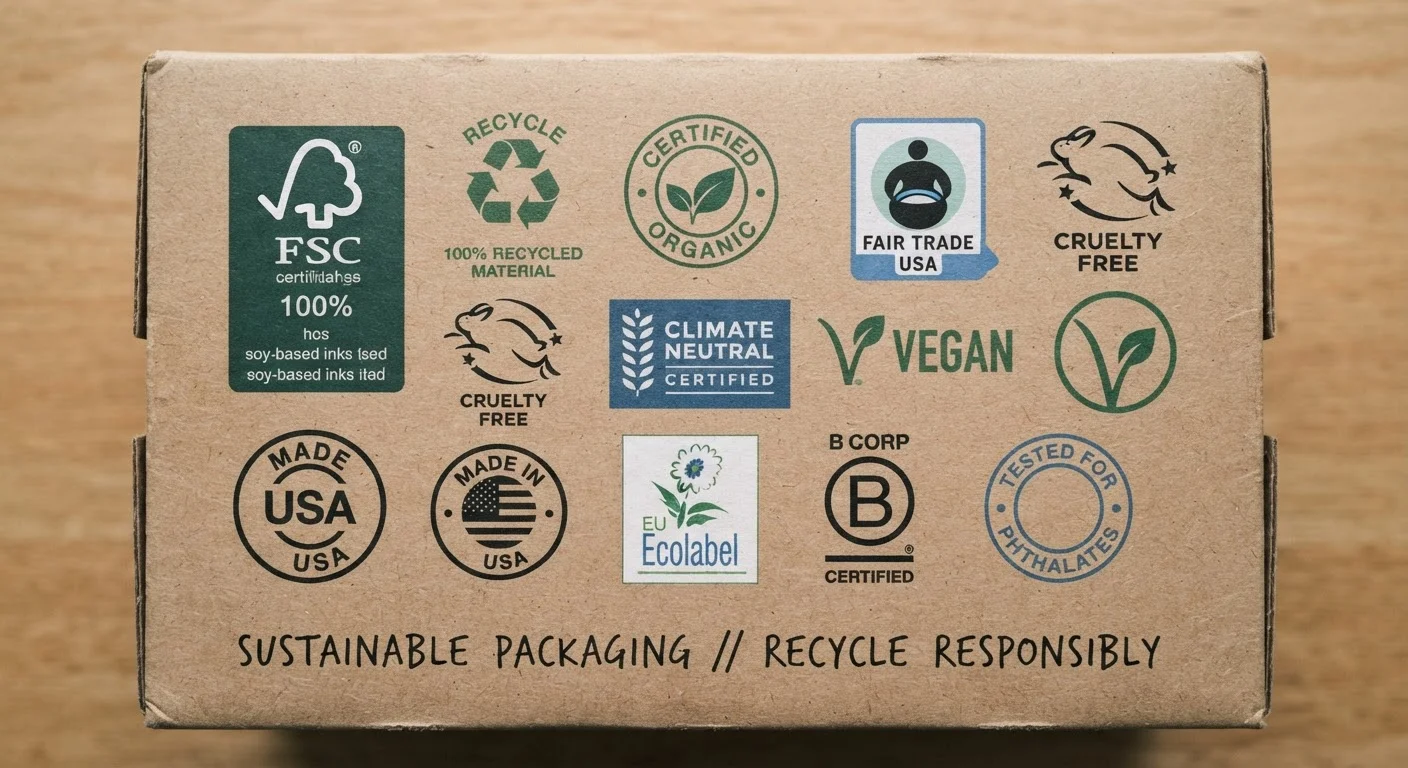
Third-party certified
Means an independent organization - not the manufacturer - has verified a specific claim or standard. Examples include UL listings for electrical safety or ENERGY STAR for energy efficiency. This carries more weight than self-reported claims.
Warranty vs. guarantee
A warranty is a formal written commitment by the seller or manufacturer to repair or replace a product under specified conditions for a defined period. A guarantee is a broader, often informal promise about satisfaction or outcome - the terms differ in legal weight and what coverage they actually provide.
MSRP
Manufacturer's Suggested Retail Price - the price a manufacturer recommends retailers charge. It is a reference point, not a binding price, and products frequently sell above or below it.
SKU
Stock Keeping Unit - an internal code used by retailers to identify a specific product variant (such as a particular color or size). Knowing a product's SKU helps you verify you're comparing the exact same configuration across different sellers.
IP rating
Ingress Protection rating - a standardized two-digit code (e.g., IP67) indicating a product's resistance to solid particles and liquids. The first digit covers dust, the second covers water. Higher numbers indicate greater protection.
OEM
Original Equipment Manufacturer - the company that originally designed or produced a component. An OEM part is made by the same manufacturer as the original; a non-OEM or aftermarket part is made by a third party and may differ in fit, materials, or quality.
Mean Time Between Failures (MTBF)
A statistical estimate of how long a product or component is expected to operate before failing, used especially in electronics and appliances. It reflects averages from reliability modeling, not a guaranteed lifespan for any individual unit.
Refurbished
A product that was returned, repaired, and re-sold, typically at a lower price. Certified refurbished items have been inspected and restored to working condition by the manufacturer or an authorized partner - seller-refurbished items carry no such standard.
Country of origin
The country where a product was substantially manufactured or assembled, as disclosed on labeling. For products with components sourced globally, this refers to where the final manufacturing took place, not where all parts originated.
How to Use These Definitions While Shopping
Most of these terms appear in one of three places: product listings, marketing copy, or third-party reviews. Each context carries different weight. A manufacturer calling their product "professional grade" is making a marketing claim. An independent testing organization applying the same label is making a verified one - and the difference matters significantly for your decision.
When you see a term you don't recognize, treat it as a prompt to dig deeper rather than a reason to feel confident. Look for who defined the standard, whether a third party verified it, and whether it applies to the specific feature you care about most. If you're shopping for something you can't test in person, these research strategies are especially useful for filling in the gaps.
Familiarity with consumer vocabulary also helps you recognize when a product is marketed toward impulse buyers rather than informed ones - a signal worth heeding. For a broader foundation on judging quality without prior experience, this beginner-friendly primer covers the core concepts clearly. Smarter product literacy also connects to broader habits covered in savvy spending strategies.