What Each Term Actually Means
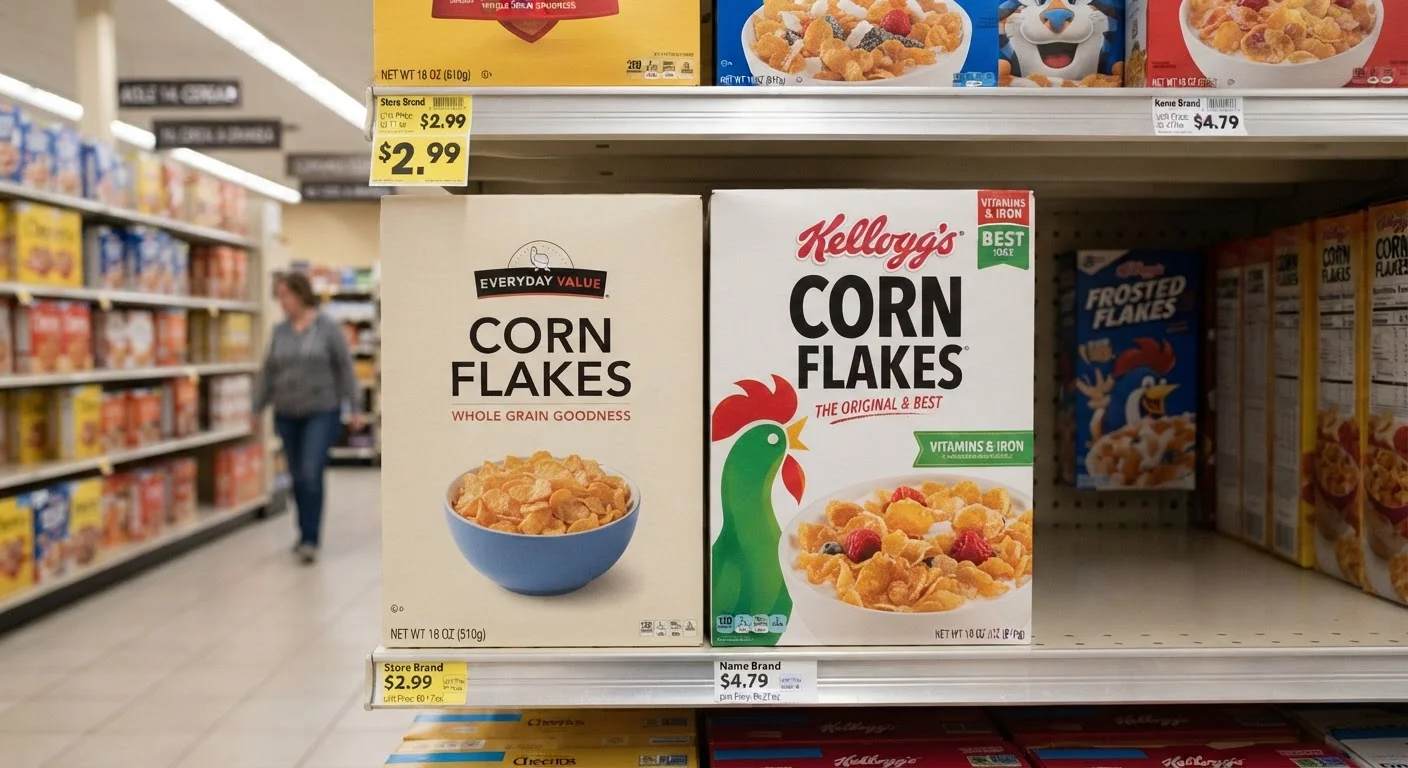
The terms name brand and private label describe who owns and controls the product's identity - not necessarily who manufactures it. A name brand product (also called a national brand) is sold under the identity of the company that developed and markets it. A private label product is developed, sourced, and sold under a retailer's own brand - think of the store-name versions of cereal, cleaning spray, or vitamins you see at major chains.
The key distinction is one of brand ownership and control. With a name brand, the manufacturer sets the formulation, packaging, and price. With private label, the retailer controls the specs and often contracts the production out to a third-party manufacturer - sometimes the very same one that produces the name brand version. For a deeper look at how to parse product quality signals, the Product Evaluation Glossary covers key terminology worth knowing.
Where the Price Difference Actually Comes From
Name brands dedicate substantial budgets to advertising, celebrity endorsements, national distribution logistics, and retail shelf placement fees - costs that are passed directly to the consumer. Private label products sidestep most of that spending. Retailers own the shelf, so there are no slotting fees. Marketing is minimal. The savings flow primarily from that leaner cost structure, not from cheaper ingredients or inferior manufacturing.
This doesn't mean private label is always the better value. Price and value aren't the same thing - a lower price on a product you'll replace more often or that performs inconsistently can cost you more over time. The Price vs. Value guide breaks down how to assess that trade-off more rigorously. Checking unit pricing is one of the fastest ways to make an apples-to-apples cost comparison at the shelf.
| Criterion | Name Brand Products | Private Label Products |
|---|---|---|
| Brand ownership | Manufacturer owns the brand | Retailer owns the brand |
| Marketing spend | High - factored into price | Minimal - savings passed on |
| Manufacturing source | Often proprietary facilities | Frequently third-party or shared |
| Price point | Generally higher | Generally 15-30% lower |
| Formulation consistency | Typically tightly controlled | Varies by retailer investment |
| Regulatory equivalence | Required to meet category standards | Required to meet same category standards |
| Proprietary innovation | Common in premium segments | Rare; usually follows market |
| Shelf availability | Multi-retailer distribution | Exclusive to that retailer |
Quality, Sourcing, and the Manufacturing Overlap
One of the most persistent misconceptions is that private label means lower quality. The reality is more nuanced. Retailers increasingly invest in private label development programs, hiring food scientists, testing formulations, and setting quality standards that rival national brands. In regulated categories - such as over-the-counter pharmaceuticals - private label products must meet the same active ingredient and efficacy standards as name brand equivalents, regardless of price.
Co-manufacturing is common across consumer goods industries: the same production facility fills both the name brand jar and the store brand jar, sometimes with the same recipe. That said, formulations can and do differ - a retailer may choose a slightly different ingredient mix to hit a price target. The honest approach is to compare ingredient lists and, where available, independent test results rather than assuming equivalence or inferiority. For context on what independent research shows across categories, see what the research actually shows about generic versus name brand products.
Where Each Category Holds a Genuine Edge
Private label tends to perform well in commodity-heavy categories: pantry staples, paper goods, basic cleaning products, dairy, and store-brand over-the-counter medications where regulations standardize the active ingredients. In these areas, the formulation differences are minimal and the cost savings are real.
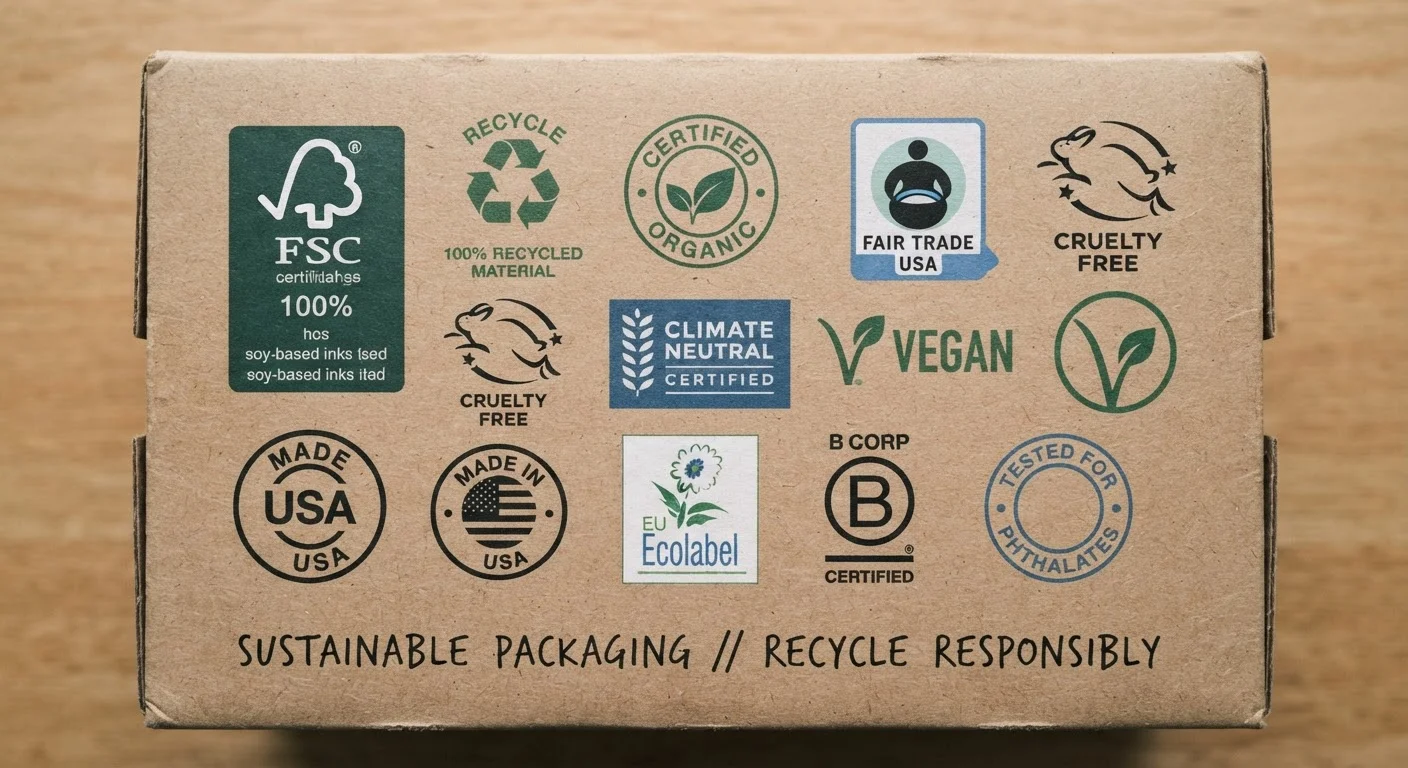
Name brands hold a clearer advantage when proprietary technology matters - think specialized skincare with patented actives, appliances with manufacturer warranties, or food products with a genuinely distinct process. They also maintain an edge in accountability: a national brand has strong incentive to maintain consistency because its reputation is attached to that product in a way a private label isn't. When evaluating a product's credentials, understanding which certification labels are meaningful can help you cut through packaging noise regardless of whether you're looking at a store brand or a national one.
~20%
Average private label price discount vs. name brands
Consumer research from organizations like the Private Label Manufacturers Association has consistently found store brands priced roughly 20% below comparable national brands on average.
1 in 5
Grocery items sold are private label
Industry data suggests private label products account for roughly 20% of unit sales in U.S. grocery channels, a share that has grown steadily over the past decade.
~40%
Of consumers report increased private label purchasing
Surveys conducted during periods of elevated food prices found a significant portion of American shoppers actively trading into store brands across multiple categories.