Why the Generic vs. Name Brand Question Is Worth Asking
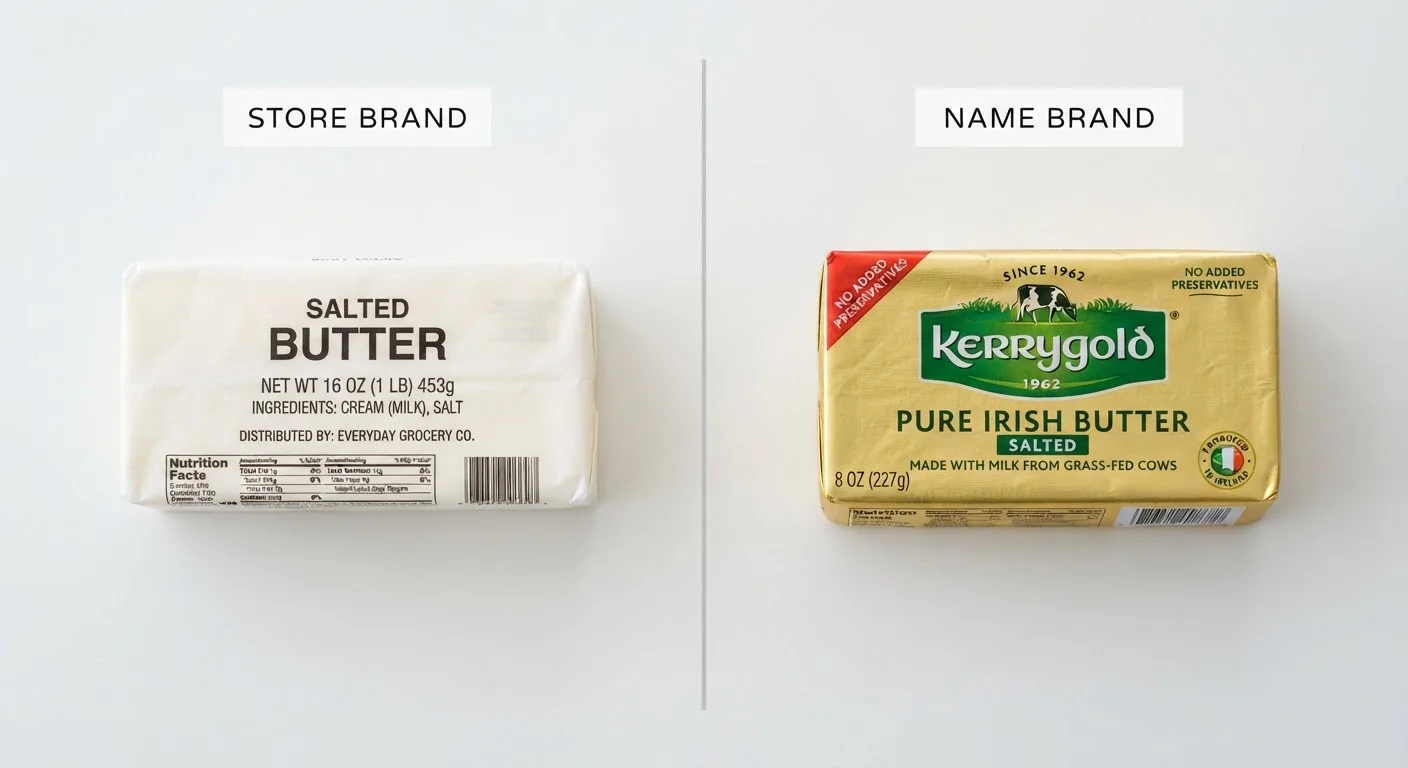
Americans spend billions of dollars annually choosing name-brand products over their store-brand equivalents. Much of that premium funds advertising budgets and brand equity - not better ingredients or manufacturing. Yet the assumption that higher price means higher quality remains remarkably persistent among shoppers.
Independent consumer testing organizations have compared generics and name brands across hundreds of product categories over decades. Their collective finding is not that one category always wins, but that the outcome varies widely by product type - and that many shoppers are paying a premium for little more than the logo on the label.
Understanding where the gap is real and where it is mostly perception is one of the most practical tools a consumer can develop. For a broader framework on how to evaluate quality before you buy, see our guide on product evaluation strategies.
Common Myths, Corrected by Evidence
These are the misconceptions that most consistently lead consumers to overspend - and what independent research actually shows.
Myth
Generic products are made with lower-quality ingredients or inferior manufacturing processes.
Fact
Many generic products are produced in the same facilities and with the same inputs as their name-brand counterparts.
Retailers frequently contract with the same manufacturers that produce name-brand goods - the only difference is the label applied at the end of the line. This is especially common in food, household supplies, and personal care. A 2019 analysis of private-label food production found a significant share of store-brand items originate from national brand manufacturers. Ingredient lists and nutrition panels are the most reliable tool for direct comparison - not brand positioning.
Myth
If a product costs more, it must perform better.
Fact
Price is a weak predictor of product performance across most consumer categories tested independently.
Price reflects many factors beyond ingredient or manufacturing quality: advertising spend, retail shelf placement fees, packaging design, and brand licensing costs all inflate the final price a consumer pays. Decades of blind testing by independent consumer organizations consistently show that shoppers cannot reliably distinguish name-brand from generic products in side-by-side comparisons across categories like pain relievers, basic food staples, and cleaning products. Understanding how to weigh price against genuine value is explored in depth in our guide on price versus value.
Myth
Store brands exist mainly for budget-constrained shoppers - most people who can afford name brands prefer them.
Fact
Store-brand market share has grown across all income segments, driven by improved quality and greater consumer awareness.
Private-label products have expanded significantly in both quality and consumer acceptance across income levels. Grocery industry data shows store-brand dollar share has grown consistently over the past decade, including among higher-income households. The shift reflects both improved store-brand quality investment by retailers and greater consumer skepticism of brand premiums. This trend is examined in more detail in our overview of consumer trends shaping how Americans shop today.
Myth
Generic OTC medications are less effective because they are not the original formula.
Fact
The FDA requires generic OTC drugs to contain the same active ingredient at the same labeled strength as the brand-name product.
U.S. regulations mandate that generic over-the-counter drugs meet the same standards for active ingredient identity and concentration as their brand-name equivalents. Inactive ingredients - binders, fillers, coatings - may differ, which can occasionally affect factors like tablet size or coating texture, but not the therapeutic action of the active compound. Consumers who have specific sensitivities to inactive ingredients should review full ingredient labels or consult a pharmacist, but for the general population, generic OTC medications offer equivalent efficacy at a lower cost.
Myth
Expert reviewers and consumer ratings always favor name brands over generics.
Fact
Independent lab-based testing frequently rates generics on par with - or above - name brands in controlled comparisons.
Consumer testing organizations that conduct blinded, standardized evaluations routinely find generic and store-brand products matching or exceeding name brands on objective performance metrics. These findings often diverge from user-generated reviews, where brand familiarity and expectation bias can influence perceived performance. Understanding the difference between what independent testing reveals versus what crowd-sourced ratings reflect is critical to interpreting product quality data accurately. Our article on user reviews vs. expert testing explains how to use both types of evidence together.
Where Generic Products Genuinely Deliver
Certain categories show consistently strong performance for store brands under independent testing:
- Over-the-counter medications: The FDA requires generic OTC drugs to contain the same active ingredient at the same dosage as their brand-name counterparts. A store-brand ibuprofen is chemically required to be equivalent to the name-brand version.
- Basic pantry staples: Flour, sugar, salt, canned vegetables, and dried pasta consistently score comparably in blind taste tests. These are commodity products where there is little room for meaningful differentiation.
- Cleaning supplies: Bleach, baking soda-based cleaners, and many multi-surface sprays share core chemistry across brands. Independent testing rarely finds performance differences that justify significant price premiums.
- Paper products: Toilet paper and paper towels show more variation, but mid-tier store brands regularly match national brand performance on standard tests for strength and absorption.
Price per unit is an important factor when comparing these items. Our explainer on unit pricing walks through exactly how to use shelf tag data to make accurate comparisons.
Where Paying More Can Be Justified
The research also identifies categories where name-brand products maintain more defensible advantages:
- Complex electronics and tools: Engineering tolerances, component sourcing, and durability testing are harder to replicate, and brand-name warranties often reflect genuine quality control investment.
- Specialty food products: Items defined by specific flavor profiles - artisanal cheeses, hot sauces, specialty condiments - may have authentic formulation differences that matter to individual preference.
- Prescription medications: Generic prescription drugs are also FDA-regulated for bioequivalence, but formulation differences in delivery mechanisms can occasionally affect absorption. This is a conversation to have with a pharmacist, not a generalization to apply broadly.
The key principle is that price should reflect something tangible. Our article on price vs. value explains how to distinguish a genuine quality premium from a marketing markup. And when you're evaluating any product without hands-on access, the research habits outlined in our guide on evaluating products you can't try before buying apply equally to both generic and name-brand comparisons.
This article is for general informational purposes only. For decisions involving medications, consult a licensed pharmacist or healthcare professional.