What Tailgating Actually Is - and Why It's Dangerous
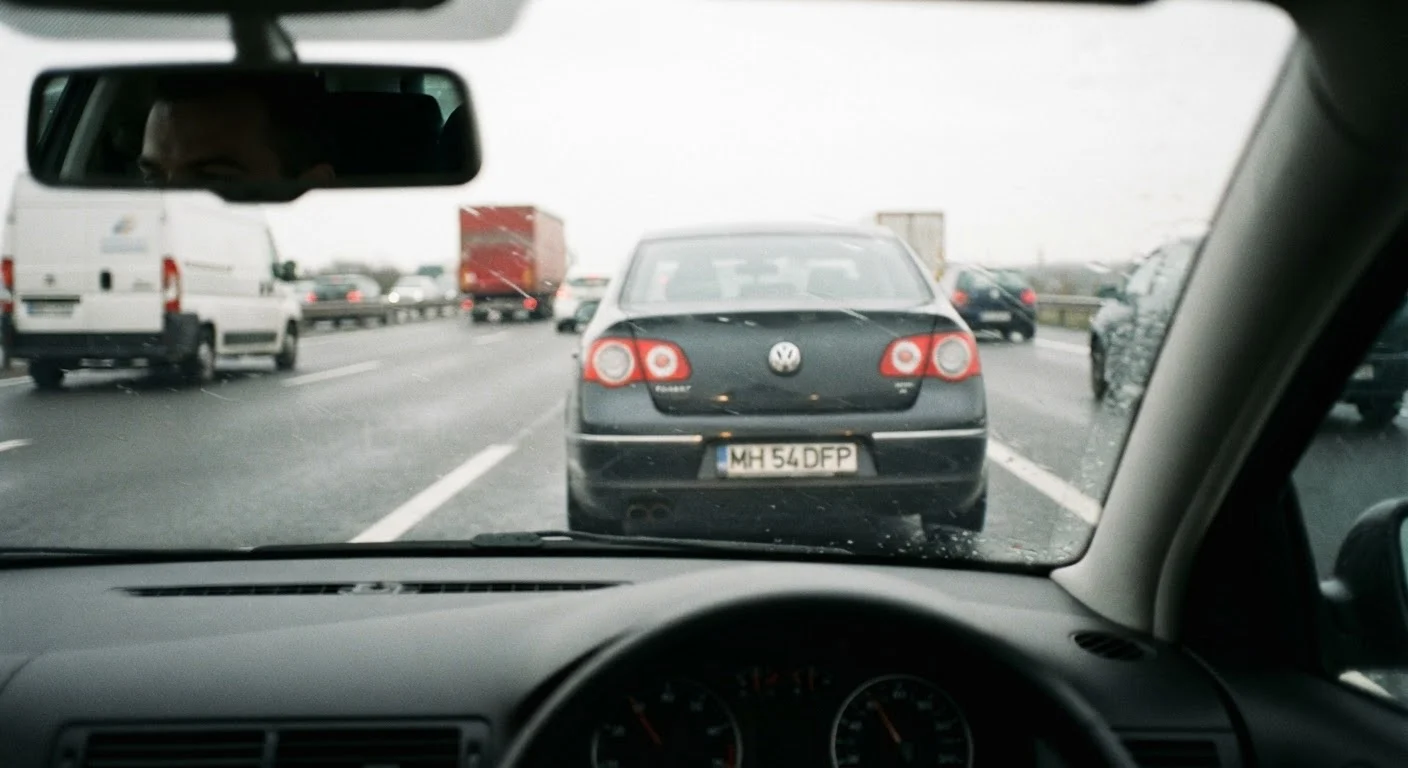
Tailgating means following another vehicle more closely than physics allows you to safely stop. At 60 mph, a car travels roughly 88 feet every second. The average driver takes about 1.5 seconds just to recognize a hazard and begin braking - that's 132 feet gone before the brakes even engage. Add actual stopping distance, and even a well-maintained car needs well over 200 feet to come to a full stop. When you're riding someone's bumper, that margin disappears entirely.
The National Highway Traffic Safety Administration (NHTSA) consistently identifies rear-end collisions as one of the most common crash types on American roads. Following too closely is a direct contributor. It's not just a ticketable offense - it's a physics problem with predictable consequences.
Understanding why drivers tailgate in the first place is the first step toward changing the habit. See how tailgating fits into the broader picture of road behavior in our article on defensive versus aggressive driving.
Common Tailgating Mistakes - and What's Really Behind Them
Most drivers who tailgate aren't doing it consciously. Here are the patterns that put people at risk:
Following at the same distance regardless of speed.
Why it happens: Drivers often set a gap based on how close they feel comfortable - which doesn't scale with speed. What feels fine at 30 mph is dangerously short at 65 mph.
Tailgating as a way to signal impatience or pressure a slower driver.
Why it happens: Frustration behind the wheel is real, and closing the gap feels like doing something about it. In practice, it rarely speeds up the driver ahead and just increases your own risk.
Drifting closer without noticing - especially on highways.
Why it happens: On long, monotonous stretches, drivers lose active awareness of their spacing. The gap shrinks gradually and goes unnoticed until it's already dangerous.
Maintaining a short gap in heavy traffic, assuming low speeds make it safe.
Why it happens: Stop-and-go traffic feels slow, so drivers stop thinking about stopping distance. But sudden braking in dense traffic is common, and a short gap at even 25 mph can still cause a collision.
These mistakes compound each other. A driver who's late, frustrated, and operating on autopilot is several times more likely to close the gap dangerously - and several times less likely to notice until it's too late.
The Real Costs: Financial, Legal, and Physical
A rear-end collision - even a low-speed one - carries consequences that last long after the scene is cleared.
~29%
Of all U.S. crashes that are rear-end collisions
According to NHTSA data, rear-end crashes represent a significant share of all reported traffic crashes each year in the United States.
1.5 sec
Average driver perception-reaction time
Traffic safety research consistently estimates that the average driver takes roughly 1.5 seconds to perceive a hazard and begin applying the brakes.
Financially, the driver who rear-ends another vehicle is almost always found at fault under U.S. traffic law. That means you're on the hook for the other driver's repairs, potential medical bills, and any injury claims. Your insurance premiums can rise substantially after an at-fault collision. These aren't small numbers - even a minor crash can easily cost thousands of dollars out of pocket before your deductible is met. For a fuller picture of what vehicle ownership really costs, see the true cost of owning a car.
Legally, many states treat tailgating as a moving violation with points against your license. In crashes that cause serious injury, the at-fault driver can face civil suits and, in cases of reckless driving, even criminal charges.
Physically, rear-end crashes remain a leading cause of whiplash injuries, which can involve months of pain and medical treatment. High-speed rear-end crashes are fatal. The risk isn't theoretical.
First-time car owners are especially vulnerable to the cascading costs of an at-fault crash. Financial pitfalls that catch new car owners off guard covers several of these, including gaps in insurance coverage that leave drivers exposed.
How to Build a Better Following Distance Habit
The most widely recommended rule is the three-second following distance: pick a fixed point on the road, and make sure at least three seconds pass between when the car ahead crosses it and when your car does. In rain, snow, or low light, extend that to four or five seconds. On the highway at high speeds, consider even more.
It sounds simple because it is - but staying consistent requires making it a conscious habit until it becomes automatic. A few practical approaches:
- Use mile markers or highway signage as reference points to check your spacing regularly.
- If someone is tailgating you, resist the urge to speed up. Gradually moving to a different lane or gently increasing your own following distance ahead gives you more buffer room.
- Recognize when you're running late and consciously resist the urge to close the gap. Tailgating rarely gets you there significantly faster - and it dramatically raises your risk.
Nighttime conditions make following distance even more critical. Our article on why night driving is statistically more dangerous explains how reduced reaction time compounds spacing risks after dark.
Safe following distance is one of the simplest, most impactful habits any driver can build. It costs nothing, requires no special equipment, and works on every road in every condition.