What Depreciation Actually Means for Car Owners
When you spend money on gas or an oil change, you get a receipt. Depreciation doesn't come with one - but it's costing you money all the same. It's the invisible expense that most car owners underestimate, and over a five-year ownership period, it often adds up to more than fuel, insurance, and maintenance combined.
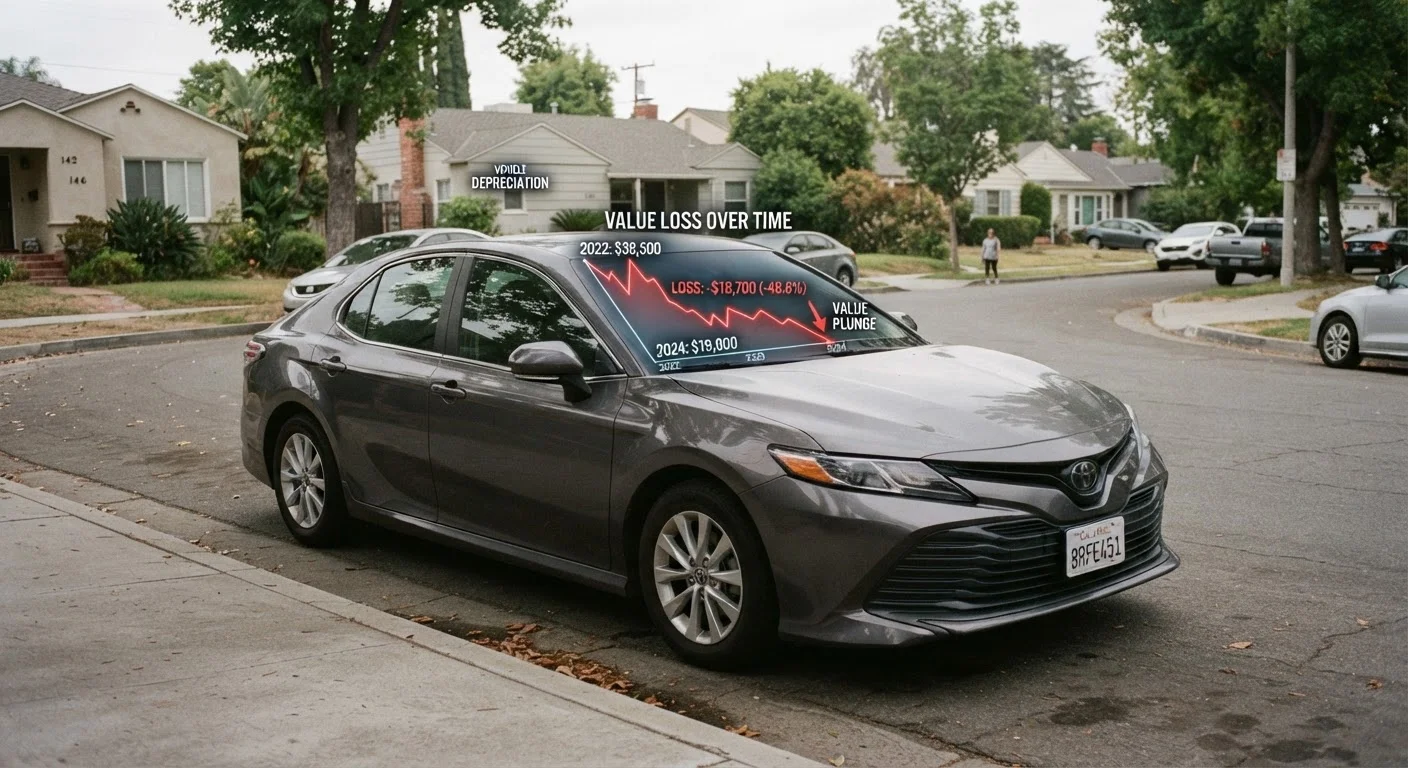
In simple terms, depreciation is the difference between what you paid for your car and what it's worth today. That gap grows over time whether you drive the car constantly or park it in a garage. For most vehicles, the loss is steepest in the early years and gradually levels off as the car ages.
This matters beyond the moment of sale. If you financed your car and it loses value faster than you pay down your loan, you can end up owing more than the vehicle is worth. That's called being "upside down" or "underwater" on your loan, and it can put you in a difficult position if you need to sell, trade in, or if the car is totaled in an accident. For a broader view of what owning a car actually costs, see the true cost of car ownership.
~20%
Average new car value lost in year one
Industry estimates broadly place first-year depreciation for most new vehicles between 15% and 25%, depending on the make and model.
~50%
Value lost after five years of ownership
Many vehicles retain only about half their original purchase price after five years, according to widely referenced automotive valuation benchmarks.
#1
Depreciation as largest cost of ownership
Studies by transportation research organizations consistently rank depreciation as the single largest annual expense for vehicle owners, ahead of fuel and insurance.
What Makes Some Cars Depreciate Faster Than Others
Depreciation isn't uniform. Several factors determine how quickly a specific vehicle loses value, and some are in your control while others are not.
- Age and mileage: These two go hand in hand. The older the car and the more miles it carries, the lower its resale value tends to be.
- Brand and model reputation: Vehicles from brands perceived as reliable and durable historically hold their value better. Popular models in high demand tend to depreciate more slowly than niche or discontinued models.
- Condition: A car with a clean interior, unscratched paint, and no accident history will consistently command a higher price than one with visible wear or damage.
- Color: Neutral colors - white, black, silver, gray - are consistently preferred by more buyers, which supports resale value. Unusual colors often narrow your buyer pool.
- Market conditions: Fuel prices, economic shifts, and consumer preferences all influence demand. A large SUV may depreciate faster when gas prices spike, while fuel-efficient vehicles may hold value better.
- Technology and features: Cars with outdated infotainment systems or missing modern safety features can depreciate faster as buyers expect up-to-date tech.
One factor you can control is how well you maintain the vehicle. A documented service history signals to buyers that the car was cared for. Following your car's maintenance schedule is one of the most practical ways to protect your investment.
How Depreciation Shapes Your Financial Decisions
Understanding depreciation changes how you think about several common car ownership choices.
New vs. Used
Buying a new car means absorbing that sharp first-year drop in value yourself. Buying a used car that's two or three years old lets someone else take that initial hit - you pay a lower price for a vehicle that will depreciate more slowly going forward. That said, used vehicles may carry higher maintenance needs, so it's worth weighing both sides carefully.
How Long to Keep Your Car
Depreciation slows as a car ages. If you sell or trade in every two or three years, you may consistently be selling during the steepest part of the depreciation curve - rarely getting the most out of your purchase. Owners who hold vehicles longer often see a better cost-per-year outcome from their original investment.
Leasing
When you lease, your monthly payments are essentially covering the projected depreciation of the vehicle over the lease term, plus financing costs. Understanding how auto leases are structured helps clarify why depreciation is so central to that calculation.
Insurance and Loan Balance
If your car is totaled, standard insurance typically pays out the vehicle's current market value - not what you originally paid. If you're underwater on your loan, that payout may not cover what you still owe. Gap insurance exists specifically to cover this difference, and it's worth discussing with your insurer if you financed a significant portion of a new vehicle's purchase price.
Keeping your car in good shape doesn't just help at resale - it can make ownership more manageable on a tighter budget too. Prioritizing the right maintenance when money is tight can prevent bigger losses down the road.
This article is for general informational purposes only and does not constitute financial or legal advice. For decisions about financing, insurance, or your personal financial situation, consult a qualified professional.