
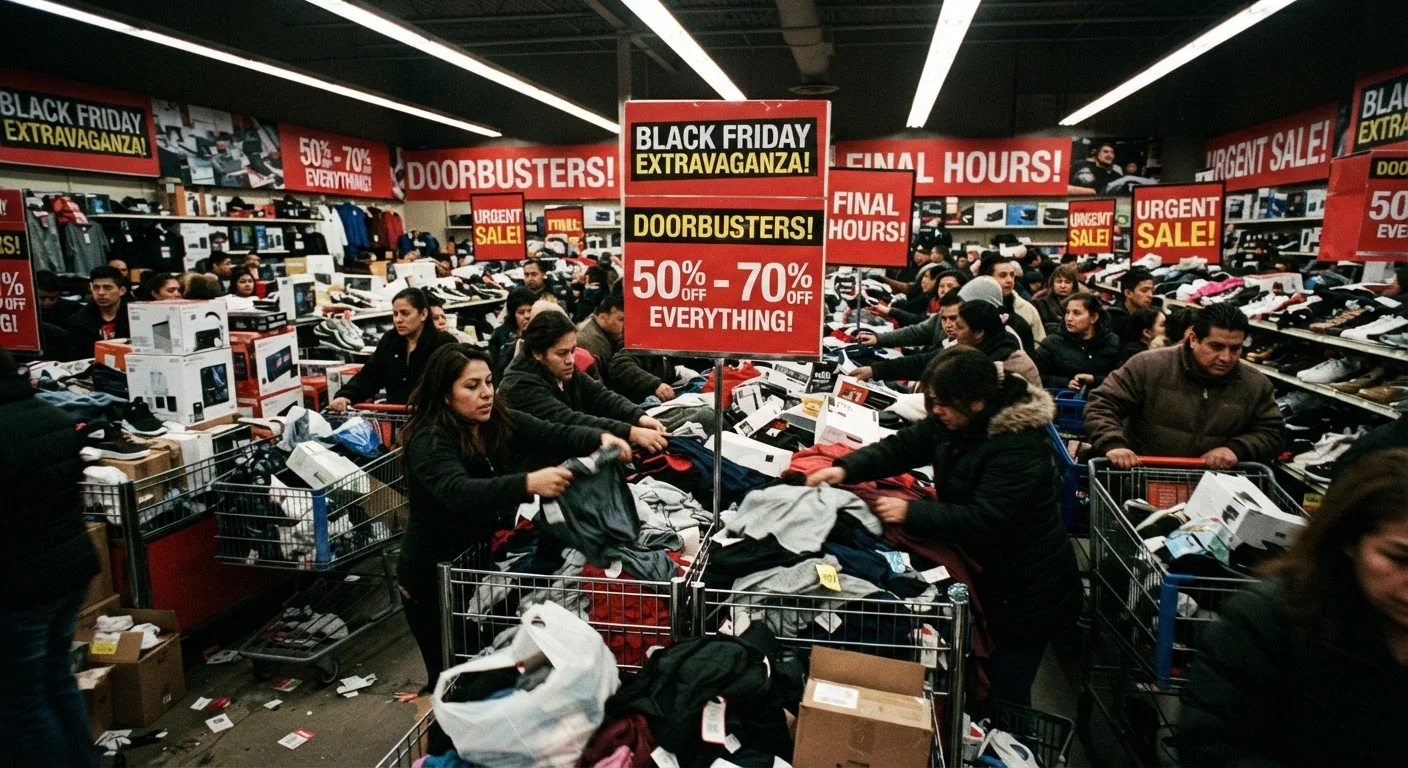
Why Sale Season Mythology Is Expensive
Retailers have spent decades refining the psychology of the sale event. The result is a set of deeply held consumer beliefs - about when to buy, how much to save, and what counts as a deal - that often work against the shopper's actual financial interest. Believing these myths doesn't just mean missing a better price; it can mean spending money you didn't need to spend at all.
Understanding how sale seasons actually work requires separating marketing mechanics from genuine market behavior. The myth-and-fact breakdown below covers the most costly misconceptions circulating among everyday American shoppers. For a deeper look at the pricing illusions that underpin many of these tactics, see how retailers use anchoring and phantom discounts.
Myth
Black Friday offers the lowest prices of the year on virtually everything.
Fact
Black Friday pricing varies significantly by product category, and many items reach their annual price low at other points in the year.
Consumer price tracking data consistently shows that Black Friday is not a universal price floor. Electronics - particularly televisions - do see competitive discounting around major sale events, but the models featured are frequently entry-level or outgoing inventory, not the current mainstream lineup. For categories like clothing, kitchenware, and home goods, comparable or deeper discounts often appear during post-holiday clearance in January or mid-year promotional events. The belief that Black Friday is categorically the best time to buy leads shoppers to rush purchases that could wait for a genuinely better price.
Myth
If the countdown timer says the deal expires soon, you need to act now.
Fact
Countdown timers and 'limited time' labels are sales tools. Many reset or the offer recurs shortly after.
Countdown timers exploit a well-documented behavioral response: scarcity increases perceived value. Retailers know this, and online storefronts frequently deploy timers that reset upon page refresh or recur the following day. 'Limited stock' warnings are similarly unreliable - inventory systems can be configured to display low-stock alerts as a conversion mechanism regardless of actual supply. Treating these signals as objective information rather than marketing mechanics leads to purchases driven by manufactured urgency rather than considered judgment.
Myth
A higher 'original price' crossed out next to a sale price proves you're saving money.
Fact
Reference prices - the 'was' figures - are sometimes set artificially high to make the discount look larger than it is.
Regulatory guidelines in the U.S. require that reference prices reflect prices at which items were actually offered for sale, but enforcement is inconsistent and the rules allow considerable flexibility. Some retailers briefly list items at elevated prices before marking them down, allowing them to display a technically legal but misleading 'original' price. The Federal Trade Commission has issued guidance on deceptive pricing practices, but shoppers cannot rely on crossed-out prices as an honest benchmark. An item's real-world price history - available through third-party tracking tools - is a far more reliable reference point.
Myth
End-of-season clearance is always the smartest time to buy clothing.
Fact
End-of-season clearance offers genuine discounts, but selection, sizing, and condition all degrade significantly as the sale progresses.
Clearance markdowns are real - retailers genuinely need to move inventory to make room for incoming stock. However, by the time discounts reach their deepest levels (often 60-70% off), the remaining selection reflects what other shoppers passed over: unusual sizing, unpopular colorways, and occasionally items with packaging damage or minor defects. Shopping early in a clearance cycle captures better selection at moderate discounts; waiting for maximum markdowns often means choosing between limited options. The 'best' time within a clearance window depends on what you need, not just what the discount percentage is.
Myth
Holiday sales are the only time to get a meaningful deal on major appliances.
Fact
Appliance pricing follows several discount windows throughout the year, including holiday weekends and model-transition periods.
Major appliances - refrigerators, washers, ranges - do see discounting around major holidays, but a comparable or better opportunity often arises when manufacturers release updated models and retailers need to clear prior-year inventory. This typically happens in spring and fall for many appliance categories. Shopping only during holiday sale windows can mean paying a 'sale' price that is still above what the item will sell for three months later when a new model arrives. Understanding product release cycles by category is more reliable than following the retail calendar alone.
What Smart Shoppers Do Instead
Rejecting sale mythology doesn't mean ignoring sales entirely - it means evaluating each discount on its actual merits. A few practical habits make an outsized difference:
- Check price history before buying. Browser extensions and dedicated price-tracking sites log historical pricing on millions of products. A 30% discount off a price that was inflated three weeks ago is not a 30% saving.
- Define your price threshold in advance. Decide what you're willing to pay for a specific item before you encounter sale messaging. This insulates you from in-the-moment urgency.
- Separate want from need in the sale context. The sale event is not the reason to buy something. The item's usefulness to you is. Sale messaging routinely inverts this logic.
- Understand category-specific timing. Appliances, mattresses, and electronics do follow somewhat predictable discount calendars - but only within narrow windows and on specific model generations, not across the board.
It's also worth noting that the impulse to stock up during sales can backfire. Bulk buying during sales can quietly cost more when you account for spoilage, storage, and purchasing items you wouldn't have bought at full price. And for a broader framework on separating a low sticker price from genuine value, price versus value analysis provides a useful foundation.
~40%
Black Friday items cheaper earlier in the year
Analysis by price-tracking services has found that a substantial share of Black Friday 'deals' were available at equal or lower prices in the weeks or months prior to the event.
65%
Shoppers who report impulse buys driven by sale urgency
Consumer behavior surveys by retail research organizations regularly find that the majority of shoppers have made unplanned purchases specifically because a sale deadline felt imminent.