The Core Promise - and the Hidden Catch
The appeal of bulk buying is straightforward: pay less per unit by buying more units. It's a deal that makes intuitive sense, and for certain products it genuinely delivers. But the per-unit price is only part of the equation. The real cost of a bulk purchase includes what you pay, what you use, and what you end up throwing away.
Warehouse clubs and big-box retailers have built entire business models around the psychology of volume savings. Understanding how that psychology works - and when it works against you - is the first step to shopping smarter. For a deeper look at the behavioral side, see our piece on why you spend more than you mean to.
The categories where bulk buying consistently pays off share three traits: long shelf life, regular household use, and price stability over time. Categories where it fails tend to involve perishability, personal preference, or consumption rates that don't match the package size.
Lower per-unit cost on shelf-stable staples
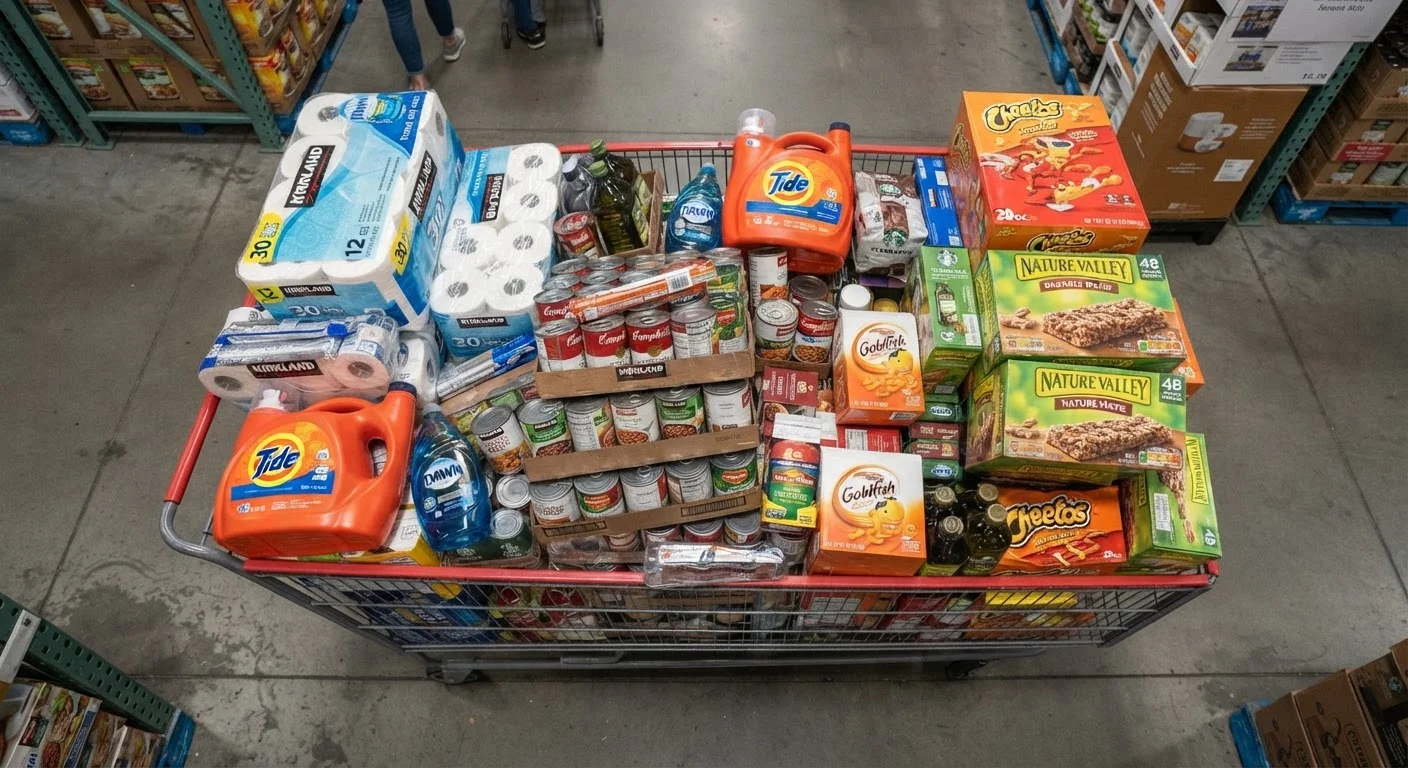
For products like canned goods, paper towels, and cleaning supplies, bulk packaging consistently delivers a lower cost per unit compared to standard retail sizes - savings that compound over regular household use.
Fewer shopping trips for high-use items
Stocking up on frequently used consumables reduces how often you need to shop for them, which can also reduce impulse purchases made during unnecessary store visits.
Protection against short-term price increases
Buying ahead at a known price insulates you from temporary price spikes on commodities, particularly for pantry staples and household supplies.
Reduces per-trip packaging and waste
Larger containers often use less packaging per unit of product, which can reduce both packaging waste and the frequency of disposal - a secondary benefit for environmentally conscious shoppers.
Where Bulk Buying Works Against You
Fresh produce, dairy, and meat bought in bulk volumes routinely spoil before a single household can use them - the money saved per pound disappears the moment food hits the trash. But perishability isn't limited to groceries. Medications and supplements have expiration dates. Cosmetics and skincare products can degrade or separate over time. Even paper goods can be affected by moisture and storage conditions.
There's also a less obvious trap: buying a large quantity of something you haven't fully vetted. Purchasing a 96-count box of a supplement, a five-liter jug of a cleaning product, or a year's supply of a food item you've used once or twice is a gamble on your own future preferences. When the product disappoints - or simply stops being something you want - you're stuck with surplus you won't use.
Spoilage negates savings for perishables
Food, medications, and some personal care products have expiration dates that may arrive before a household can use a bulk quantity. Discarding unused product erases - and can exceed - any per-unit savings.
Upfront cost strains household cash flow
Bulk purchases require a larger payment at the point of sale, which can create short-term budget pressure even when the per-unit math is favorable over time.
Membership fees may offset savings
Warehouse club access typically costs $65 or more annually. Shoppers who don't buy frequently enough in qualifying categories may spend more on access than they recover in savings.
Storage space has an underappreciated cost
Bulk inventory requires physical space, and in smaller homes, the square footage occupied by surplus goods represents a real trade-off against other household storage needs.
Preference changes leave you with surplus
Buying a large quantity of an untested or infrequently used product is a risk - if your household stops using it or switches to an alternative, you're left with unusable inventory.
Membership fees add another layer of complexity. A warehouse club membership can run $65 or more per year. For households that shop infrequently or only buy a handful of bulk items, those fees can easily offset any per-unit savings. It's worth calculating your actual annual savings against the cost of access before assuming the membership pays for itself.
Products That Genuinely Benefit From Bulk Purchasing
Shelf-stable staples are the clearest case for bulk buying. Canned goods, dried beans, rice, pasta, and oats have long shelf lives, predictable consumption rates, and prices that don't fluctuate dramatically with packaging size. Paper products - toilet paper, paper towels, tissues - are genuinely cheaper per unit in bulk and carry no spoilage risk.
Cleaning supplies, laundry detergent, dish soap, and trash bags are another strong category. These items are used consistently, tolerate storage well, and rarely go through preference changes. The same applies to personal care staples like shampoo, body wash, and toothpaste for households where the same formulas are used routinely.
~30%
Average American household food waste by weight
USDA estimates suggest that approximately 30 to 40 percent of the U.S. food supply is wasted, with household-level waste being a significant contributor - a dynamic that bulk perishable purchases can worsen.
$65+
Typical annual warehouse club membership cost
Major warehouse retailers charge annual membership fees in the $65-$130 range, a fixed cost that must be recovered through actual savings to make the membership financially worthwhile.
The key filter is honest self-assessment: does your household actually go through this product at a rate that matches the bulk package size? If you've been buying the standard size and running out consistently, bulk often makes sense. If the standard size regularly lasts longer than expected, buying more will likely create surplus rather than savings. This connects directly to the broader question of price versus genuine value - a lower price tag on a larger quantity is only a deal if you actually use what you buy.
A Practical Framework Before You Buy
Before adding a bulk item to your cart, three questions can help you avoid the most common traps. First: what is the realistic shelf life of this product under your storage conditions? Second: at your household's actual usage rate, how long will this quantity last - and does that duration stay within the shelf life window? Third: is this a product you've used enough to be confident you'll continue using it?
Storage space has a financial value that most shoppers don't account for. Allocating significant pantry, garage, or closet space to bulk inventory isn't free - it occupies space that could serve other household functions. In smaller homes or apartments, this trade-off is especially concrete.
For grocery purchases specifically, planning ahead matters as much as quantity decisions. Our guide on grocery shopping with a plan outlines approaches to reducing spending that complement - or sometimes replace - bulk buying as a strategy. Bulk purchasing works best as one deliberate tool among several, not as a default shopping mode applied to everything in the store.
Bulk Buying and Brand Decisions Often Overlap
Warehouse clubs frequently stock their own private-label versions of household staples alongside name brands - and the value comparison isn't always straightforward. Before defaulting to the bulk name-brand option, it's worth understanding what independent testing shows about store-brand quality. Our analysis of generic vs. name brand products covers this in detail across common product categories.