The Language Designed to Feel Like Evidence
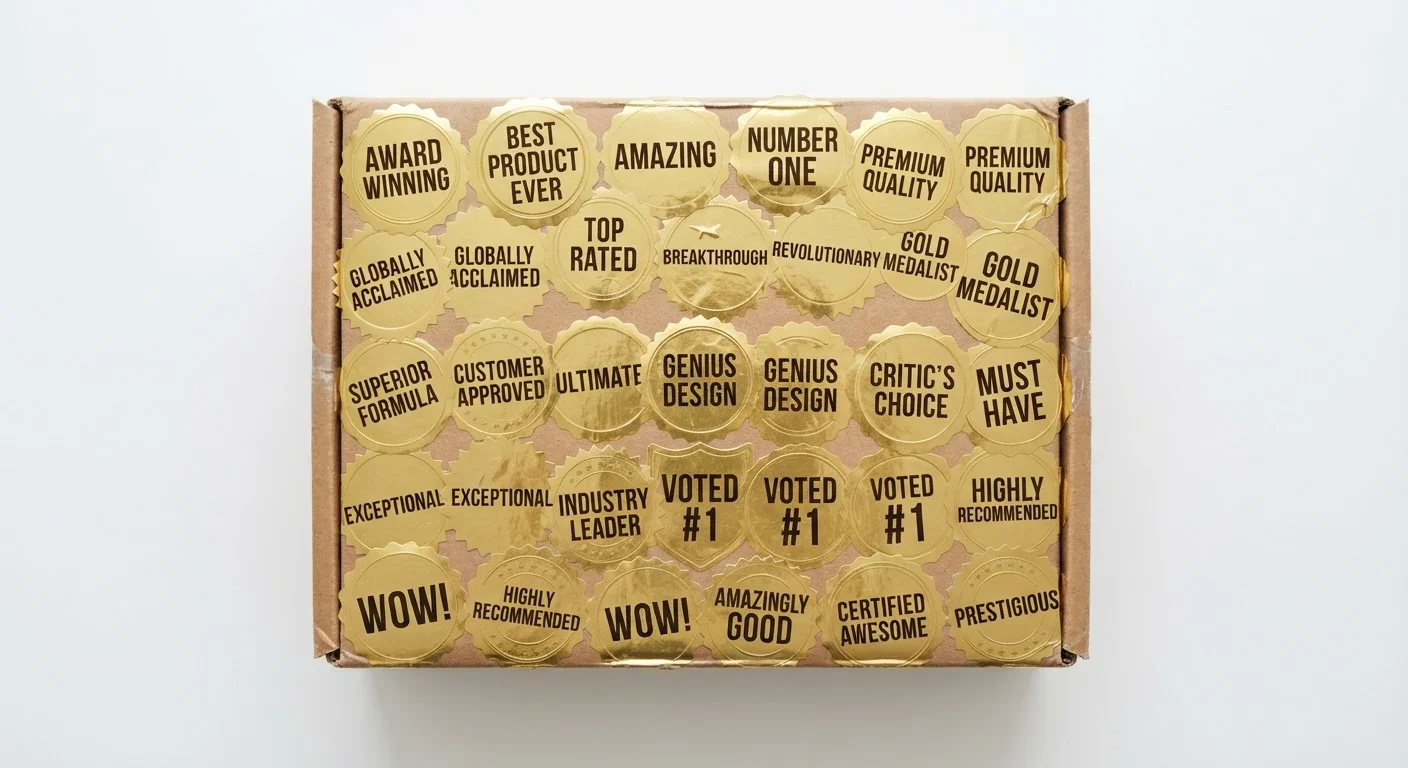
Walk through any retail aisle - physical or digital - and you'll be surrounded by claims that sound authoritative: award-winning formula, industry-leading performance, #1 trusted brand. These phrases are engineered to trigger the same mental shortcut as a credential. They feel like proof. They aren't.
Marketing copy operates in the gap between what a phrase implies and what it actually proves. "Award-winning" implies rigorous, independent evaluation. It rarely means that. "Industry-leading" implies a measurable competitive benchmark. It almost never has one. Understanding why these phrases are hollow - and what to look for instead - is one of the most practical skills a consumer can develop.
This isn't about cynicism. It's about precision. A company with a genuinely superior product can make that case with specific, verifiable data. When a brand reaches for vague superlatives instead, that's often a signal that specific data either doesn't exist or doesn't favor them.
Myth
If a product is labeled 'award-winning,' it was evaluated by an independent expert panel and outperformed competitors.
Fact
Most award programs have no standardized criteria, no blind testing, and often require brands to self-nominate and pay entry fees.
There is no governing body that defines what qualifies as an "award" for consumer products. Awards can be issued by trade publications, industry associations, marketing agencies, or organizations the brand itself helped fund. Some programs accept all entrants who pay a submission fee and judge submissions on marketing materials alone - no product testing required. Unless you can identify the awarding body, review their published judging criteria, and confirm that judges had no financial relationship with the brand, the label tells you nothing about actual product performance.
Myth
'Industry-leading' means a product has been measured against competitors and proven to perform better on a defined metric.
Fact
'Industry-leading' is an unregulated marketing term with no required benchmark, comparison data, or third-party validation.
Brands use "industry-leading" freely because it sounds comparative without committing to any actual comparison. No regulatory body in the U.S. requires a brand to substantiate what metric is being led, which competitors were measured, who conducted the measurement, or when the data was collected. In practice, a company can claim industry leadership based on internal benchmarks, selectively chosen time periods, or metrics that no competitor even tracks. The phrase functions as a confidence signal, not a factual statement.
Myth
A '#1 trusted brand' claim means consumers were surveyed and this brand ranked highest on trust measures.
Fact
These claims often originate from narrow, commissioned surveys where the methodology, sample size, and question framing are rarely disclosed.
"#1 trusted" and similar rankings are frequently produced by market research firms hired directly by the brand. The survey questions, the competitive set included, the sample demographics, and the time period are usually proprietary - meaning you cannot independently reproduce or challenge the finding. In some cases, the category being measured is defined narrowly enough that only one or two brands qualify. When you see this claim, the question to ask is: trusted by whom, measured how, and compared to what? Brands that can answer those questions clearly will usually say so. Those that can't, don't.
Myth
A product that has won multiple awards must be genuinely superior - the volume of recognition signals real quality.
Fact
Multiple awards often reflect a well-resourced marketing team submitting to many programs, not accumulated independent validation.
Submitting to award programs is a marketing function. Larger brands with bigger marketing budgets can enter dozens of programs annually, accumulating a collection of badges that appears impressive in aggregate. Because many programs have low or nonexistent judging bars, the number of awards a product holds correlates more reliably with how many programs the brand entered than with how the product actually performs. Volume of badges is not the same as depth of evidence. One rigorous, transparent, independently conducted test result is worth more than a shelf of plaques from programs whose criteria you cannot verify.
What Real Quality Signals Actually Look Like
If superlatives are noise, what's the signal? Credible quality evidence shares three characteristics: it's specific, attributable, and independently verifiable.
Specific means the claim names a measurable outcome - not "superior durability" but a defined test standard, a quantified result, or a concrete material specification. Durability claims on packaging are a particularly common area where vagueness hides a lack of real data.
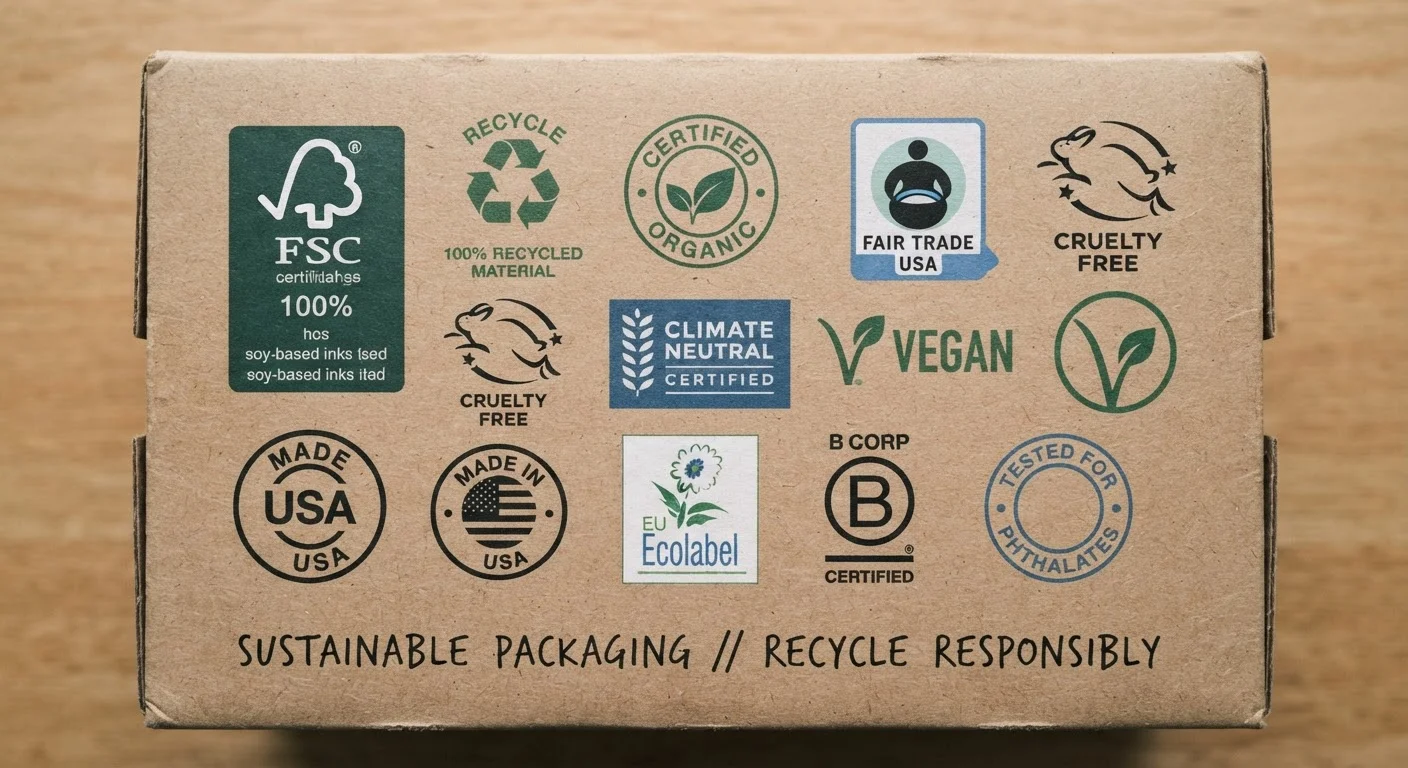
Attributable means you can trace the claim to a named organization with a disclosed methodology. A certification from a recognized testing body - where you can look up what the standard actually requires - carries weight. A badge that says "Editors' Choice" with no publication name does not. Our guide to certification labels on products breaks down which marks involve genuine independent verification and which are essentially self-awarded.
Independently verifiable means a third party - not the brand - conducted or audited the evaluation, with no financial stake in the outcome. This is where most awards fail. Many industry award programs charge entry fees, have no blind judging, or are run by trade associations whose members fund them.
~80%
Consumers who trust product claims without verifying source
Research from consumer behavior studies consistently finds the large majority of shoppers do not seek out the origin or methodology behind marketing claims before purchasing.
No standard
Federal requirement to substantiate 'award-winning' claims
The FTC requires advertising claims to be truthful and substantiated, but 'award-winning' is treated as puffery - a non-actionable opinion - in most commercial contexts.
When a claim passes all three tests, it's worth weighting in your decision. When it fails any one of them, treat it as decoration. And if you're evaluating reviews alongside these claims, it helps to know what separates a trustworthy product review from one that simply amplifies the brand's own messaging.
Skipping this verification step is exactly the kind of due diligence gap that leads to regrettable purchases - a pattern explored in detail in our piece on how shoppers get burned by skipping due diligence. The same scrutiny applies to environmental claims: "eco-certified" and "sustainably sourced" face the same credibility gap as any other superlative, as covered in our look at reading between the lines of green product claims.