What Are Dark Patterns?
Dark patterns are user interface design choices that guide you toward actions benefiting a company - signing up for a subscription, sharing more data, or spending more money - often without you fully realizing it. The term was coined by UX designer Harry Brignull around 2010 to describe these manipulative but technically legal design tactics.
They show up everywhere: e-commerce checkout flows, app sign-up screens, cookie consent banners, and cancellation pages. Unlike accidental usability problems, dark patterns are typically deliberate. They exploit cognitive shortcuts and habitual clicking to override your actual intentions.
Dark pattern
A user interface design choice that manipulates users into taking actions they didn't intend, typically to benefit the company at the user's expense.
Roach motel
A dark pattern where signing up or opting in is simple, but canceling or opting out is deliberately difficult or obscure.
Confirmshaming
A technique where opt-out buttons use emotionally loaded or guilt-inducing language to discourage users from declining an offer.
Misdirection
Using visual design - color, size, or placement - to steer users toward a preferred option while making the alternative less noticeable.
Pre-checked box
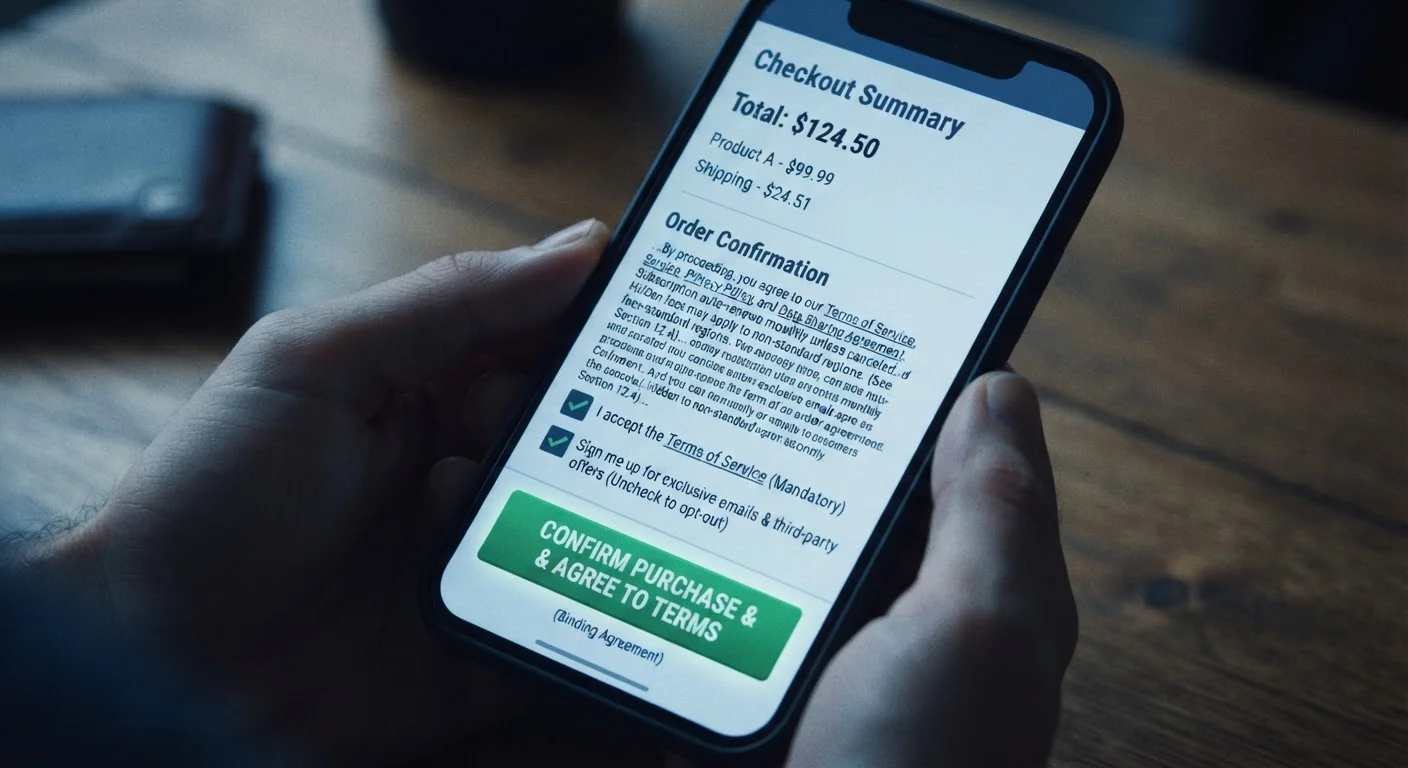
A form field that is already selected by default, enrolling users in a service or opt-in unless they actively uncheck it.
Hidden costs
Fees, charges, or surcharges that are not disclosed until the final stage of checkout, after the user has already invested time in the process.
Understanding how they work is the first step toward shopping with more awareness. For a look at how broader psychological tactics reinforce these patterns, see why you spend more than you mean to.
The Most Common Types You'll Encounter
Dark patterns take many forms. Here are the ones most likely to affect everyday purchases:
- Roach motels: Easy to get in, hard to get out. Subscribing takes one click; canceling requires navigating a phone menu or mailing a written request.
- Confirmshaming: Opt-out buttons use guilt-laden language - "No thanks, I don't want to save money" - making declining feel uncomfortable.
- Hidden costs: Taxes, service fees, or shipping charges appear only on the final checkout screen, after you've invested time in the process.
- Trick questions: Pre-checked boxes enroll you in marketing lists or add-on services unless you actively uncheck them.
- Misdirection: Visual design draws attention to a preferred option while de-emphasizing the alternative - often through color contrast, size, or placement.
- Urgency and scarcity cues: Countdown timers and "only 2 left" notices that may not reflect actual inventory or time constraints.
These tactics often overlap with pricing illusions. Retail pricing tricks like phantom discounts and decoy pricing work alongside dark patterns to shape your perception of value.
Where They Appear and Why It Matters
Dark patterns are especially prevalent in social commerce environments, where purchasing is embedded directly in entertainment-style feeds. The friction between browsing and buying is deliberately minimal - which means less time to reflect. For context on that environment, see how social commerce works.
Regulatory attention on dark patterns has grown. The Federal Trade Commission (FTC) has issued guidance and enforcement actions targeting subscription traps and deceptive cancellation flows. Several states have enacted or proposed laws specifically addressing manipulative design. This is an active and evolving regulatory area, so practices that are commonplace today may face restrictions in the future.
Regulatory Landscape Is Shifting
The FTC has taken enforcement action against companies using deceptive subscription and cancellation flows, and the regulatory environment around dark patterns continues to evolve. Some states have introduced or passed legislation targeting specific manipulative design practices. Because rules vary by jurisdiction and change over time, it's worth checking current consumer protection resources in your state for the most up-to-date guidance.
Awareness matters because dark patterns work even on people who know about them - the designs exploit automatic behavior, not just ignorance. Building deliberate pause points into your shopping routine is one of the most practical defenses. Before committing to a purchase, run through a short decision check - how to evaluate a purchase before you commit offers a useful framework for doing exactly that.
Practical Ways to Protect Yourself
No single habit eliminates exposure to dark patterns, but a few consistent practices reduce their impact:
- Slow down at checkout. Read every line, including pre-filled fields and small-print add-ons, before clicking "Place Order."
- Screenshot your cart. Capture prices before checkout begins so you can compare the final total against what you expected to pay.
- Use a secondary email for sign-ups so marketing opt-ins don't clutter your primary inbox and are easier to track.
- Look for the hard exit. If canceling a service is unclear, search for the cancellation process before subscribing.
- Install a browser extension that flags known dark patterns - several privacy-focused tools do this, though their coverage varies.
Impulse control strategies pair well with these habits. The 30-day rule and similar approaches create the kind of deliberate pause that dark patterns are specifically designed to eliminate. For a broader picture of how digital platforms shape what you see and buy, understanding recommendation algorithms adds useful context. More strategies for avoiding common spending traps are collected in the Savvy Spending hub.