The Numbers Behind the Narrative
The story that online shopping would eliminate brick-and-mortar retail has not played out that way. U.S. Census Bureau data consistently shows that e-commerce represents roughly 15-16% of total retail sales - a meaningful share, but far from a majority. Physical stores still handle the bulk of American consumer spending, even as that share has gradually declined over the past decade.
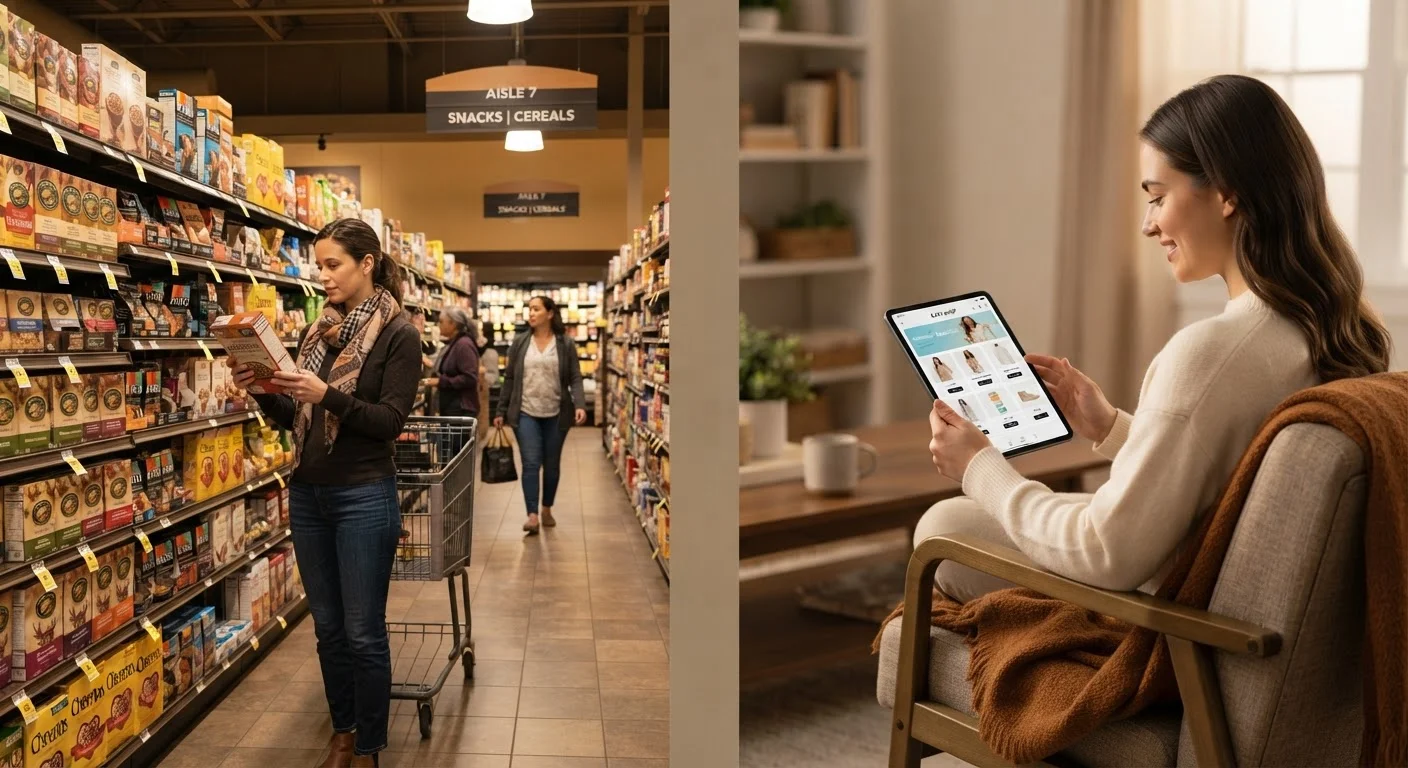
What has shifted more dramatically is how the two channels interact. Consumers frequently research a product online before buying it in a store, or visit a store to evaluate something they later order for delivery. This blended behavior - sometimes called omnichannel shopping - is now the norm rather than the exception for many product categories.
~15-16%
E-commerce share of total U.S. retail sales
U.S. Census Bureau quarterly retail e-commerce reports consistently place online sales in this range, well below a majority of total spending.
Over 60%
Shoppers who research online before buying in-store
Various consumer behavior surveys have found a majority of in-store purchases are preceded by some form of online research, a behavior sometimes called ROPO (research online, purchase offline).
Top 3
In-store-dominant categories: groceries, automotive, pharmacy
Retail industry analyses consistently show these categories retain the highest share of physical-store transactions relative to their online equivalents.
Understanding these patterns matters for everyday buyers. Knowing which channel tends to serve which type of purchase can save time, reduce returns, and help you get more value from each shopping trip. For a broader look at how spending patterns connect to larger economic forces, see how consumer spending signals broader economic shifts.
Where Each Channel Still Holds Ground
Not all product categories have shifted equally. Groceries remain heavily in-store, with online grocery ordering still representing a minority of food purchases for most households. Similarly, health and pharmacy products, automotive parts, and home improvement supplies see strong in-store traffic because consumers value immediacy and the ability to ask knowledgeable staff questions on the spot.
Online shopping has made its deepest inroads in categories where product familiarity is high and returns are manageable - electronics, books, software, apparel from known brands, and household consumables. These are purchases where the buyer already knows what they want, so physical inspection adds less value.
| Criterion | In-Store Shopping | Online Shopping |
|---|---|---|
| Product inspection | Touch, try, and test in person | Photos, reviews, and specs only |
| Availability speed | Immediate, same-day | Typically 1-5 business days |
| Selection breadth | Limited to shelf/floor inventory | Vastly wider, including third-party sellers |
| Price comparison ease | Manual, store-by-store | Fast, with comparison tools available |
| Returns process | Immediate in-store exchanges | Shipping required; timelines vary |
| Staff expertise access | Often available on the floor | Limited to chat, FAQs, or call centers |
| Strongest categories | Groceries, automotive, pharmacy | Electronics, apparel, consumables |
Age and geography also shape channel preferences in ways that are often oversimplified. Younger adults skew more digital, but they also lead in-store visits when looking for experiences or immediate needs. Rural shoppers lean more on e-commerce out of necessity, while dense urban populations often have more accessible physical retail options.
How Retail Has Adapted - and What That Means for You
Retailers have not stood still while consumer habits evolved. Curbside pickup became mainstream during the pandemic and has remained a preferred option for many shoppers because it combines the convenience of ordering online with the speed of in-store availability. Major chains have also invested heavily in making physical stores function as fulfillment hubs, blurring the line between warehouse and shopping floor.
Returns policy is another area where channels have converged. Many online retailers now allow in-store returns, reducing one of the friction points that historically made online apparel or electronics purchases riskier. Conversely, some physical retailers now offer app-guided navigation, digital price matching, and QR-code product detail pages that bring digital information into the store environment.
New purchase pathways continue to emerge beyond traditional retail. Social commerce - buying directly within social media feeds - represents a third channel that draws from both the convenience of online and the discovery feel of browsing. Meanwhile, the secondhand market has grown significantly online, adding another dimension to how Americans shop.
For shoppers, the practical takeaway is that loyalty to a single channel is rarely optimal. The smartest approach is matching the channel to the purchase type - and being aware of the algorithmic forces shaping what you see online so you're browsing on your terms, not the platform's. Some consumers are also quietly stepping back from habits they adopted in the digital shopping boom, a signal worth paying attention to.