
Why a Monthly Budget Is Your Financial Foundation
A monthly budget is not a restriction on your spending - it is a plan that tells your money where to go instead of wondering where it went. For anyone who has reached the end of a month without fully understanding why their account balance is lower than expected, a structured budget is the first practical tool that changes that pattern.
Budgeting sits at the center of nearly every personal finance goal, from paying down debt to building savings. Without it, even a decent income can disappear into vague, untracked categories. Our complete overview of personal budgeting covers the broader landscape, but this guide focuses specifically on building your very first monthly budget - no prior system required.
If your income varies from month to month, note that this guide assumes relatively stable earnings. For freelancers and gig workers, irregular income budgeting strategies may be a better starting point.
What You'll Need Before You Start
Gathering the right information before you sit down to build your budget saves significant frustration. Pull together the following before you begin:
What you will need
With these materials in hand, you can build an accurate first draft rather than working from rough guesses that need constant revision later.
Step-by-Step: Building Your First Monthly Budget
Follow these steps in order. Each one builds on the last, so resist the temptation to skip ahead.
Calculate Your True Monthly Take-Home Income
Start with the money that actually lands in your bank account - your net pay after taxes, health insurance premiums, and any retirement contributions are already deducted. If you are paid bi-weekly (every two weeks), multiply one paycheck by 26, then divide by 12 to get your monthly figure. Include all income sources: a second job, consistent freelance income, or regular support payments.
List Every Fixed Expense
Fixed expenses are costs that stay the same every month: rent or mortgage, car payment, student loan payment, insurance premiums, and any subscription services you pay on a set schedule. Write down the exact amount for each. These are non-negotiable line items that must be covered before anything else is allocated.
Estimate Your Variable Expenses
Variable expenses change month to month: groceries, gas, dining out, clothing, household supplies, and entertainment. Review your bank and credit card statements from the past two or three months and calculate an average for each category. Use that average as your starting target - you can refine it after your first full month on the budget.
Assign a Savings Amount
Before you finalize other variable amounts, set a savings target and write it in as if it were a fixed bill. Even a modest amount - whatever is realistic given your numbers - establishes the habit. Common frameworks suggest allocating roughly 20% of take-home pay toward savings and debt repayment combined, but your correct number depends on your current obligations and goals. Start where you can and increase it over time.
Balance the Budget - Income Minus All Categories Should Equal Zero
Add up every category: fixed expenses, variable expenses, and savings. Subtract the total from your monthly take-home income. If you have money left, assign it deliberately - to savings, debt payoff, or a specific category. If the total exceeds your income, identify which variable categories can be reduced until everything balances. Every dollar should have a named destination.
Track Actual Spending Throughout the Month
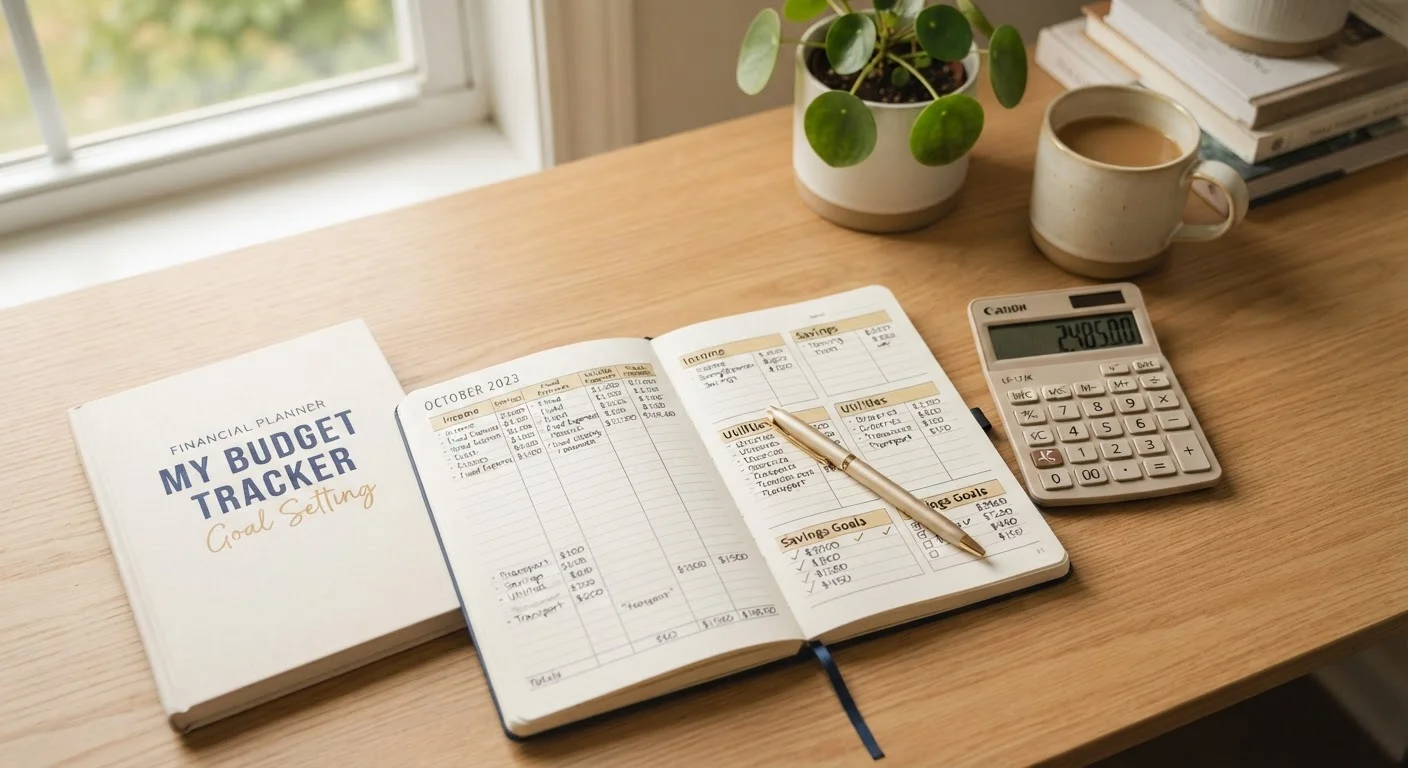
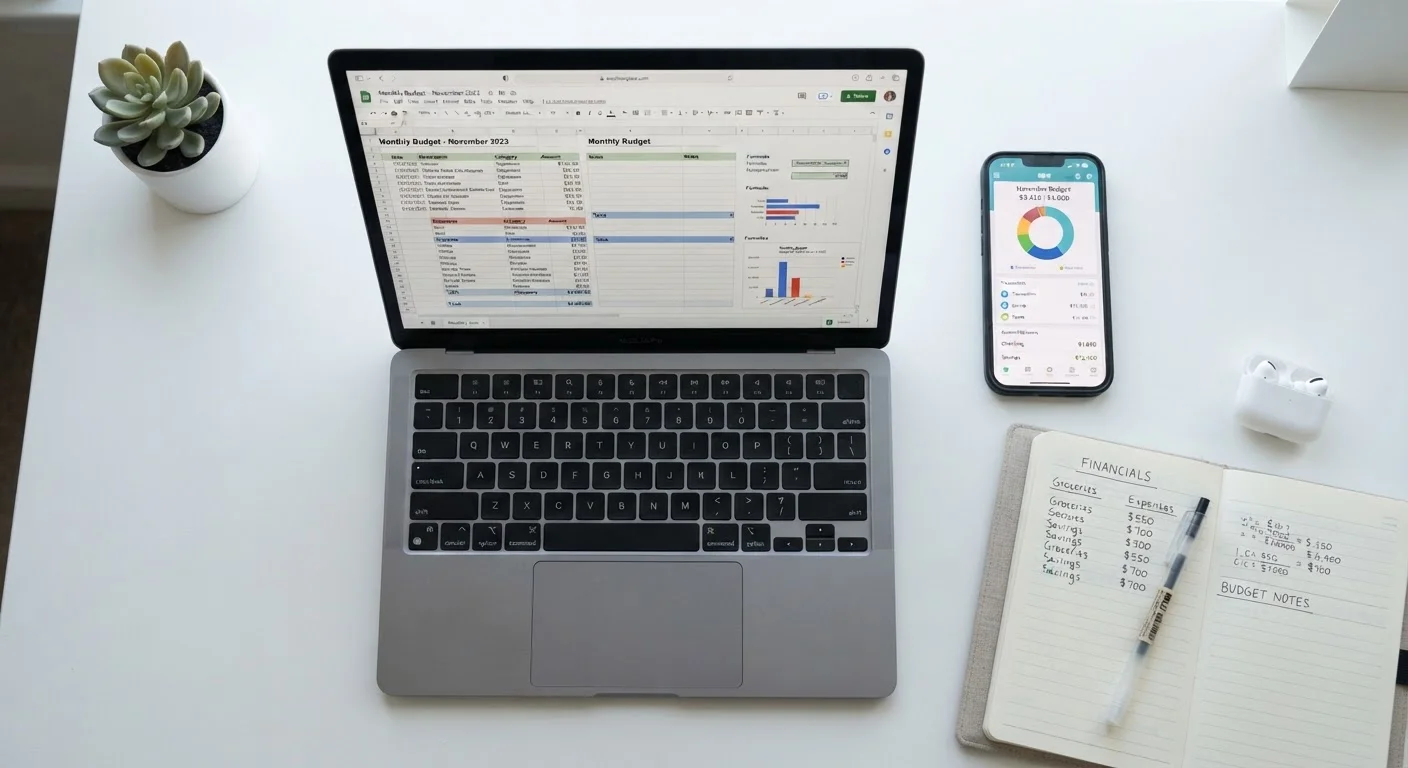
Your budget is a plan - tracking is how you measure execution. Record actual spending against each category as you go, whether in a spreadsheet, a notebook, or a tracking app. At minimum, update your records once a week. When a category runs low, you will know in time to make a conscious choice rather than discovering the shortfall after the fact.
Once your first budget is complete, use the monthly budget setup checklist to verify everything is in order before your next month begins.
Putting Your Budget to Work
A budget on paper is only useful if it informs real decisions. Once your categories are set and dollars are assigned, two habits will determine whether the budget actually works for you.
Check in weekly, not just monthly. Spending patterns shift during the month - an unexpected expense in week two can throw off weeks three and four if you are not watching. A ten-minute weekly check against your running totals lets you adjust before you run out of room in a category.
Build savings directly into the plan. Treat savings as a fixed expense line item, not as what is left over after everything else. Even a small, consistent amount contributes meaningfully over time. For guidance on where saved money should go first, see our article on building your first emergency fund - an emergency reserve and a monthly budget work together as a connected financial system, which we explore further in the relationship between emergency funds and a working budget.
Once you are comfortable with the basics here, you may want to explore zero-based budgeting - a method that takes the same foundation and applies even tighter intentionality to every dollar. And as your spending awareness grows, smart spending strategies for new budgeters can help you stretch each category further.
This article is for general informational and educational purposes only and does not constitute personalized financial advice. Please consult a qualified financial professional for guidance specific to your situation.