Why Budget Eating Gets a Bad Reputation
A common assumption holds that healthy eating is inherently expensive - that good nutrition belongs to those who can afford specialty stores and premium ingredients. The evidence doesn't support this. Research consistently shows that some of the most nutrient-dense foods available - legumes, oats, eggs, canned fish, frozen vegetables - rank among the most affordable items in any grocery store.
The challenge is less about money and more about planning. Without a framework, it's easy to drift toward convenience foods that cost more and deliver less nutritional value. Building balanced meals on a limited budget is genuinely achievable, but it does require some intentional choices about what to buy, how to prepare it, and how to reduce waste. If you want to sharpen your grocery strategy before diving into the kitchen, the Grocery Shopping With a Plan guide covers practical approaches to a leaner grocery run.
This article focuses on the nutrition side: what to prioritize, how to structure meals, and how to make your food dollar go further without sacrificing quality.
The Nutritional Powerhouses Worth Building Around
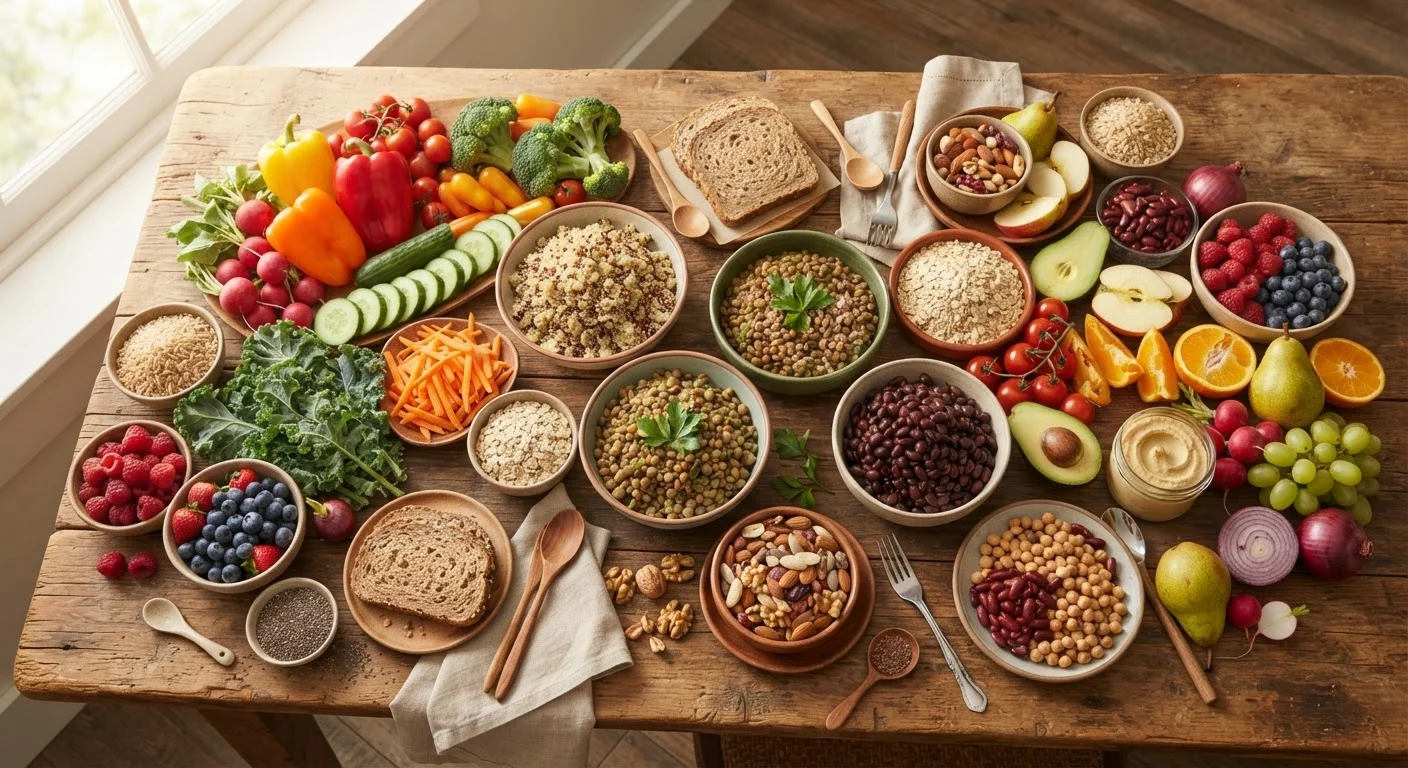
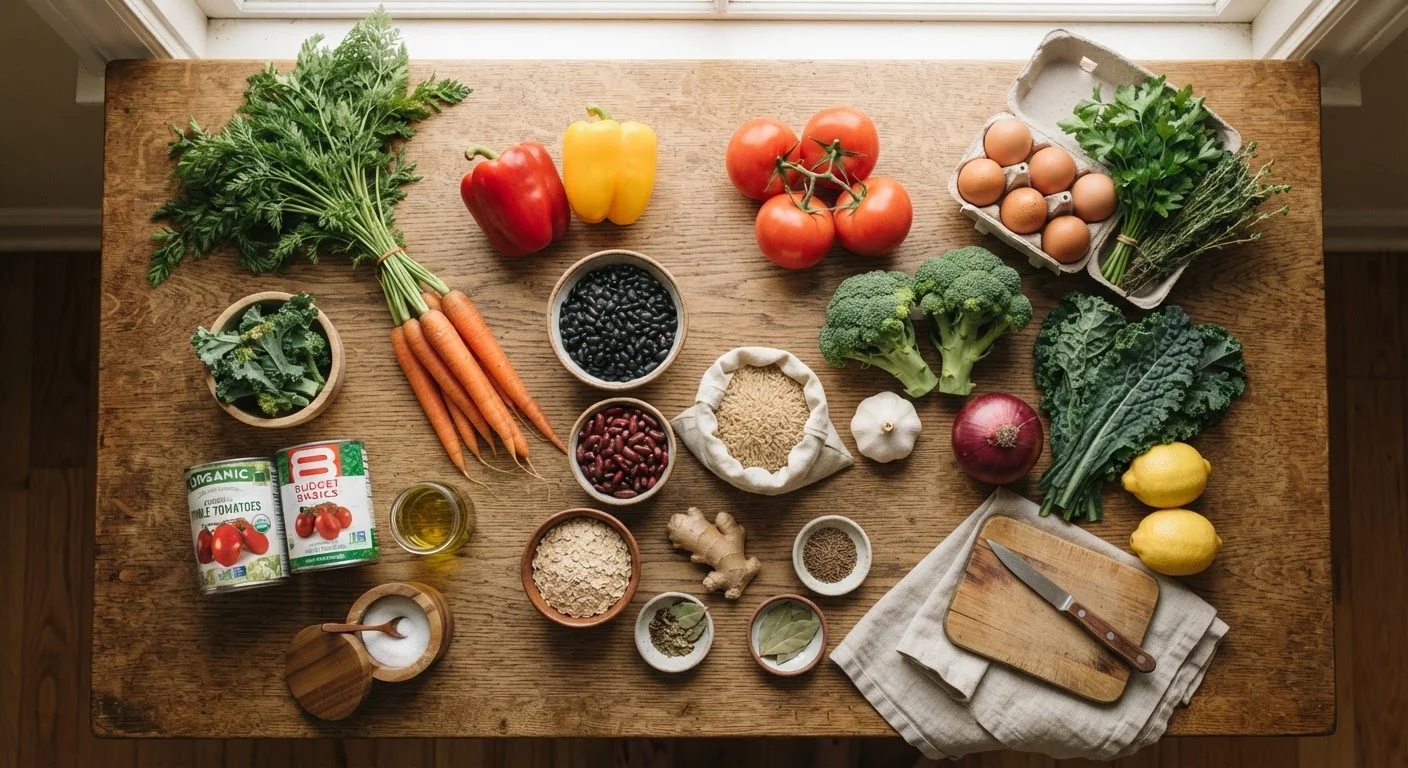
A sound budget-eating strategy starts with identifying a core group of affordable, versatile ingredients that cover your macronutrient and micronutrient needs reliably. Nutrition researchers and registered dietitians consistently point to a handful of foods that deliver exceptional value per dollar:
- Legumes (dried or canned beans, lentils, chickpeas): Rich in protein, fiber, iron, and folate. Dried varieties are particularly economical and expand considerably when cooked.
- Eggs: A complete protein source containing all essential amino acids, plus vitamins D and B12. Highly flexible across meal types.
- Oats: An excellent source of soluble fiber, particularly beta-glucan, which is associated with heart health benefits in peer-reviewed research.
- Frozen vegetables: Flash-frozen at peak ripeness, frozen produce retains most of its vitamins and minerals. Studies comparing fresh and frozen vegetables find minimal nutritional differences in most cases.
- Canned tomatoes and fish: Canned salmon and sardines provide omega-3 fatty acids and calcium; canned tomatoes offer lycopene and vitamin C at a fraction of fresh specialty pricing.
- Brown rice and whole-grain pasta: Affordable complex carbohydrates that provide sustained energy and meaningful fiber content.
These ingredients serve as the backbone of meals that cover the major food groups without straining a budget. For a deeper look at eating patterns that research links to long-term health, see Eating Patterns That Research Links to Long-Term Health.
Store Brands Are Worth a Closer Look
Generic or store-brand versions of pantry staples - canned beans, oats, frozen vegetables, pasta - are typically produced under the same food safety regulations as name-brand products. Switching consistently to store brands in these categories can reduce your weekly grocery bill without compromising nutritional quality. Compare ingredient lists if you're unsure; they're often identical.
How to Build Balanced Meals Step by Step
Once you've stocked a foundation of versatile staples, the practical work is combining them into meals that are nutritionally complete, satisfying, and varied enough to stay appealing. The following steps outline an approach that works regardless of household size or cooking skill level.
Audit what you already have
Before buying anything, take stock of your pantry, freezer, and refrigerator. Identify proteins, starches, and vegetables already on hand. Many households have more to work with than they realize - partial bags of lentils, canned goods, or frozen items that haven't been used. Building a meal around existing inventory reduces both waste and spending.
Plan meals around a protein anchor
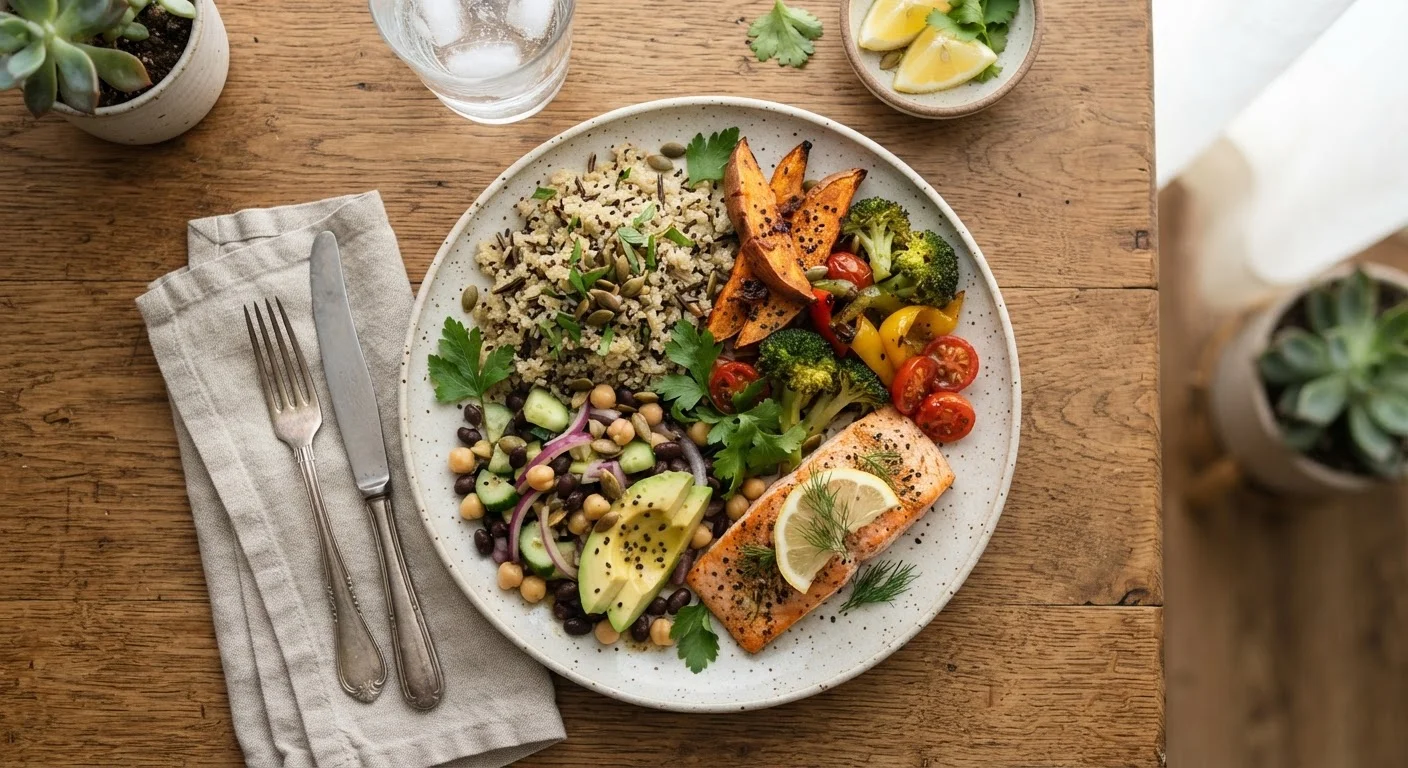
Decide which protein source anchors each meal for the week. Alternate between animal proteins (eggs, canned fish, chicken thighs) and plant-based proteins (beans, lentils, tofu) to reduce cost. Protein anchors make it easier to build the rest of the plate - add a complex carbohydrate and at least one vegetable, fresh or frozen, and the nutritional structure is essentially complete.
Plant-based proteins are often dramatically cheaper per gram of protein than meat. The Plant-Based Eating guide examines the trade-offs and benefits worth knowing if you shift in that direction.
Batch cook staples once or twice a week
Cook larger quantities of grains (rice, oats, barley) and legumes at one time and refrigerate or freeze portions for later meals. A pot of dried lentils or a batch of brown rice takes roughly the same effort whether you cook one serving or eight. Batch cooking dramatically reduces the temptation to buy convenience food on busy nights.
Use frozen and store-brand options without hesitation
Frozen vegetables are nutritionally sound alternatives to fresh, and store-brand (generic) pantry staples - canned tomatoes, dried pasta, oats, beans - are produced to the same food safety standards as name-brand equivalents. Studies on store-brand versus name-brand foods consistently find comparable quality in categories like canned goods, dairy, and frozen produce. Choosing these options routinely produces meaningful savings over time.
Minimize food waste deliberately
Wasted food is wasted money and wasted nutrition. Store perishables correctly (most fresh herbs last longer wrapped in a damp paper towel in the fridge), use vegetable scraps for broth, and repurpose leftover cooked proteins into soups, grain bowls, or omelets. The USDA estimates that a significant share of household food is discarded before it's consumed - reducing that directly lowers your effective cost per meal.
This article is for general informational and educational purposes only and is not a substitute for personalized medical or dietary advice. Consult a qualified healthcare professional or registered dietitian before making significant changes to your diet, especially if you have a chronic health condition, are pregnant, or are managing a specific nutritional concern.