
Why Fiber Is Called a Shortfall Nutrient
The term shortfall nutrient is used by public health researchers to describe nutrients that a significant portion of the population fails to consume in adequate amounts. Dietary fiber consistently appears on that list. Data from national nutrition surveys indicate that American adults consume an average of about 15 grams of fiber per day - roughly half the amount that dietary guidelines recommend for most adults.
This gap exists despite fiber being widely available and relatively affordable. The core reason is structural: the modern American diet is heavily weighted toward ultra-processed foods, refined grains, and animal products - none of which contribute meaningful fiber. When white bread, packaged snacks, and fast food dominate daily eating patterns, fiber almost inevitably falls short. As one useful contrast, many popular nutrition beliefs focus on macronutrients like fat or protein while fiber receives comparatively little attention from consumers.
~15g
Average daily fiber intake for U.S. adults
National dietary survey data consistently show American adults average around 15 grams of fiber daily - well below recommended levels.
25-38g
Daily fiber intake recommended for adults
The Dietary Guidelines for Americans recommend approximately 25g/day for women and 38g/day for men, varying by age.
95%
Americans not meeting fiber recommendations
Research published in nutrition journals estimates that approximately 95% of Americans fail to meet recommended daily fiber intake targets.
10-15%
Potential LDL cholesterol reduction with soluble fiber
Some clinical reviews suggest that consistent soluble fiber consumption may contribute to modest reductions in LDL cholesterol levels as part of an overall healthy diet.
What Fiber Actually Does in the Body
Fiber's reputation is often reduced to its role in preventing constipation - a real benefit, but only part of the picture. The research base supporting fiber's broader physiological roles has grown substantially in recent decades.
Soluble Fiber and Metabolic Health
Soluble fiber, found in oats, barley, apples, and legumes, dissolves in water and slows the movement of food through the digestive tract. This slowing effect helps moderate the rate at which glucose enters the bloodstream, which is relevant to blood sugar management. Soluble fiber also binds to bile acids in the intestine - a mechanism that contributes to modest reductions in LDL (low-density lipoprotein) cholesterol in some individuals, according to research reviewed by nutrition scientists and referenced in clinical dietary guidance.
Insoluble Fiber and Digestive Function
Insoluble fiber - prominent in whole wheat, bran, and many vegetables - does not dissolve in water. It adds bulk to stool and speeds transit time through the colon, which supports regular bowel function and may reduce pressure within the intestine.
The Gut Microbiome Connection
An active area of nutrition research involves fiber's role as a prebiotic - a substrate that feeds beneficial bacteria in the large intestine. When gut bacteria ferment certain fibers, they produce short-chain fatty acids that appear to support the integrity of the intestinal lining and play roles in immune regulation. This is an evolving field, and researchers continue to investigate the full scope of these interactions.
Practical Sources: Where Fiber Comes From
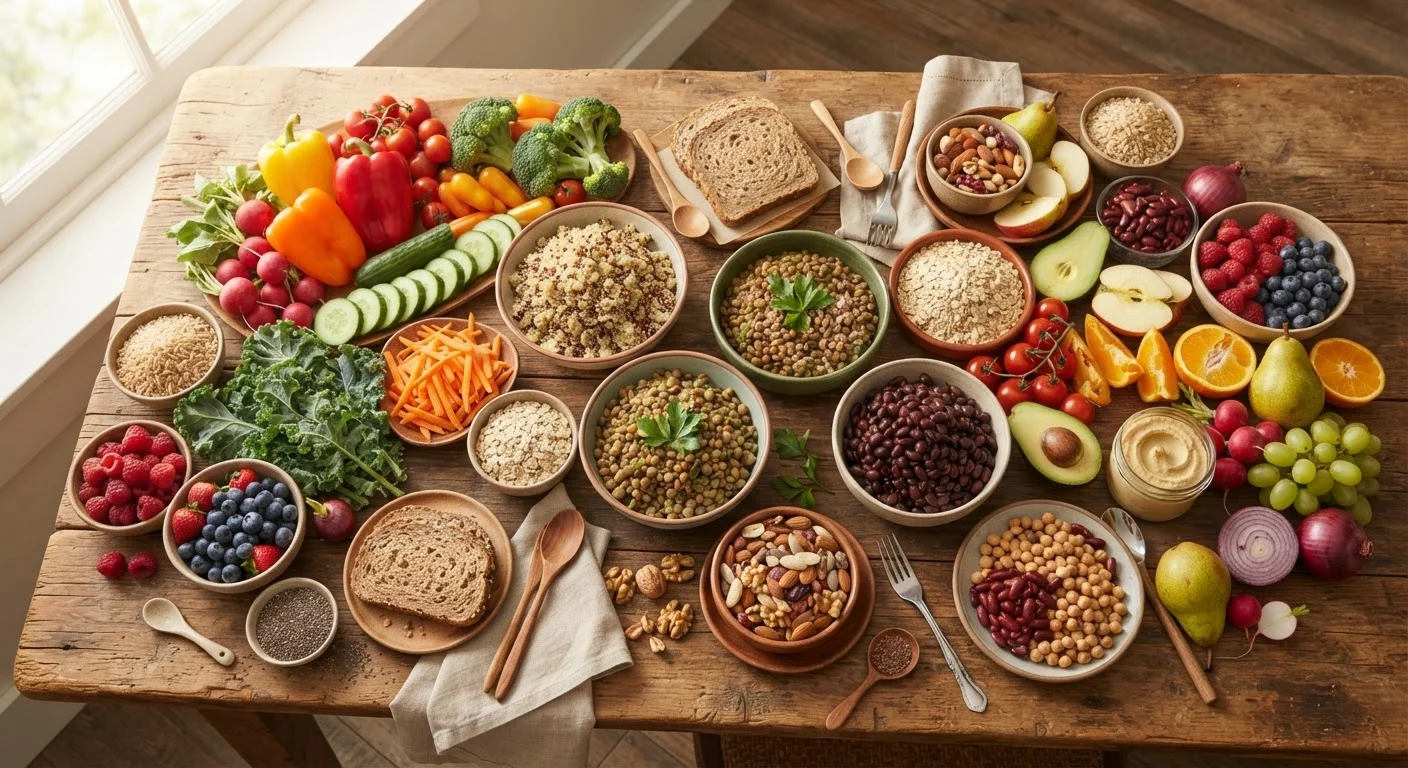
Fiber is found exclusively in plant foods. Animal products - meat, poultry, fish, dairy, and eggs - contain no dietary fiber. The following categories are among the most reliable sources:
- Legumes: Lentils, chickpeas, black beans, and kidney beans are among the most fiber-dense foods available, providing roughly 12-16 grams of fiber per cooked cup.
- Whole grains: Oats, barley, bulgur, quinoa, and whole wheat products contribute both soluble and insoluble fiber. Refined grains, in contrast, have had most of their fiber-containing bran removed during processing.
- Vegetables: Broccoli, Brussels sprouts, carrots, and leafy greens are solid contributors. Starchy vegetables like sweet potatoes also provide meaningful amounts.
- Fruits: Berries, pears, apples (with skin), and avocados are particularly fiber-rich fruits. Fruit juice, however, contains little to no fiber.
- Nuts and seeds: Chia seeds, flaxseeds, and almonds provide fiber alongside healthy fats.
One practical strategy is to look at where certain dietary components hide in processed foods - a similar lens applied to fiber reveals how consistently it is removed during food manufacturing.
Increasing Fiber Without the Side Effects
One reason people hesitate to increase fiber intake is the well-documented potential for digestive discomfort - bloating, gas, and cramping - when intake rises too quickly. This happens because gut bacteria need time to adapt to fermenting larger amounts of fiber.
Add Fiber Gradually for Easier Adjustment
If you're currently eating a low-fiber diet, aim to increase your intake by roughly 5 grams per week rather than all at once. This gives your gut microbiome time to adjust and significantly reduces the likelihood of bloating or discomfort. Pairing increased fiber with adequate water intake - typically around 8 cups per day for most adults - helps everything move smoothly.
Adequate hydration is equally important. Fiber absorbs water as it moves through the digestive tract, and insufficient fluid intake can make stool harder rather than easier to pass. Most nutrition professionals recommend increasing fiber gradually over several weeks rather than making abrupt large changes.
Fiber supplements - such as psyllium husk - are a recognized option for people who struggle to meet needs through food alone. They can contribute to daily totals and have some evidence supporting their use for specific purposes like cholesterol management. That said, they generally lack the nutritional complexity of whole food sources and should be viewed as a complement to, not a replacement for, a fiber-rich diet.
This article is for general informational and educational purposes only and does not constitute medical or dietary advice. Individual nutritional needs vary. Please consult a registered dietitian or qualified healthcare provider for guidance specific to your health situation.