The Salt Shaker Is Not the Problem
Americans consume, on average, about 3,400 milligrams of sodium per day - well above the 2,300 mg limit recommended by the DGA and major health organizations including the American Heart Association. What surprises many people is where that sodium actually comes from.
Research consistently shows that roughly 70-75% of dietary sodium in the U.S. diet comes from processed, packaged, and restaurant foods - not from salt added at the table or during home cooking. That means reducing how vigorously you shake a salt shaker has a relatively modest impact compared to choices made at the grocery store or when ordering out.
Understanding where sodium hides is the first step toward making meaningful dietary adjustments - without eliminating flavor or overhauling your entire eating pattern.
The Top Sources of Sodium in Processed Foods
The CDC has identified a group of foods that contribute the most sodium to the American diet. These are sometimes called the "salty six," though the full list is broader:
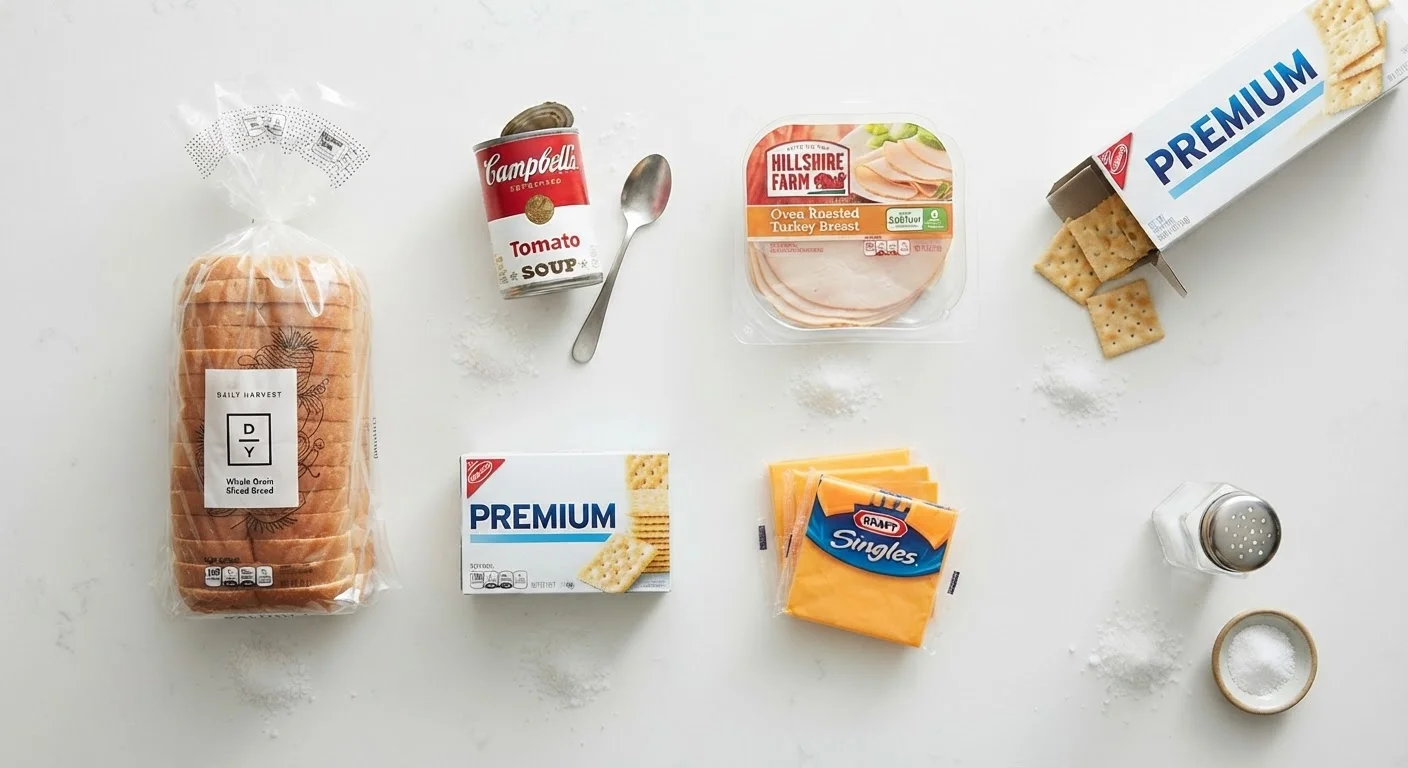
- Bread and rolls - Not salty-tasting, but consumed in large quantities and often contain 100-200 mg per slice
- Pizza - A single slice can contain 600-1,200 mg depending on toppings and crust
- Sandwiches and burgers - Especially from fast-food and fast-casual restaurants
- Cold cuts and cured meats - Deli turkey, ham, and salami are significant contributors
- Canned soups - A single serving can approach or exceed 800 mg
- Burritos and tacos - Particularly from restaurant or pre-made sources
- Savory snacks - Chips, pretzels, crackers, and popcorn
- Cheese - Even "mild" cheeses contain meaningful sodium per serving
One reason these foods are easy to overlook is that they don't always taste overtly salty. Sodium in processed foods serves multiple functions beyond flavor - it acts as a preservative, a texture modifier, and in some cases a leavening agent (as in baking soda). Learning to read a Nutrition Facts label is one of the most practical tools available. See our guide to reading Nutrition Facts labels for a step-by-step walkthrough of what to look for.
What the Numbers Actually Mean
Sodium
A mineral and electrolyte essential for fluid balance, nerve signaling, and muscle function. In food, it is most commonly found bound to chloride as sodium chloride (table salt).
Daily Value (%DV)
A reference amount used on Nutrition Facts labels to show how much of a nutrient one serving contributes toward a standard daily intake. For sodium, the Daily Value is 2,300 mg.
Sodium Sensitivity
A physiological trait in which some individuals experience greater blood pressure increases in response to sodium intake than others. Sensitivity varies by genetics, age, and underlying health conditions.
Processed Food
Any food that has been altered from its natural state through preservation, canning, cooking, or the addition of ingredients like salt, sugar, or fat. Sodium is commonly added during processing for preservation and flavor.
Electrolyte
A mineral that carries an electrical charge when dissolved in fluid. Sodium, potassium, and magnesium are key electrolytes that regulate fluid balance, nerve function, and muscle contractions.
The 2,300 mg daily limit is often cited, but context matters. That figure represents the upper limit for healthy adults - not a target. The American Heart Association advocates for an even lower ceiling of 1,500 mg per day for people with elevated cardiovascular risk, though this is a more restrictive threshold not universally adopted in clinical guidelines.
On a Nutrition Facts label, sodium is listed in milligrams and as a percent of the Daily Value (%DV), which is based on the 2,300 mg benchmark. A %DV of 5% or less is generally considered low; 20% or more is considered high. These benchmarks help make quick comparisons between similar products.
It's also worth noting what sodium does in the body. The kidneys regulate sodium balance; excess intake can raise blood pressure in sodium-sensitive individuals by increasing fluid retention. Not everyone responds to sodium the same way, and the degree of sensitivity varies by genetics, baseline blood pressure, age, and other dietary factors - including potassium intake, which can help offset some effects of sodium. If you have questions about your personal sodium targets, a registered dietitian or your healthcare provider is the right resource.
For context on another nutrient where Americans fall short, our article on dietary fiber examines why intake gaps matter and how food choices intersect.
This article is for general informational and educational purposes only and is not a substitute for personalized medical or dietary advice. Consult a qualified healthcare professional before making significant changes to your diet, especially if you have a health condition such as hypertension, kidney disease, or heart disease.