Why Label Literacy Matters
The Nutrition Facts panel is one of the few standardized, regulated sources of nutritional information available at the point of purchase. Unlike front-of-package marketing, which operates under looser oversight, the panel's format and required disclosures are governed by the FDA. Learning to read it efficiently gives you a reliable anchor when evaluating packaged foods - regardless of whatever health claims appear elsewhere on the box.
Label literacy doesn't require memorizing reference values or becoming a nutrition expert. It means knowing which numbers to look at first, what those numbers represent, and where the label's limitations lie. That practical knowledge supports the kind of informed, sustainable food decisions that nutrition science consistently supports over time.
This Is General Information, Not Medical Advice
Nutrition labels provide population-level reference values that may not match your individual health needs. If you have a chronic condition, follow a therapeutic diet, or are managing a health concern, work with a registered dietitian or your healthcare provider to interpret these numbers in your personal context.
How to Read a Nutrition Facts Label
Follow these steps the next time you pick up a packaged product. With practice, this process takes under a minute.
Start With the Serving Size
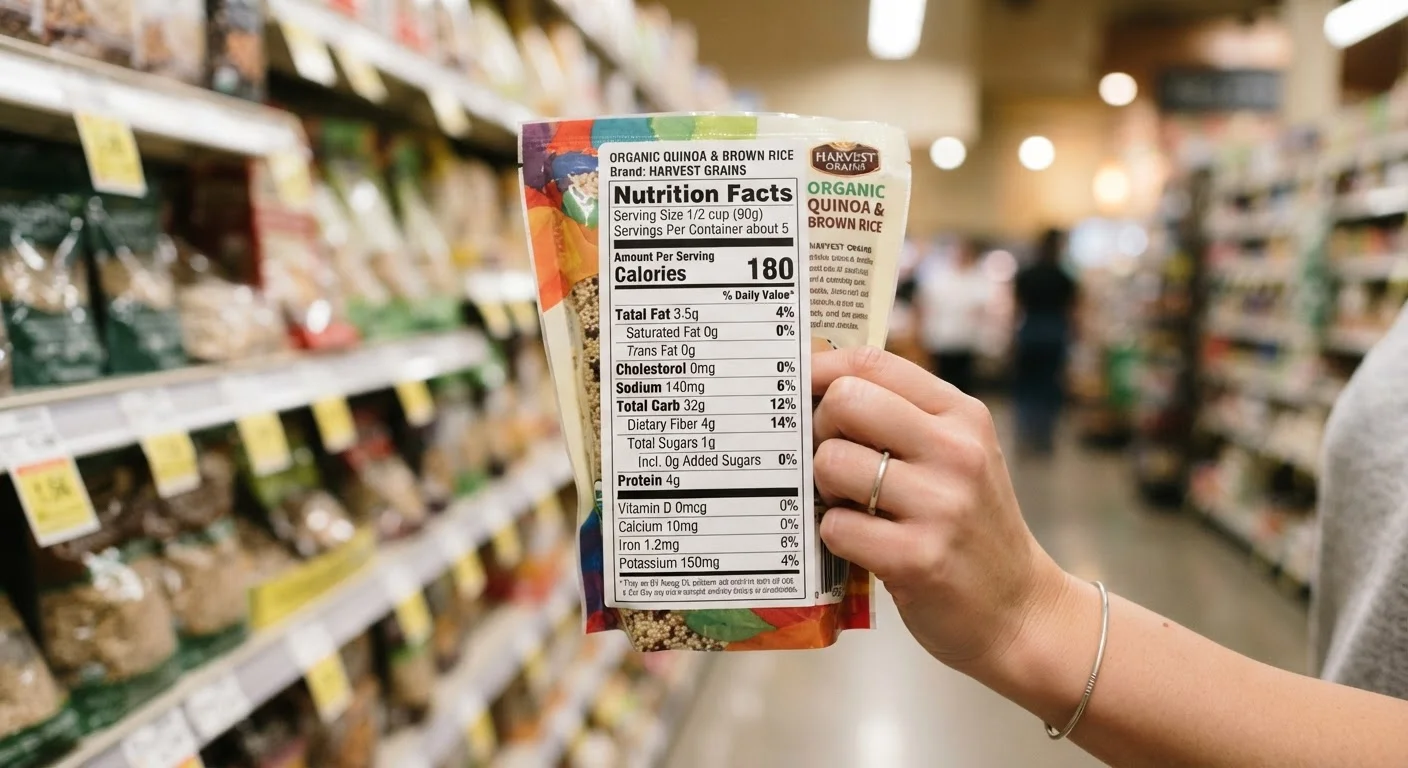
The serving size is the foundation of every number that follows on the label. All calorie counts and nutrient amounts listed are per serving, not per package. The FDA updated label requirements to reflect more realistic serving amounts - for example, a serving of ice cream is now listed as 2/3 cup rather than the older 1/2 cup - but multi-serving packages still require attention.
Check how many servings are in the container. If a bag lists 3 servings and you eat the whole bag, multiply every value by 3.
Review Calories in Context
Calories measure the energy a food provides. The label shows calories per serving. While total calorie intake matters for energy balance, calories alone don't indicate whether a food is nutritious. A handful of walnuts and a handful of crackers may have similar calorie counts but very different nutrient profiles.
Use calories as one data point, not the only one.
Identify Nutrients to Limit
Three nutrients appear prominently because excess intake is associated with health risks in the general population:
- Saturated fat: Current dietary guidelines recommend keeping intake relatively low; it's distinct from unsaturated fats found in nuts, seeds, and fish.
- Sodium: Most Americans consume more than recommended amounts, largely from packaged and restaurant foods. See where dietary sodium actually comes from for context.
- Added sugars: Now listed separately from total sugars on updated labels, added sugars reflect sweeteners introduced during processing - not naturally occurring sugars in fruit or milk.
Look for Nutrients to Prioritize
The lower section of the panel highlights nutrients many Americans under-consume:
- Dietary fiber: Associated with digestive health and satiety; most adults fall short of recommended amounts.
- Vitamin D, calcium, iron, and potassium: These four are federally mandated on updated labels because intake gaps are common across the population.
For a broader look at micronutrients, a plain-language guide to vitamins and minerals is a useful companion resource.
Interpret Percent Daily Values (%DV)
The %DV column tells you how much a nutrient in one serving contributes to a total daily intake of 2,000 calories. This is a reference point, not a universal prescription - individual calorie and nutrient needs vary based on age, sex, activity level, and health status.
%DV is most useful for comparing products and for quickly identifying whether a food is a meaningful source of a nutrient or a significant contributor to one you're trying to limit.
Read the Ingredient List
Ingredients are listed in descending order by weight - the first ingredient is the most abundant. This is where you see what's actually in the product beyond summarized nutrient data. A product can appear moderate in added sugars on the label while listing three or four different sweeteners (cane sugar, corn syrup, dextrose, maltose) that collectively rank high by weight.
Short ingredient lists aren't automatically better, and long ones aren't automatically worse - but familiarity with what's listed builds practical label literacy over time. For a broader lens on nutrition claims that don't always hold up to the evidence, that resource addresses common misconceptions directly.
Use %DV as a Quick Benchmark
A general rule from dietary guidance: 5% DV or less is considered low for a nutrient; 20% DV or more is considered high. Use this to quickly flag products that are high in nutrients you want to limit - like sodium or saturated fat - or high in nutrients you want more of, like fiber or calcium.
What the Label Doesn't Tell You
The Nutrition Facts panel summarizes a product's nutritional composition but doesn't fully capture food quality. It won't tell you whether a fat source is inflammatory or protective, how a food fits within your overall eating pattern, or whether a product's micronutrient content was degraded during processing.
Context also matters across life stages. Nutrient needs shift meaningfully from your 20s through your 70s - for a grounded overview, how dietary needs shift as you age maps those changes clearly.
Front-of-Package Claims Can Mislead
Terms like 'made with whole grains,' 'low fat,' or 'all natural' appear on packaging with minimal regulatory oversight in many cases. A product can carry these phrases while still being high in added sugars or sodium. Always flip the package and consult the Nutrition Facts panel itself rather than relying on front-label marketing.
This article is for general informational and educational purposes only and does not constitute medical or dietary advice. Consult a qualified healthcare professional or registered dietitian for guidance specific to your health situation.