Three Systems, Three Jobs
Antilock brakes (ABS), traction control, and electronic stability control (ESC) are often mentioned in the same breath - and for good reason. They share hardware, including wheel-speed sensors and the same control module. But each one solves a different problem, and knowing which does what helps you understand how your car is protecting you.
| ABS Required in U.S. | All new cars since 2000 model year (NHTSA Federal Motor Vehicle Safety Standards) |
| ESC Required in U.S. | All new passenger vehicles since 2012 model year (NHTSA FMVSS No. 126) |
| ESC Estimated Crash Reduction | Reduces fatal single-vehicle crashes by ~33% (NHTSA research estimates) |
| Shared Hardware | All three systems use wheel-speed sensors |
| Driver Override | Traction control and ESC can often be temporarily disabled; ABS typically cannot |
| ABS Pedal Feel | Pulsing or vibration during hard braking is normal |
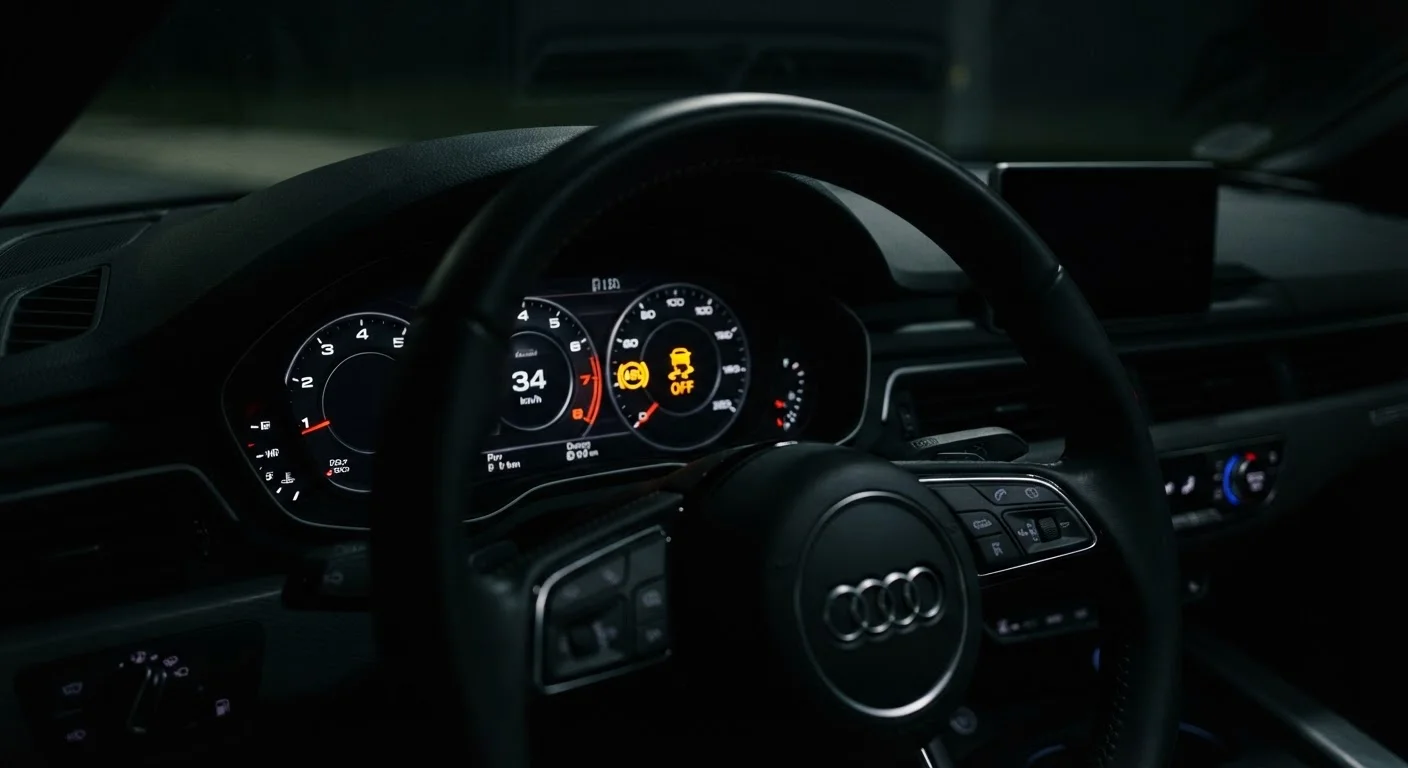
If you ever see a warning light related to any of these systems, check out our guide to dashboard warning lights for plain-language guidance on what to do next.
Antilock Braking System (ABS): Keeping the Wheels Turning While You Stop
When you slam the brakes hard - on ice, wet pavement, or in a panic stop - your wheels can lock up and stop spinning. A locked wheel gives you almost no ability to steer, which is a serious problem if you need to swerve around an obstacle while braking.
ABS prevents wheel lockup by rapidly pumping the brakes for you, many times per second, keeping each wheel on the edge of traction rather than fully stopped. You may feel a pulsing or vibrating through the brake pedal - that's normal, and it means the system is working. The key takeaway: ABS keeps you steering while you stop. It doesn't necessarily shorten your stopping distance on every surface, but it preserves steering control, which is often more valuable.
When it kicks in: Only during hard braking when one or more wheels are about to lock up.
Traction Control: Preventing Wheelspin During Acceleration
Traction control works on the opposite end of the driving scenario. Instead of stopping, it's focused on getting you moving - or keeping you moving - without spinning your tires.
When you accelerate on a slippery surface, one or more drive wheels can spin freely instead of gripping the road. Traction control detects this using the same wheel-speed sensors as ABS. It responds by briefly reducing engine power, applying the brakes to the spinning wheel, or both, until grip is restored.
You'll often notice traction control as a slight hesitation or a brief stuttering feeling when you accelerate on ice or gravel. Some vehicles have a dashboard light that flashes to indicate the system is active. Traction control won't overcome physics - if conditions are bad enough, it simply can't find grip - but it meaningfully reduces the chance of getting stuck or losing control during acceleration.
When it kicks in: During acceleration when a drive wheel spins faster than the others.
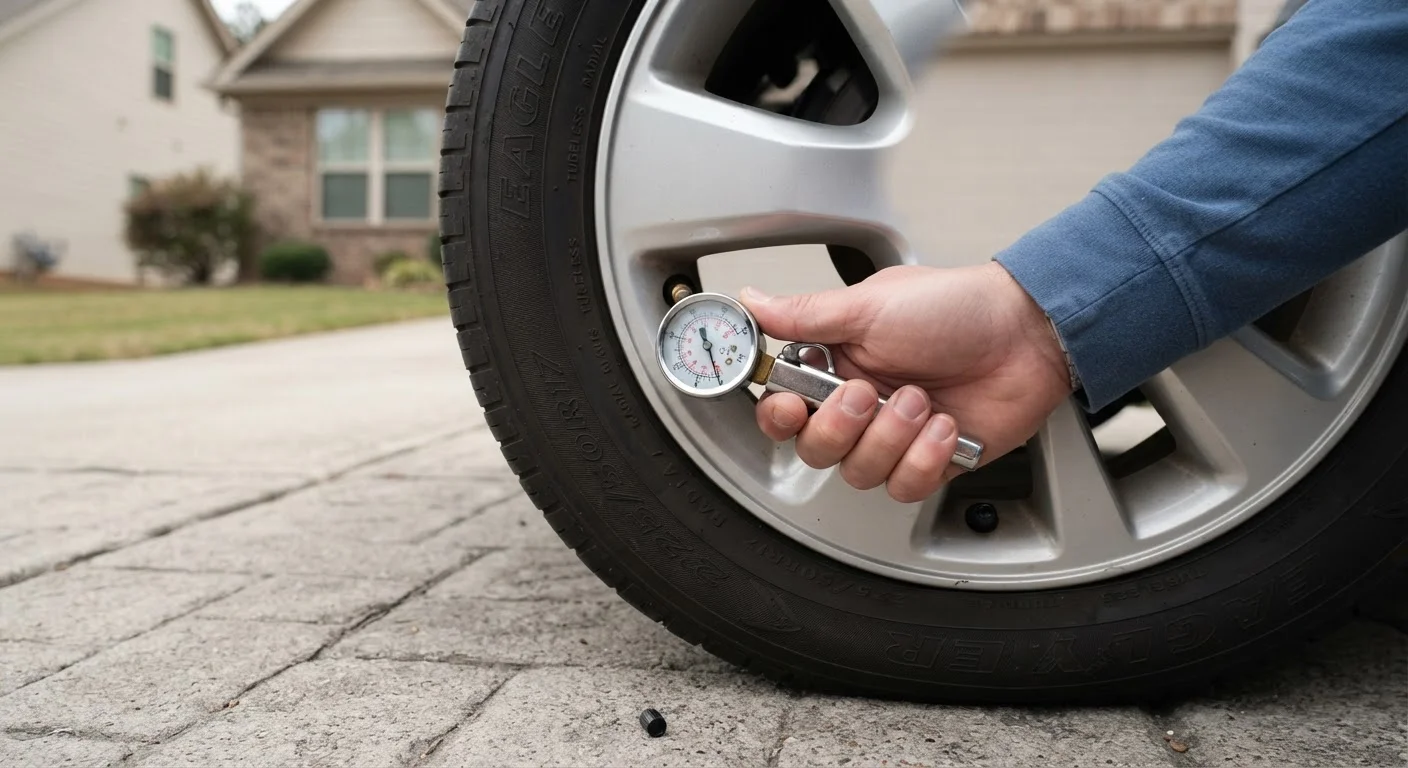
Keeping your tires in good shape makes all three systems more effective. See our tire care guide for everything you need to know about tread depth and pressure.
Electronic Stability Control (ESC): Catching a Skid Before It Gets Away From You
ESC is the most comprehensive of the three. It monitors not just wheel speed but also the direction the vehicle is actually moving versus the direction the driver intends to go - using sensors that track steering angle, yaw rate (rotation around the vehicle's vertical axis), and lateral acceleration.
If the system detects that the car is sliding sideways or rotating in a way that doesn't match your steering input - the beginning of a skid - it automatically applies braking force to individual wheels to help pull the vehicle back on course. It may also reduce engine power.
ESC is particularly effective in two common dangerous situations: understeer (the front of the car pushes wide in a corner) and oversteer (the rear swings out). Federal regulations have required ESC on all new passenger vehicles sold in the U.S. since the 2012 model year.
When it kicks in: When sensors detect the vehicle is not following the driver's intended path - typically in cornering, evasive maneuvers, or skids.
How They Work Together
These three systems build on each other. ABS is the foundation - traction control and ESC both rely on the wheel-speed sensors ABS introduced. Traction control extended that hardware to address acceleration. ESC added steering and yaw sensors to catch broader loss-of-control situations.
In practice, you can think of them this way:
- ABS - braking problem, loss of steering control
- Traction control - acceleration problem, wheelspin
- ESC - cornering or stability problem, the vehicle isn't going where you're pointing it
None of these systems replace attentive, defensive driving. They're safety nets, not substitutes for slowing down in bad weather or maintaining your vehicle properly. Keeping brake fluid at the right level also matters for how well ABS functions - see our guide to car fluids for the basics.