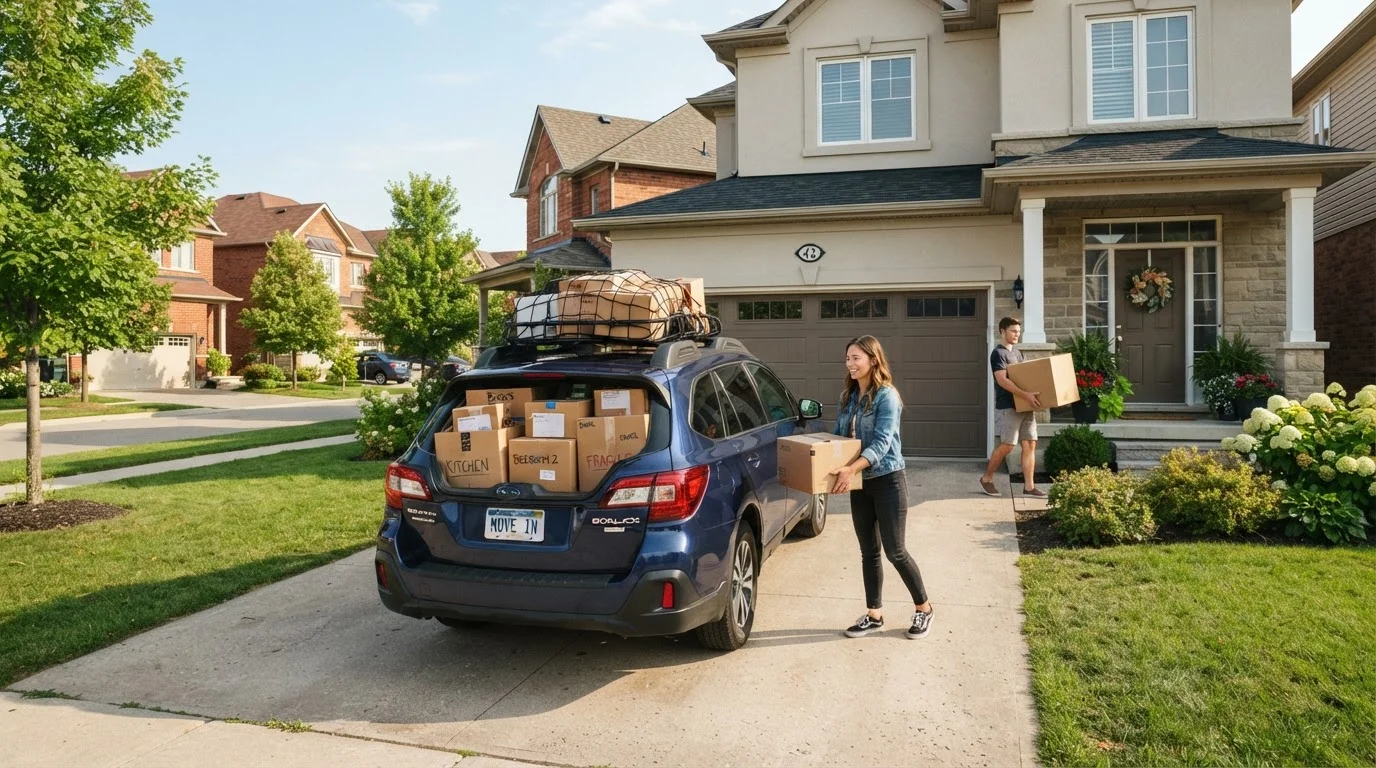
Deadlines, title transfers, new inspections — what drivers need to sort out when relocating across state lines with a vehicle.
Key Takeaways
Most states require you to re-register your vehicle within 30 to 90 days of establishing residency.
Your current auto insurance policy may not meet your new state's minimum coverage requirements.
You will likely need a new driver's license and may need a vehicle inspection before registration.
Driving on out-of-state plates past your deadline can result in fines or registration being voided.
A lienholder (lender) on your car title may require notification before you move states.
Why Crossing State Lines Changes Your Car Situation
When you move to a new state, your vehicle doesn't automatically follow the local rules - you have to actively update your registration, title, and insurance to comply with the laws where you now live. Every state sets its own deadlines, fees, and requirements, and the gap between "I just moved" and "I'm now legally required to act" is shorter than most people expect.
Ignoring these steps isn't just a paperwork problem. Driving on an expired out-of-state registration can lead to fines, and carrying insurance that doesn't meet your new state's minimums leaves you financially exposed if you're in an accident. For a broader look at how registration works across U.S. states, see how vehicle registration works.
Use the checklist below to work through every piece of the puzzle - before a deadline sneaks up on you.
Establish Residency First
Confirm your official move-in date, since most state deadlines for re-registration (typically 30-90 days) start from the day you establish residency, not the day you arrive.Must
Set a calendar reminder at least two weeks before your state's registration deadline so you have time to gather documents and schedule any required inspections.Must
Look up your new state's specific deadline on the official DMV or motor vehicle agency website - do not rely on general estimates, as timelines differ significantly.Must
Update Your Driver's License
Apply for a driver's license in your new state - most states require this within 30 to 60 days of establishing residency, and some require it before you can register your vehicle.Must
Bring proof of identity, your current out-of-state license, and proof of new address (such as a utility bill or lease agreement) to the licensing office.Must
Check whether your new state requires a written or vision test even if you already hold a valid license from another state.Should
Handle the Vehicle Title
Apply for a new title in your new state - most states require you to transfer the title even if you own the car outright.Must
If your vehicle is financed, contact your lender immediately to notify them of your address change and ask how they handle out-of-state title transfers.Must
Verify whether your new state charges a title transfer fee or an excise tax based on the vehicle's value, and budget accordingly.Should
Complete Vehicle Registration
Visit your new state's DMV or motor vehicle agency with your current title, proof of insurance, and proof of residency to register the vehicle.Must
Check whether your new state requires a vehicle safety inspection or emissions test before registration can be completed - many states do.Must
Pay the required registration fees, which vary by state and are often based on the vehicle's age, weight, or value.Must
Surrender your old license plates if required by your previous state - some states mandate plate return to avoid ongoing liability.Should
Update Your Auto Insurance
Contact your current insurance provider before the move to confirm whether your policy is valid in your new state and whether coverage levels need to change.Must
Compare your current policy's liability limits against your new state's minimum required coverage - many states have different minimums for bodily injury and property damage.Must
Update your address with your insurer on or before your move date - driving in a new state without updating your insurer could affect a future claim.Must
Ask your insurer whether your move triggers a rate change, since premiums are based partly on where the vehicle is primarily garaged.Should
Obtain a new insurance ID card showing your updated address and policy details to present at the DMV during registration.Must
Final Verification
Confirm your new registration sticker is affixed to the correct plate and your registration card is stored in your vehicle.Must
Notify your employer's HR department and any financial institutions of your address change so your records stay consistent.Nice to have
Review your full auto insurance policy once settled to ensure coverage still fits your driving habits - commute distance and parking situation can both affect your premium.Should
What You'll Need to Bring
Before you visit your new state's DMV (or equivalent agency), gathering the right documents saves you from making multiple trips. Requirements vary by state, but the core items are consistent almost everywhere.
Required
Current vehicle title
Required to initiate a title transfer in your new state; if financed, your lender may need to supply this directly.
Required
Proof of new-state residency
A utility bill, bank statement, or signed lease showing your new address is typically required by the DMV.
Required
Valid auto insurance card
Proof of insurance meeting your new state's minimum coverage levels is required at registration.
Required
Out-of-state driver's license
Used as proof of identity and driving history when applying for your new state license.
Optional
Odometer disclosure statement
Some states require a signed odometer reading when transferring a title to prevent fraud.
Optional
Vehicle inspection report
Required in states that mandate a safety or emissions inspection before registration can be issued.
If your car is financed, your lender holds the title. You'll need to notify them of your address change and may need to request that they send the title - or a lien release letter - directly to your new state's motor vehicle agency. Failing to loop in your lender is one of the more common and costly oversights drivers make during a move. The financial pitfalls that catch new car owners off guard article covers related mistakes worth reviewing.
Don't Wait Until the Deadline Arrives
Some states count your residency start date from the moment you sign a lease or utility account - not when you physically move in. If you miss your state's re-registration window, you may face fines and be required to pay back fees. Start the process as soon as you have a confirmed address in your new state.
Once you've completed re-registration, it's a good habit to run a full review of your ownership situation - insurance coverage, renewal dates, and maintenance - using the annual car ownership audit as your guide.
Automotive Editorial Team is the collective byline for our editorial team and contributor network. Articles published under this byline or an editorial pen name are researched, written, and reviewed according to our editorial standards for clarity, consistency, and independence before publication.
The content on this site is provided for informational purposes only and should not be considered a substitute for professional advice. While we strive to provide accurate and up-to-date information, we make no guarantees regarding its completeness or accuracy. Always consult a qualified professional for advice specific to your circumstances before making any decisions.