Liability Coverage: What You Owe Others After an At-Fault Crash
Liability is the foundation of nearly every auto policy, and it's the only type of coverage most states legally require. But it's commonly misunderstood: liability pays for the harm you cause to other people - not for damage to your own vehicle or injuries to yourself.
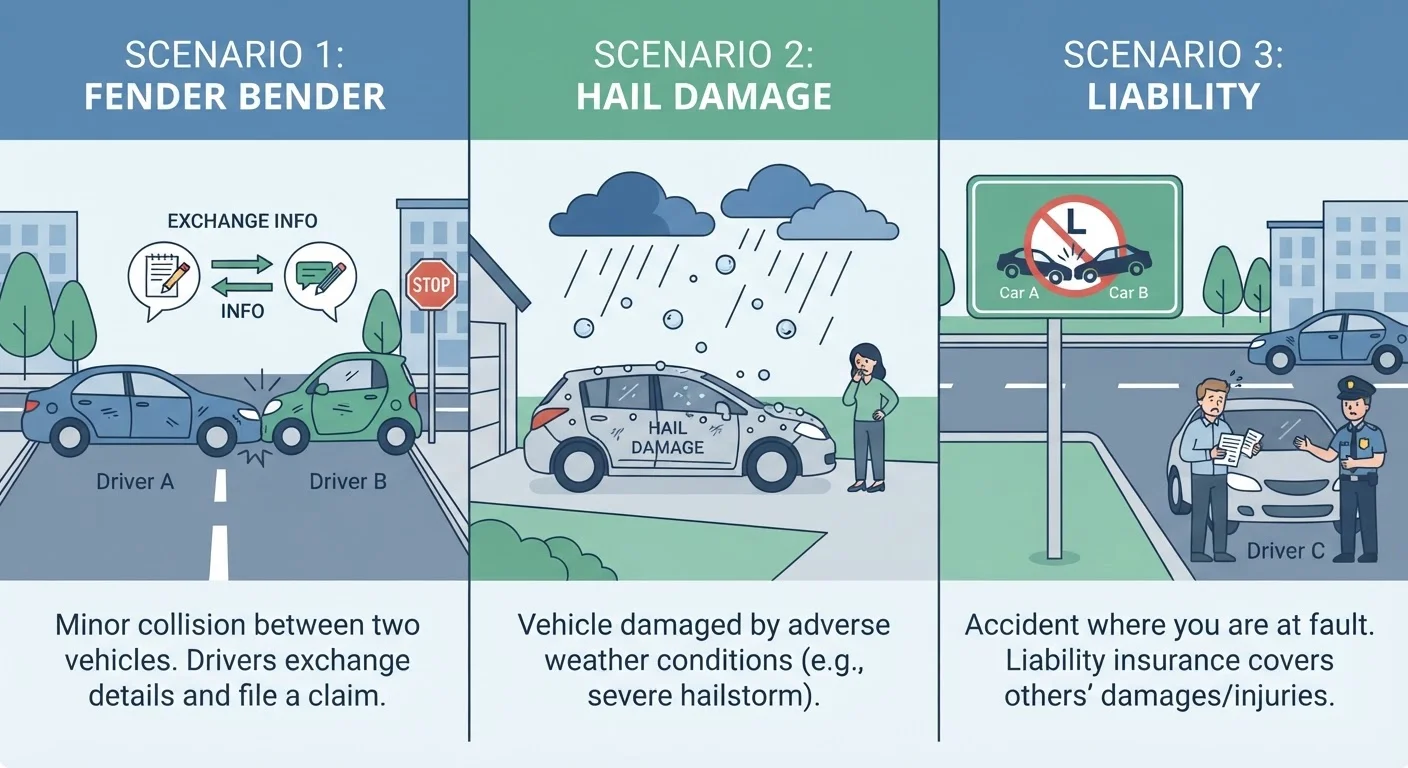
There are two components. Bodily injury liability covers medical bills, lost wages, and legal costs for people injured in an accident you caused. Property damage liability covers repairs to another driver's car, a fence you hit, or any other property you damaged.
Coverage is expressed in limits - the maximum your insurer will pay per person injured, per accident, and for property damage. If those limits fall short of the actual damages, you're personally responsible for the difference. State-mandated minimums vary significantly and are often lower than what a serious accident can cost. For context on what goes into your overall premium picture, see what factors shape your car insurance premium.
~13%
Estimated uninsured drivers on U.S. roads
The Insurance Research Council has estimated that roughly 1 in 8 U.S. drivers carries no auto insurance, underscoring the value of uninsured motorist coverage.
50 + D.C.
Jurisdictions with unique liability minimums
Every U.S. state and the District of Columbia sets its own minimum liability limits, meaning required coverage levels vary significantly depending on where you live.
$500-$2,000
Typical collision deductible range
Industry data shows most drivers select collision deductibles in this range, directly affecting both their premium cost and out-of-pocket expense after a claim.
Collision Coverage: Your Car's Protection After a Crash
Collision coverage pays to repair or replace your vehicle when it's damaged in a crash - whether you hit another car, rear-ended someone, or ran into a guardrail. Fault generally doesn't change whether collision pays, though it may affect whether your insurer pursues reimbursement from the other driver afterward.
This coverage comes with a deductible - the amount you pay out of pocket before your insurer covers the rest. A higher deductible means a lower premium, but it also means a bigger upfront cost when you file a claim. If your car's market value is low, the math sometimes doesn't favor carrying collision; repair costs may not exceed the deductible by much.
Lenders and leasing companies routinely require collision because they have a financial stake in the vehicle's condition. Once the loan is paid off, it becomes your call - though dropping it on a newer car carries real financial risk if a crash renders it a total loss. First-time owners often underestimate this, a point covered in detail in common financial pitfalls for new car owners.
Comprehensive Coverage: Protection From Events Outside Your Control
Comprehensive coverage handles damage that isn't caused by a collision. Common scenarios include theft, vandalism, hail, flooding, fire, falling objects, and striking an animal. Like collision, it has its own deductible and pays up to the vehicle's actual cash value at the time of the claim - not its replacement cost if it's a newer model.
A frequent misunderstanding is that comprehensive covers everything - it doesn't. Mechanical breakdowns, routine wear, and tire damage from road hazards typically fall outside its scope. For a broader look at what insurers do and don't cover, common auto insurance myths that cost drivers money is worth a read.
Comprehensive tends to be less expensive than collision for most vehicles. Drivers in areas prone to severe weather, high vehicle theft rates, or heavy deer activity often find the coverage particularly worthwhile.
Where the Gaps Are - and What Else to Consider
Even with all three coverages in place, significant gaps can exist. The most important one: if you owe more on your car loan than the vehicle is worth and your car is totaled, liability, collision, and comprehensive together won't cover the difference. That's where gap coverage comes in - explained in depth in our guide to gap insurance.
Other commonly overlooked gaps include:
- Uninsured/underinsured motorist coverage - pays when the at-fault driver has no insurance or insufficient limits.
- Medical payments (MedPay) or personal injury protection (PIP) - covers your own medical expenses after a crash, regardless of fault. Availability varies by state.
- Rental reimbursement - covers a rental car while yours is being repaired after a covered claim.
Understanding the terms behind your policy matters as much as knowing the coverage types. If terms like deductible, actual cash value, or split limits feel unfamiliar, a driver's glossary of key insurance and financing terms is a useful starting point.
This article provides general information about auto insurance coverage types and is not a substitute for advice from a licensed insurance professional. Coverage availability, requirements, and terms vary by state and individual policy.