Why Service Records Are Worth More Than a Quick Glance
Most drivers flip through service records looking for one thing: proof that oil was changed. Mechanics look for something more revealing - a pattern. The sequence of dates, mileages, and service types tells a story about how a vehicle was treated over its lifetime. Learning to read that story can save you from an expensive surprise or give you confidence in a car you're considering.
This matters whether you're reviewing your own vehicle's history before a road trip, evaluating a used car purchase, or preparing for a resale. As our guide on why maintenance records matter explains, a well-documented history has real financial value - and the absence of documentation can cost you just as much.
The Absence of Records Is Information Too
A car with zero documentation isn't necessarily poorly maintained - some careful owners simply never kept paperwork. But it does mean you're flying blind. In that case, a pre-purchase inspection by a trusted mechanic is the most reliable substitute for a documented history.
What You Need Before You Start
Gather everything available: paper receipts, a service booklet, any digital records from a dealership portal, or a vehicle history report from a third-party service. Pull out the owner's manual as well - you'll use it as your benchmark. Without the manufacturer's recommended schedule, you have no baseline to measure the records against.
What you will need
How to Read the Records Step by Step
Lay out all records in chronological order
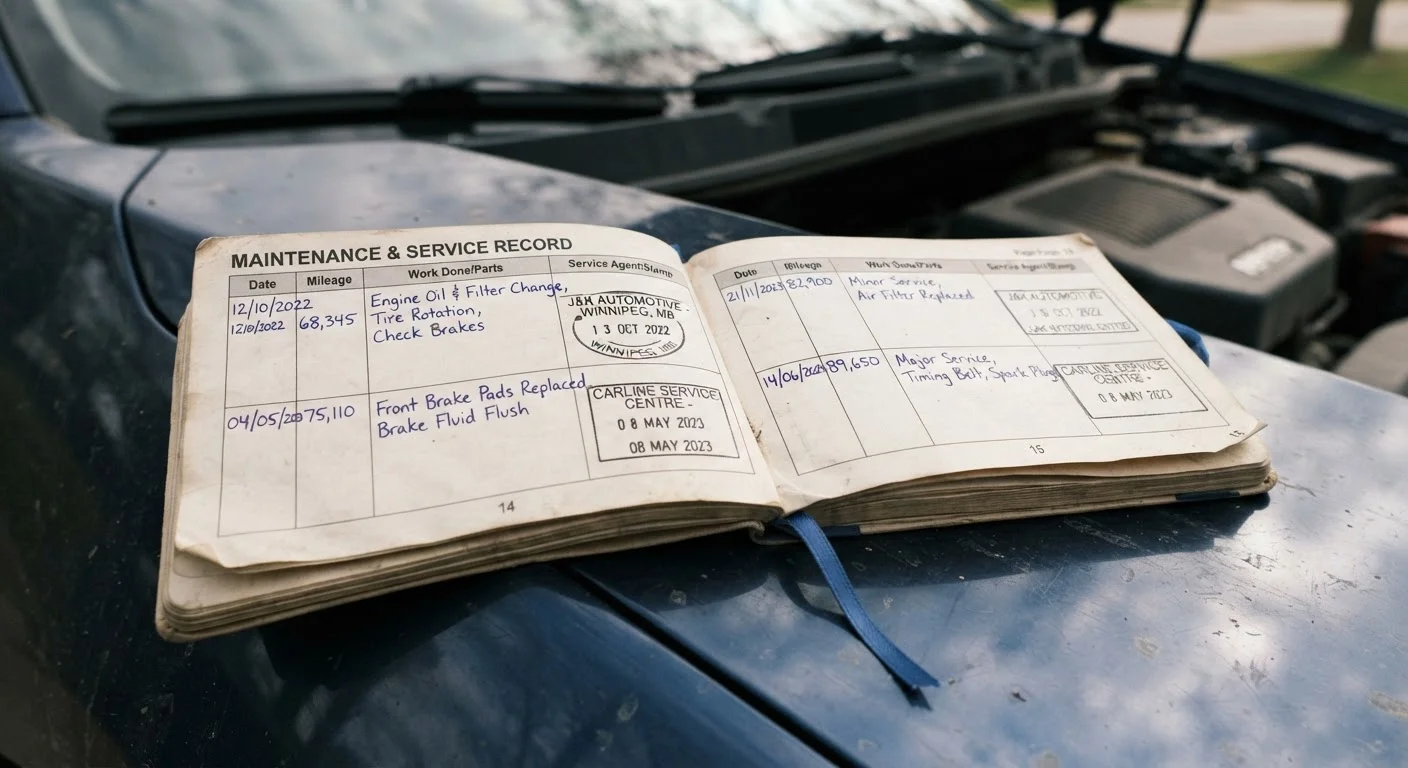
Sort every receipt, sticker, and service entry by date - oldest first. This creates a timeline you can actually read. Look at the mileage progression as you go. It should climb steadily and logically. If mileage appears to jump backward or entries are completely undated, treat that as a flag requiring explanation.
Check oil changes against the manufacturer's interval
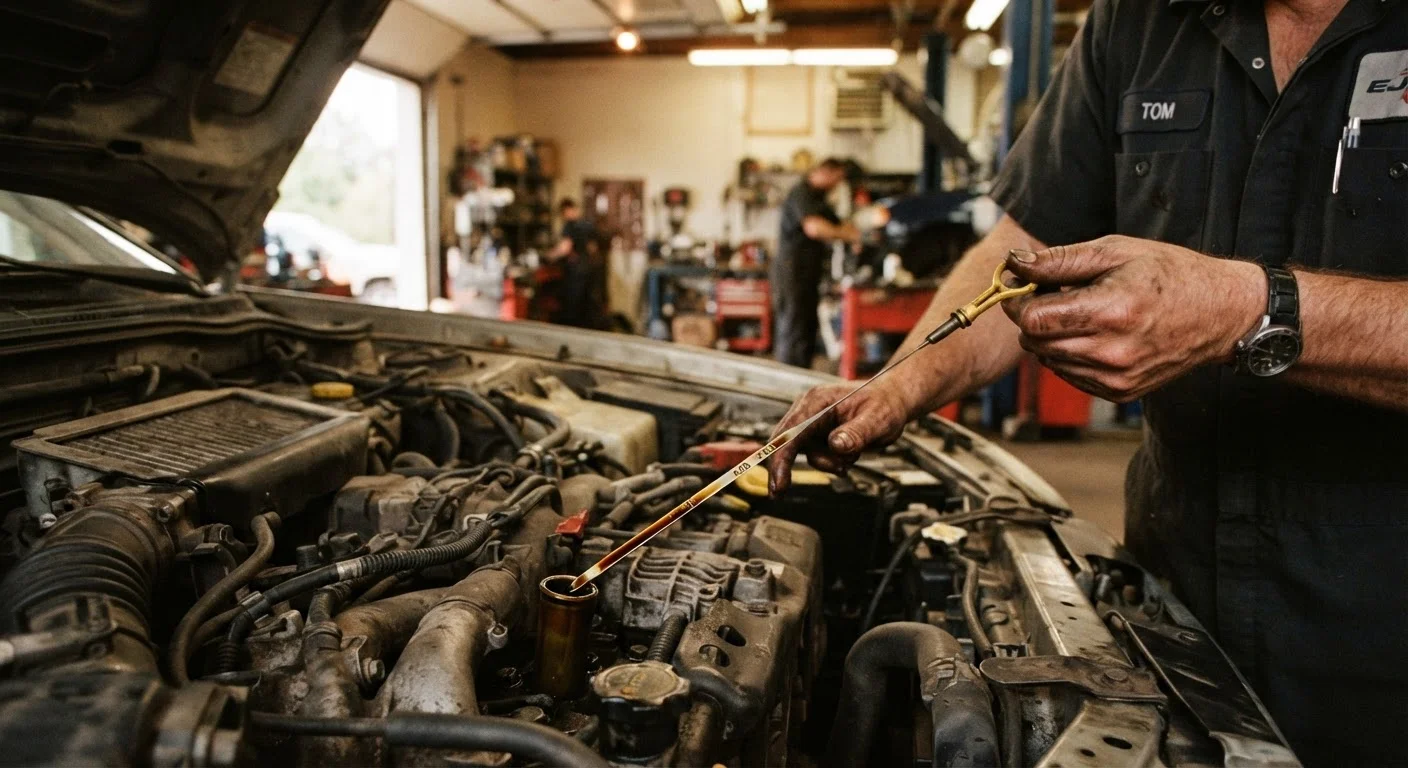
Open the owner's manual and find the recommended oil change interval - typically expressed in miles, months, or both. Compare that to the gaps between oil change entries in the records. Occasional minor stretches aren't unusual, but repeated large gaps (say, 10,000 miles between changes on a car that calls for every 5,000) suggest the engine may have run hot or dirty for extended periods.
Map major milestones against the maintenance schedule
Most manufacturers define specific services at mileage milestones - commonly around 30,000, 60,000, and 90,000 miles. These often include spark plug replacement, transmission fluid changes, coolant flushes, and timing belt or chain inspection. Find those milestones in the owner's manual, then check whether the records show corresponding service. A car with 95,000 miles and no record of a 60,000-mile service interval is missing a chapter of its story.
Assess the consistency and credibility of the sources
Records that all come from the same dealership or repair shop - with printed invoices, job descriptions, and technician notes - carry more weight than a handful of handwritten receipts from different locations. Look for specifics: what grade of oil was used, which parts were replaced by part number, and whether any concerns were noted. Vague entries like "general service" without detail tell you almost nothing.
Look for recurring repairs or unresolved issues
Scan for the same repair appearing more than once. A brake job that shows up three times in two years, or multiple entries for the same sensor replacement, may signal an underlying issue that was patched rather than fixed. Also check whether any records mention a problem that was noted but deferred - some shops log "recommend X service" and those notes reveal what the previous owner chose to ignore.
Fill gaps using digital sources
If paper records are incomplete, a vehicle history report can often surface service visits recorded by participating dealerships and repair chains. Many automakers also offer owner portals where past dealership service history is stored. Neither source is exhaustive, but together they can confirm or contradict what the paper trail shows. For a broader annual review process, see our guide to the annual car ownership audit.
Once you've worked through the records, take stock of what you found. If the car belongs to you, use any gaps you identified to prioritize upcoming service. If you're evaluating a used vehicle, unexplained gaps in critical services - especially timing belt or transmission fluid changes - are worth raising directly with a mechanic before finalizing any decision. See our comparison of dealer service centers vs. independent mechanics if you need guidance on where to take the car for a pre-purchase inspection.
If budget is a factor in how you act on what you find, our article on keeping up with car maintenance when money is tight can help you prioritize what to address first.