How Dealer Service Centers Work
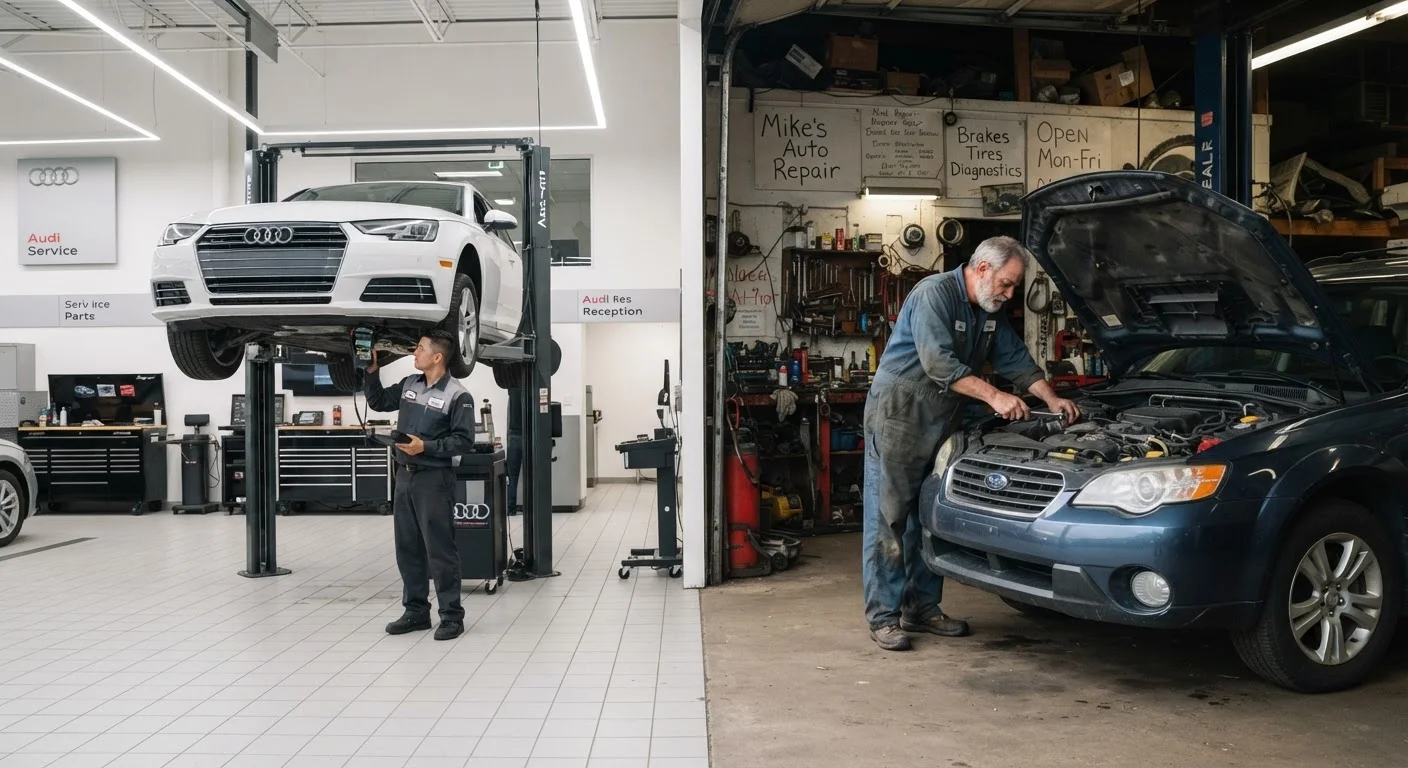
Dealership service departments are run by the automaker's franchise network and staffed by technicians who are factory-trained on your specific brand. They have access to proprietary diagnostic software, official technical service bulletins, and original equipment manufacturer (OEM) parts - meaning parts made to the automaker's exact specifications.
This specialization matters most when your car is under its factory or powertrain warranty, or when you're dealing with a recall or technical service bulletin that only the dealer can officially handle. Because their overhead is higher - think branded facilities, certified training programs, and manufacturer compliance costs - their hourly labor rates reflect that. Expect to pay more per hour than you would at most independent shops.
Dealer service can also feel less personal. Large service departments handle high volume, so your service advisor may be juggling dozens of customers. That said, the documentation standards at dealerships are generally consistent, which helps if you plan to maintain thorough service records for resale or warranty purposes.
How Independent Mechanics Work
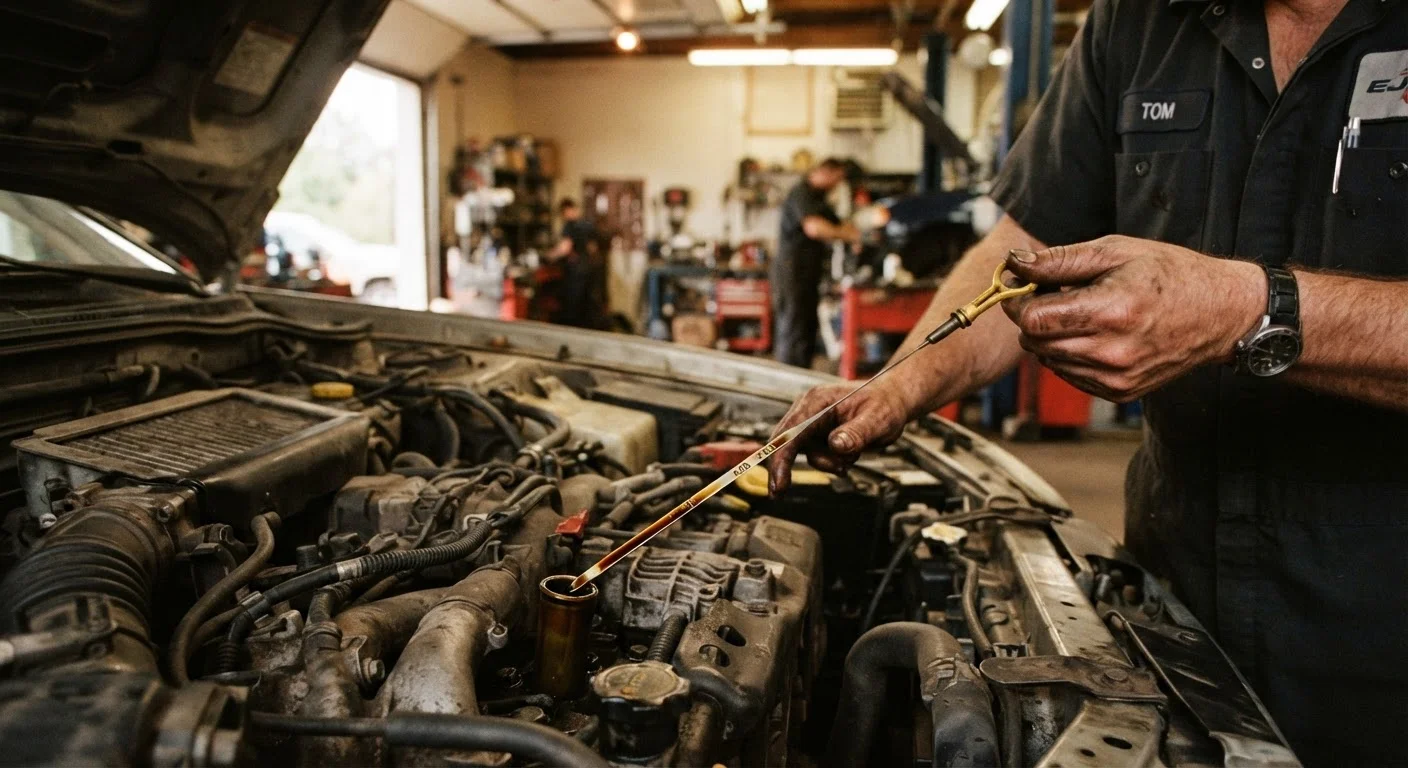
Independent shops range from one-person operations to multi-bay facilities. Many employ ASE-certified technicians (Automotive Service Excellence - a widely recognized industry credential) who work on a broad variety of makes and models. That breadth of experience can be an advantage for diagnosing unusual problems, though it may be a disadvantage for highly model-specific electronic systems.
Independent mechanics typically charge lower labor rates and have more flexibility in sourcing parts - they can use OEM parts, reputable aftermarket alternatives, or rebuilt components, depending on your budget and preference. This flexibility often translates to real savings on routine jobs like oil changes, brake service, tire rotations, and fluid flushes.
If you're comparing your options for something as common as routine oil service, our guide on DIY versus shop oil changes covers the cost-and-time trade-offs in detail. For maintenance work on an older, out-of-warranty vehicle, an independent shop is often where drivers get the most straightforward value.
Factory-trained technicians know your specific model
Dealer technicians receive brand-specific training and updates, which matters for complex electronic systems, software calibrations, and model-specific quirks that general mechanics may encounter less often.
Access to OEM parts and proprietary diagnostics
Dealers use the same diagnostic tools and parts the automaker uses, which can be critical for accurate fault-code interpretation on newer vehicles with sophisticated onboard systems.
Warranty and recall work handled in one place
Covered warranty repairs and safety recalls must typically be performed at a franchised dealer, making the dealership the only option for those specific services at no cost to you.
Independent shops usually charge lower labor rates
Without the overhead of a branded franchise operation, many independent shops can offer meaningfully lower hourly rates - savings that compound on longer or more complex jobs.
More flexibility in parts sourcing saves money
Independent mechanics can choose among OEM, reputable aftermarket, or rebuilt parts, allowing them to tailor cost to your budget without being locked into a single supplier.
Personalized service and direct mechanic communication
Smaller shops often let you speak directly with the person working on your car, which can lead to clearer explanations, honest assessments, and a longer-term working relationship.
The Warranty Question - What the Law Actually Says
One of the most persistent myths in car ownership is that taking your vehicle to an independent mechanic will void your factory warranty. Under the Magnuson-Moss Warranty Act - a federal consumer protection law - automakers generally cannot void a warranty simply because you used a non-dealer shop for routine maintenance, as long as the work was performed correctly and appropriate parts were used.
There are exceptions: if a repair performed by an independent shop causes a specific component to fail, the manufacturer may be able to deny coverage for that part. But blanket warranty voiding for routine oil changes or brake jobs at an independent shop is not something automakers can legally do under most circumstances. When in doubt, review your warranty documentation or consult the automaker's customer service line for clarification.
Keep Records Regardless of Where You Go
Whether you use a dealer or an independent shop, always request a written invoice detailing the work performed, parts used, and mileage at service. These records can protect your warranty rights, support a dispute, and add to your vehicle's resale value. Our article on why service records matter walks through exactly what to keep on file.
Weighing the Trade-Offs
The practical decision usually comes down to a few key factors: the age and warranty status of your vehicle, the complexity of the repair, and your confidence in a particular shop.
Dealer labor rates are typically higher
The cost of maintaining certified facilities and manufacturer training programs is reflected in dealer pricing - routine jobs can cost noticeably more than at an independent shop.
Independent shops vary widely in quality
Without a franchise standard to meet, shop quality depends heavily on the individual owner and technicians. Vetting reviews, certifications, and references matters more than it does at a dealership.
Dealers may upsell services aggressively
High-volume service departments have sales targets, and some advisors recommend additional services that may not be due or necessary - always cross-reference recommendations with your owner's manual.
Independent shops may lack model-specific tools
Some advanced diagnostics and programming functions require proprietary software that only franchised dealers can access, limiting what an independent shop can do on certain repairs.
For newer vehicles still under warranty, dealer service is hard to avoid for covered repairs - and may save you money outright on those jobs since the work is paid by warranty. For everything else, price out the job at both types of shops before committing. A meaningful gap in labor rates on a multi-hour repair adds up quickly.
Whatever you decide, keeping accurate service records is important. Those records affect resale value and can protect you if a warranty dispute arises. Our article on reading your car's service records explains what to look for and what gaps might signal.