
How Each Tool Works
When you're carrying high-interest credit card debt, two tools often come up as solutions: a personal loan and a balance transfer credit card. Both can help you pay less interest, but they work in fundamentally different ways.
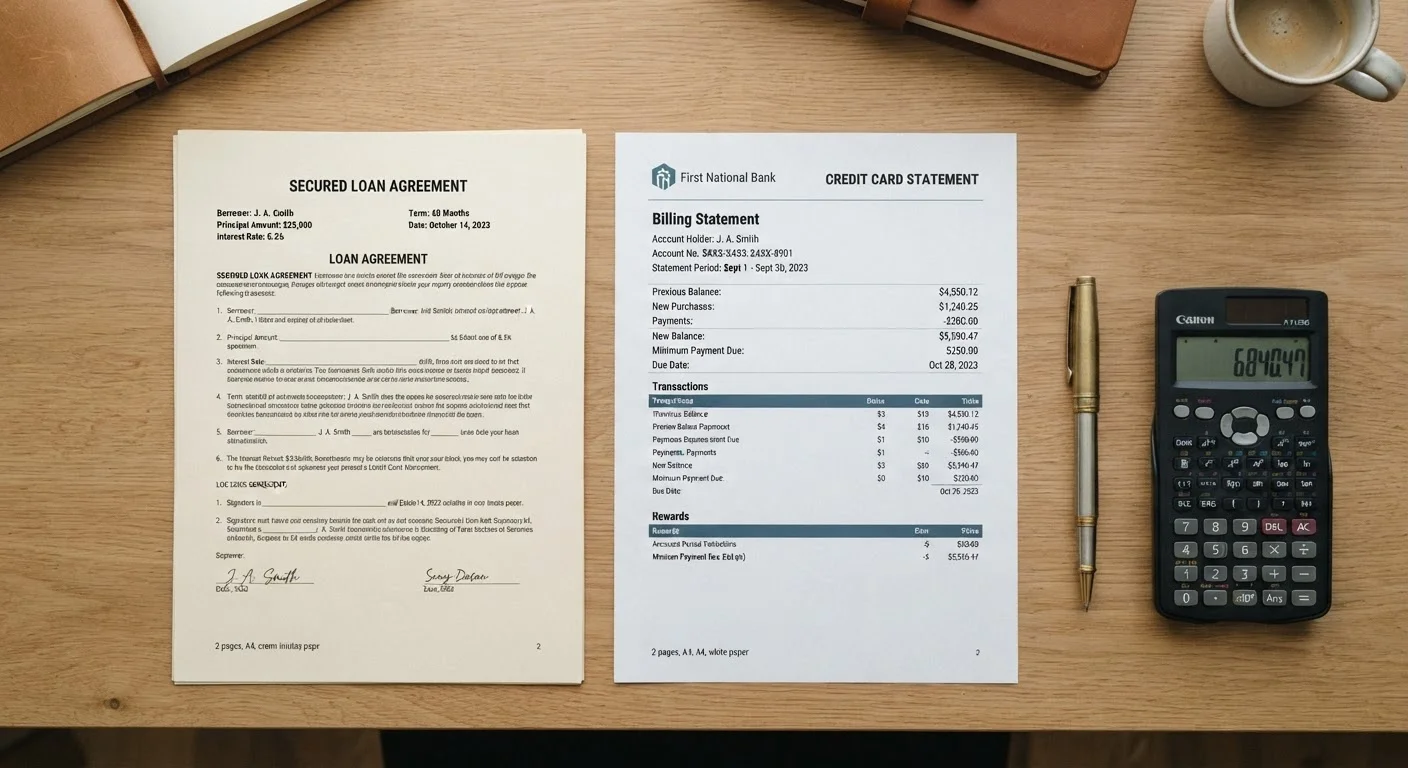
A personal loan is an installment loan - meaning you borrow a fixed amount, receive it as a lump sum, and repay it in equal monthly payments over a set term (typically 24-60 months). The interest rate is usually fixed, so your payment never changes. This structure is similar in logic to other borrowing decisions, as explored in our article on financing versus paying cash for a car.
A balance transfer card is a revolving credit product - a credit card that lets you move existing debt onto it, typically at a promotional 0% APR for a limited period (often 12 to 21 months). If you pay off the transferred balance before that window closes, you avoid interest entirely. If you don't, the remaining balance is subject to the card's standard APR, which can be quite high. For a broader look at how revolving credit products are structured, see our guide to secured vs. unsecured credit cards.
Costs, Fees, and Interest Rates
| Personal Loan | Balance Transfer Card | |
|---|---|---|
| Structure | Fixed installment loan | Revolving credit card |
| Interest Rate | Fixed APR (approx. 8%-36%) | 0% intro, then 20%-30%+ standard APR |
| Common Fees | Origination fee (1%-8%) | Transfer fee (3%-5%) |
| Repayment Timeline | Set term (24-60 months) | Flexible, but intro period is limited |
| Best Balance Size | Larger balances ($5,000+) | Smaller balances you can pay off quickly |
| Credit Score Needed | Good to excellent (fair possible) | Good to excellent typically required |
| Behavioral Risk | Lower - no open card to overspend | Higher - original card stays open |
Neither option is free. Personal loans often charge an origination fee - typically 1%-8% of the loan amount - deducted upfront or rolled into the loan balance. The APR on a personal loan generally ranges from roughly 8% to 36%, depending heavily on your credit score and the lender's terms.
Balance transfer cards usually charge a transfer fee of 3%-5% of the amount transferred. That fee is paid immediately and added to your balance. While the promotional 0% period can mean zero interest, missing a payment or carrying a balance past the intro period can trigger rates of 20%-30% or higher. Understanding the full debt picture - including how different structures affect total cost - is covered in depth in our complete guide to understanding debt.
Credit Score Impact and Eligibility
Both options require a credit application, which generates a hard inquiry on your credit report - a small, temporary dip in your score. Beyond that, the ongoing credit impact differs.
With a personal loan, your utilization on existing credit cards may improve (because you've paid them down), which can benefit your score. However, you've added a new installment account.
With a balance transfer card, you've opened a new revolving account. If the new card's credit limit is close to the transferred balance, your credit utilization ratio - the percentage of available revolving credit you're using - may remain high, which can weigh on your score. Both tools are most accessible to borrowers with good to excellent credit (generally a FICO score of 670 or above), though personal loans are sometimes available to those with fair credit at higher rates.
Either approach fits within a broader debt consolidation strategy - the key is pairing the right tool with a disciplined payoff plan.
Choosing the Right Approach for Your Situation
The better option depends on three factors: how much you owe, how quickly you can realistically repay it, and your credit profile.
- Smaller balances, fast repayment: If you owe $3,000-$5,000 and are confident you can pay it off within 12-18 months, a balance transfer card with a 0% promotional period may cost less overall - especially if the transfer fee is lower than what you'd pay in loan interest.
- Larger balances or longer timelines: If you're carrying $10,000 or more, or need 3-5 years to repay, a personal loan's fixed rate and structured term often provides more cost certainty and less risk of a rate spike.
- Behavioral risk: Balance transfer cards carry a real pitfall - they leave the original card(s) open with available credit. Without discipline, some people accumulate new charges while paying down the transferred balance, worsening their position.
Once you've chosen a tool, consider pairing it with a repayment strategy. Our comparison of the debt snowball vs. debt avalanche methods can help you structure your payments for maximum efficiency.
This article is for informational and educational purposes only and does not constitute personalized financial advice. Consult a licensed financial professional before making decisions about your specific debt situation.