
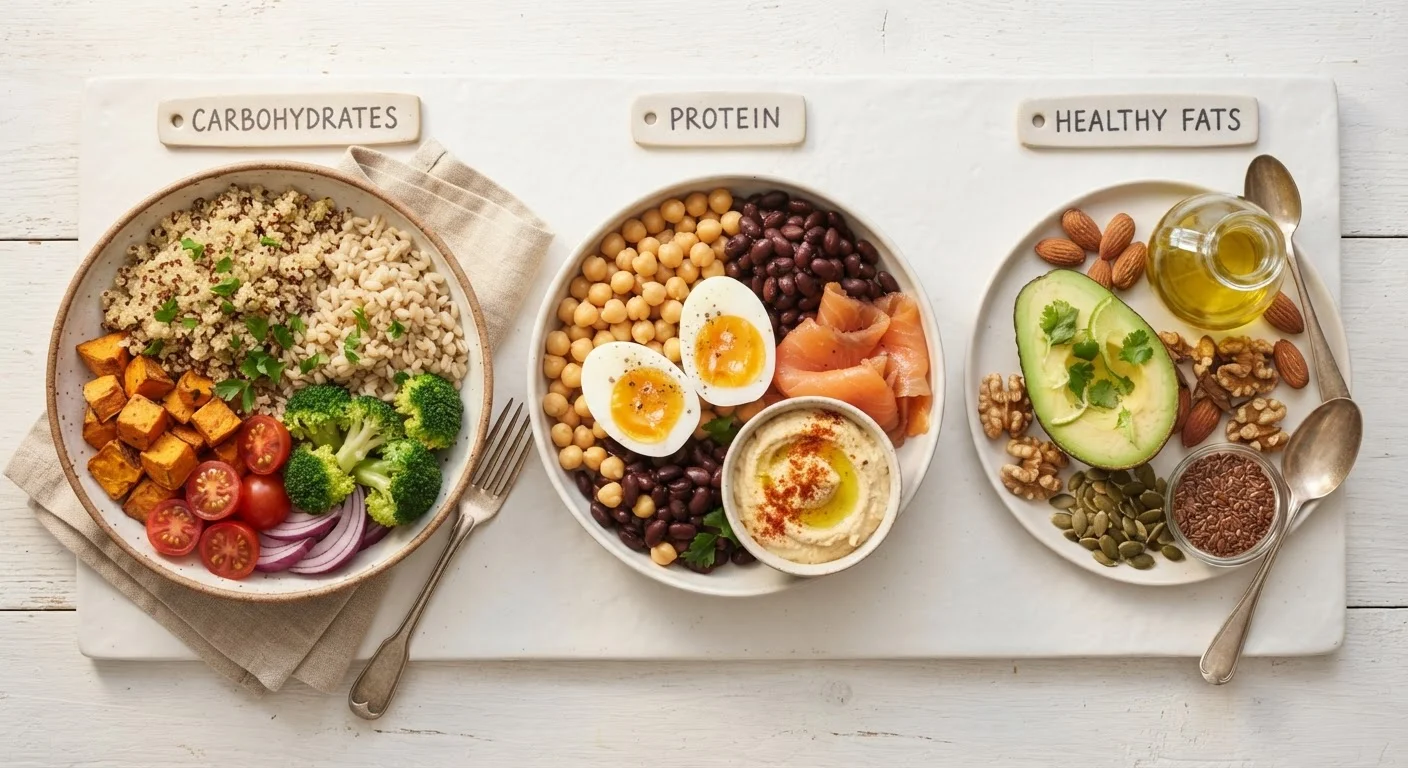
Carbohydrates: Your Body's First Choice for Fuel
Carbohydrates are the body's primary and most readily available energy source. When you eat carbs - whether from bread, fruit, beans, or vegetables - your digestive system breaks them down into glucose. That glucose enters the bloodstream and is either used immediately for energy or stored in the liver and muscles as glycogen for later use.
The brain is especially dependent on glucose; it consumes roughly 20% of the body's total energy budget and strongly prefers carbohydrates as its fuel. During intense physical activity, muscles also rely heavily on glycogen stores.
Not all carbohydrates behave the same way. Fiber - a form of carbohydrate found in vegetables, whole grains, and legumes - is not fully digested, yet it plays a critical role in supporting digestive health, stabilizing blood sugar, and promoting satiety. Choosing carbohydrate sources that are rich in fiber and minimally processed is a principle consistently supported by nutrition research.
If you want to understand how common beliefs about carbs hold up under scrutiny, see our review of popular nutrition claims for a closer look at the evidence.
Protein: The Body's Builder and Maintainer
Protein serves as the structural backbone of nearly every tissue in the body. Muscles, skin, hair, enzymes, antibodies, and many hormones are all built from proteins - which are themselves assembled from smaller units called amino acids.
When you eat protein-containing foods, digestion breaks them down into individual amino acids that your body then uses to build and repair tissues, support immune function, and produce molecules essential for metabolism. Nine of these amino acids are considered "essential" because the body cannot synthesize them on its own - they must come from food.
~0.8g
Protein per kg of body weight daily (general adult RDA)
The Recommended Dietary Allowance set by the National Academies of Medicine for most healthy adults is approximately 0.8 grams of protein per kilogram of body weight per day.
45-65%
Calorie share from carbohydrates (U.S. guidelines)
The Dietary Guidelines for Americans recommend that carbohydrates make up 45-65% of total daily calorie intake for most adults.
20-35%
Calorie share from fat (U.S. guidelines)
Current U.S. dietary guidelines suggest total fat should represent 20-35% of total daily calories, with an emphasis on unsaturated sources.
Complete protein sources - those providing all nine essential amino acids - include animal products such as eggs, dairy, meat, and fish. Many plant-based foods contain protein as well, and eating a varied plant-forward diet can supply all essential amino acids across the day. Legumes, tofu, tempeh, quinoa, and soy-based foods are among the more protein-dense plant options.
Protein also has a higher satiety effect compared to carbohydrates and fat, meaning it tends to keep you feeling fuller for longer - a factor relevant to overall energy intake and appetite regulation.
Fat: Essential, Not the Enemy
Dietary fat has been unfairly demonized in popular culture for decades, yet it is genuinely essential for human health. Fat supports the absorption of fat-soluble vitamins - A, D, E, and K - which cannot be transported through the body without it. It also provides the raw material for producing steroid hormones, including sex hormones and cortisol, and forms the structural layer surrounding every cell in the body.
Fat is also the body's main energy reserve. While carbohydrates are the preferred fuel during high-intensity effort, fat becomes the dominant energy source during lower-intensity activity and at rest.
Choose Your Fat Sources Wisely
Swapping some saturated fat sources for unsaturated alternatives - such as using olive oil instead of butter, or snacking on a handful of nuts - is one of the most evidence-backed dietary shifts you can make for cardiovascular health. You don't need to eliminate fat; you need to pay attention to what kind you're regularly eating.
The type of fat consumed matters considerably. Unsaturated fats - found in foods like olive oil, avocados, nuts, seeds, and fatty fish - are associated with favorable effects on cardiovascular health in multiple large-scale studies. Saturated fats, found predominantly in animal products and some tropical oils, warrant more moderation according to current guidelines from major health organizations. Artificially produced trans fats, once common in processed foods, are now largely phased out in the U.S. food supply due to their established harms.
For practical guidance on reading fat content on food labels, the Nutrition Facts label walkthrough offers a useful breakdown.
Why Balance Across All Three Macronutrients Matters
Popular diets often urge the elimination or severe restriction of one macronutrient - whether it's fat, carbohydrates, or even protein. The scientific evidence, however, consistently supports a more balanced approach for long-term health. Each macronutrient performs functions the others cannot fully substitute for, and eliminating one group typically means either missing essential nutrients or overcorrecting with excessive amounts of another.
Rather than focusing on ratios or elimination, nutrition science tends to emphasize food quality within each macronutrient category: whole grains over refined ones, lean and plant-based proteins alongside animal sources, and unsaturated fats in place of heavily processed fat sources. This is the framework reflected in guidelines from institutions such as the Dietary Guidelines for Americans.
Building a healthier plate explores how these principles translate into practical, everyday food choices that research has supported consistently over time.
This article is for general informational and educational purposes only and is not a substitute for personalized medical or nutritional advice. Please consult a qualified healthcare provider or registered dietitian before making significant changes to your diet.